
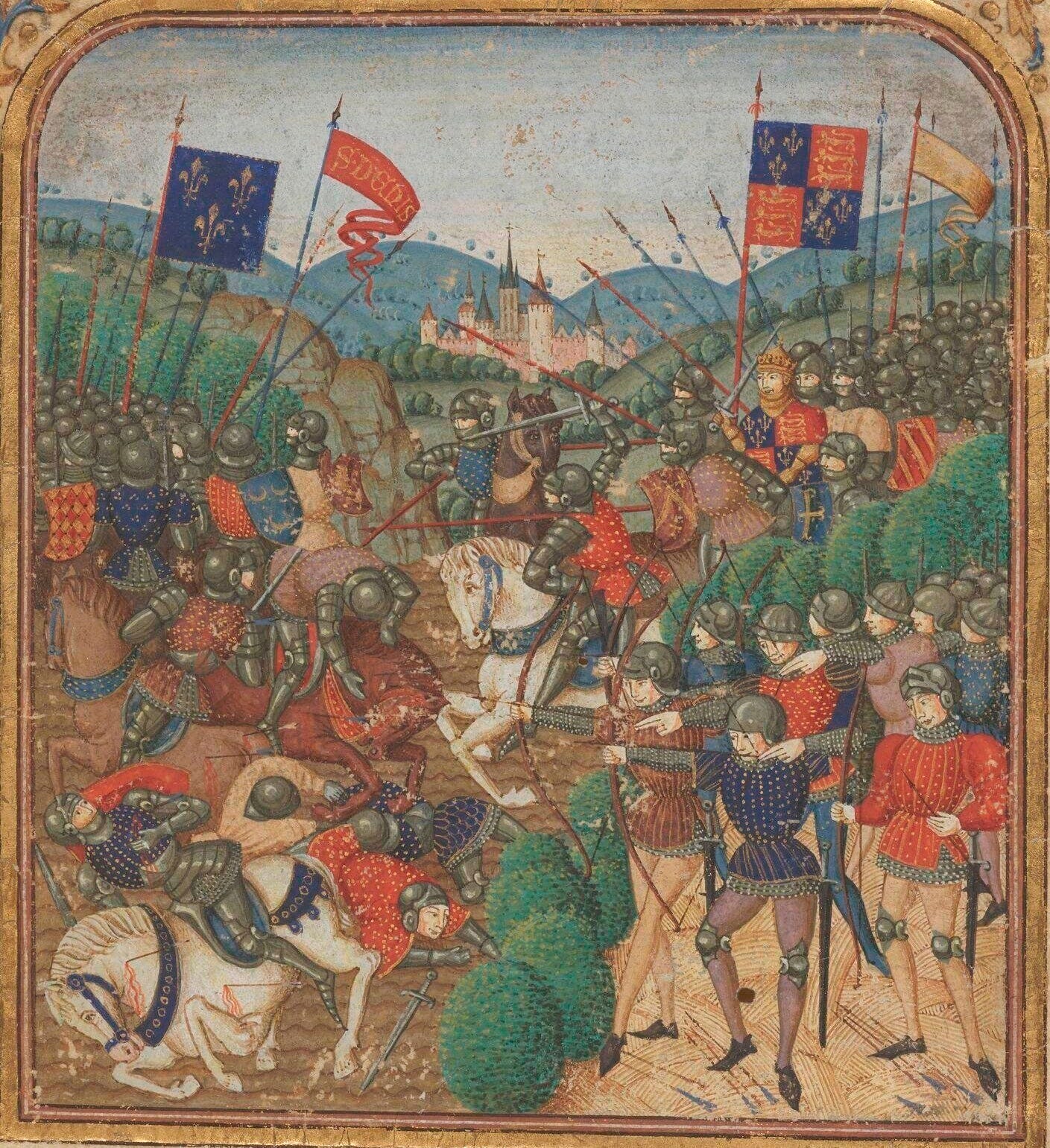
Yesterday was St. Crispin’s Day, the anniversary of Henry V’s victory at Agincourt. As with many medieval battles, the reasons for its outcome are poorly understood. The answer is nowhere near as simple as “longbows” or haughty French knights impatient for glory: the specific cause of the overwhelming English victory in 1415 is very nearly unique in the annals of warfare.
This upsets our notions of the universality of military art. Tactics are less an evolving science of accumulated knowledge than a treasury of methods that are constantly rediscovered in new circumstances. Humans intuitively stumble upon the same patterns in the course of improvisation, and even animals demonstrate sound tactical principles. Just about any battlefield victory can therefore be described using a common tactical vocabulary.
These patterns extend across time and scale. An envelopment can collapse a line of battle just as well when fighting with spears and swords as with ranged weapons, even if the specific mechanism varies. Similarly, an operational envelopment that cuts off the enemy’s line of communication does not quite look like a tactical envelopment that exposes the enemy’s vulnerable rear, but still operates much the same in principle.
It is therefore striking to stumble across something truly sui generis. Only the similarly-misunderstood Cannae comes close—even the other famous English longbow victories look nothing alike—showing how technology and circumstance can converge to create something that genuinely defies previous experience.
The English Way of War
The basic tactical scheme which Henry V employed at Agincourt was the same used by Edward III in the early years of the Hundred Years’ War, but its roots extend even deeper. That formation—dismounted knights in the center, with longbowmen protected by obstacles angled forward on the flanks—was first used not against the French, but the Scots. Edward Balliol used it in 1332 to defeat a Scottish army that outnumbered him 10:1 at Dupplin Moor, and the following year Edward III won a similar victory at Halidon Hill.
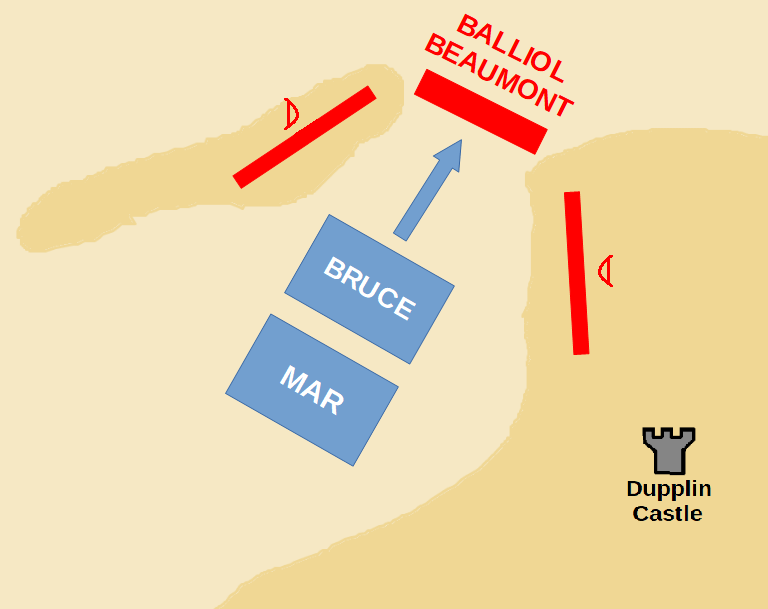
This array was ideal against the dense pike blocks that the Scots wielded so effectively in their wars of independence. The dismounts in the center invited their impetuous charge, which could easily break their thin ranks in ordinary circumstances. But by positioning themselves at the top of a slope, they forced the adversary to endure a steady hail of arrows as they slogged uphill; once engaged, the English center only had to hold out long enough for the unrelenting volleys to break them down.
This worked even better against the French at Crecy in 1346, when English arrows unhorsed multiple waves of charging knights before any could break through. The French learned from this loss and adopted new tactics ten years later at Poitiers: their own heavily-armored knights dismounted, reducing their vulnerability to the longbows, and attacked in a series of four well-formed lines. This time, however, they had to fight through multiple hedges and vines, encountered difficulties coordinating the separate lines, and were struck in the rear by a well-timed maneuver that captured their king.

Agincourt
The Battle of Agincourt, fought 59 years after Poitiers, was similar in several ways. The numbers were roughly 2:1 in the French favor on both occasions. The English adopted a position with their flanks protected by a wood on either side, and installed stakes to protect their archers on the wings; the French attacked in multiple waves of dismounted knights, trying to break through the center.

This time, the French held one distinct advantage: they were attacking downhill across mostly unobstructed terrain. They planned to capitalize on this by sending mounted knights along the flanks to roll up the longbowmen. Against this, the English held two advantages: they occupied a narrow field which protected their flanks and prevented the French from bringing their full weight of numbers down all at once, and muddy ground made the advance difficult.
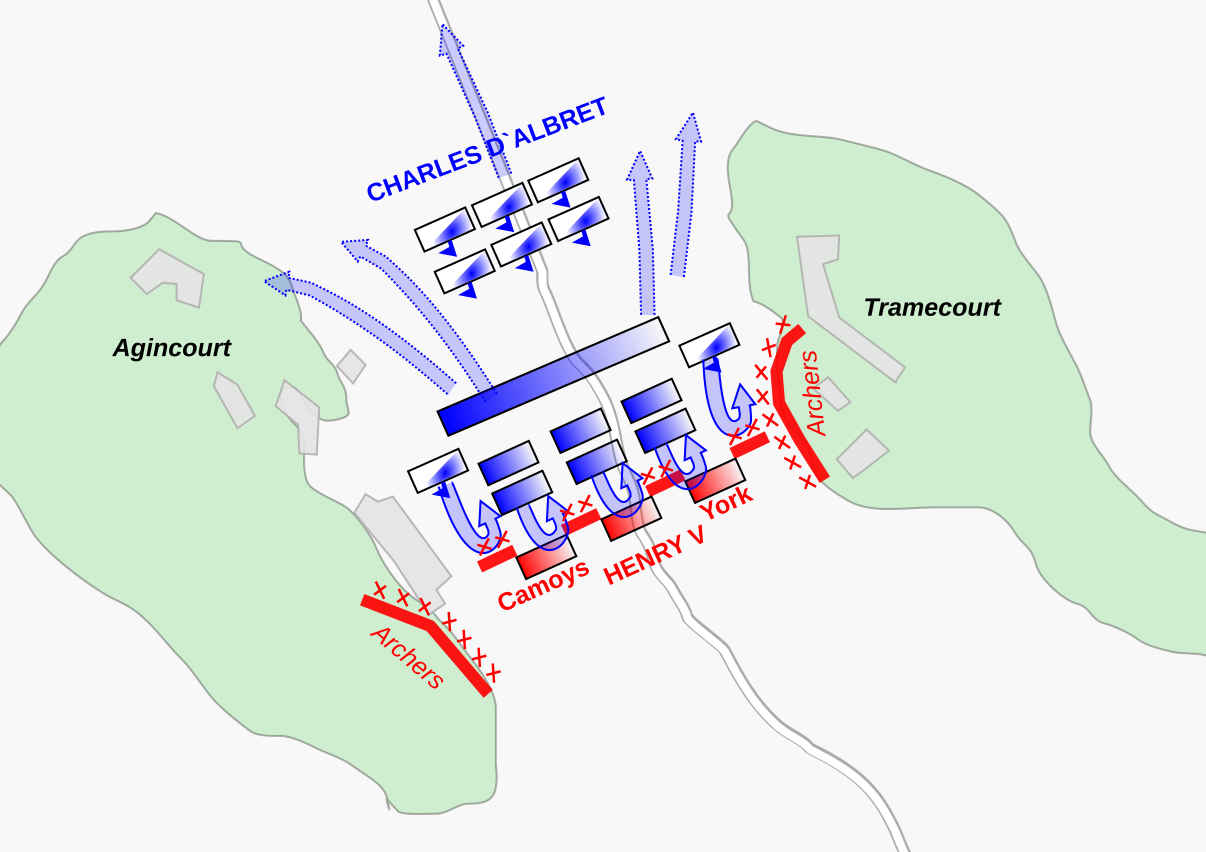
The attacks on the English flanks failed completely. The stakes protected the archers as they loosed arrow after arrow, bringing down horses and halting their forward progress. This left the French center exposed to the longbowmen, taking arrows in its front and then flanks as it advanced into the concave enemy position. This had the effect of a giant funnel, as men on the edges instinctively bunched toward the center, dissolving the line’s cohesion as men slipped and stumbled on the muddy ground.
Nevertheless, this first line made contact with Henry’s center and began driving it back in a fierce melee. Soon after, the second line, following close behind the first, came up. Rather than provide any assistance, it too turned into bunched into the center before colliding with first line’s rear. With this, the entire engaged body of the French army became a disordered jumble. The front ranks were unable to maintain any forward momentum as they were pushed and jostled from all sides. Those who fell got stuck in the mud and the crush of bodies, unable to get back up. Their mass became a hindrance rather than an asset.
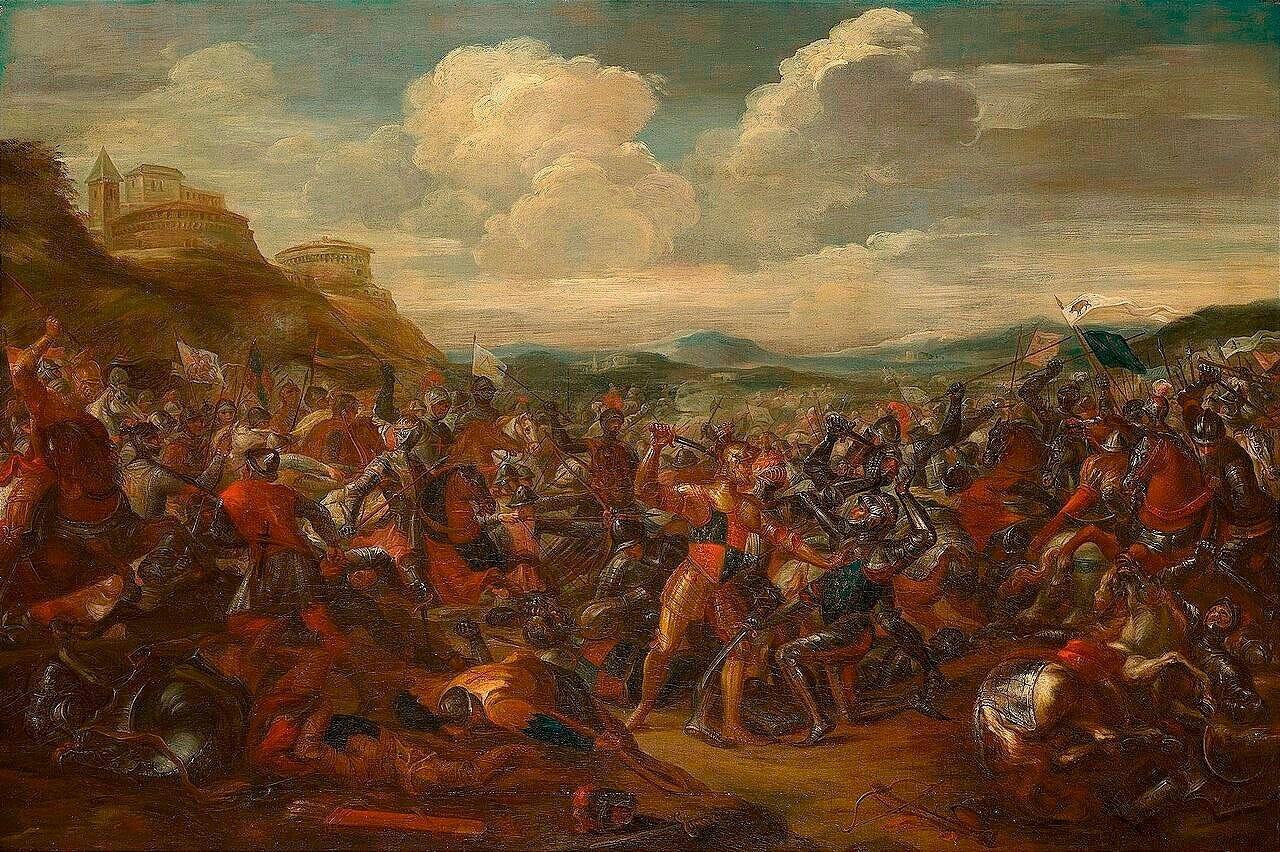
At some point, the longbowmen emerged from behind their stakes and fell upon the writhing mass, using daggers and hammers to kill the helpless knights. Although the French had a mounted third line waiting in reserve and some late-arrivals came onto the field, these troops were reluctant to charge after witnessing the calamity before them. Their few piecemeal charges were easily repulsed and they eventually fled the battlefield, leaving their compatriots to be slaughtered.
The Repeatability of Tactics
This broad sequence of events was very similar to Cannae: an overconfident enemy launched an attack that crowded into a narrow center, turning it into a disordered jumble, before the wings swung in and initiated a slaughter. Only the mechanism was different: where Henry used longbows to funnel the enemy toward the center of a muddy downhill slope, Hannibal used geometry, deploying his army in a loose crescent to entice the Romans into a converging attack.
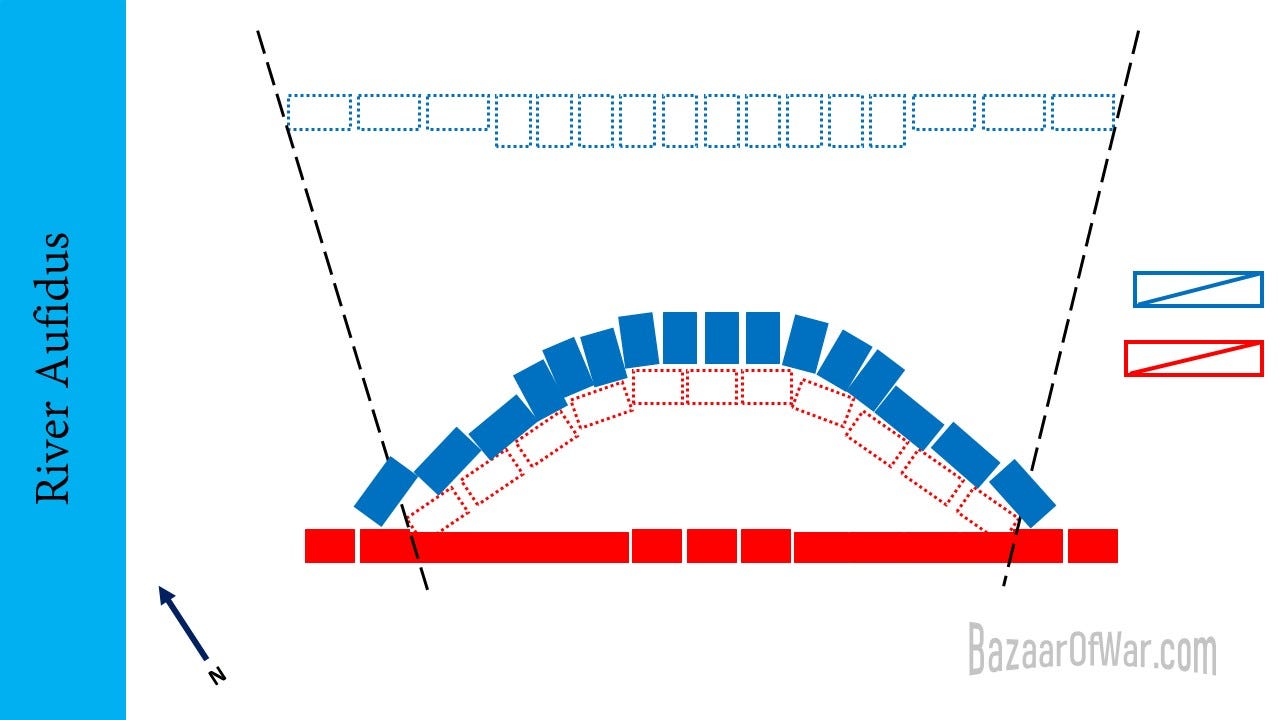
But whereas ancient authors assert that Hannibal’s stratagem was deliberate, Henry could not have foreseen that specific course of events. Unlike his great-grandfather at Crecy, he was not seeking battle. He held a much worse position than Edward and had his line of retreat cut off; indeed, of their three great longbow victories of the Hundred Years’ War, the English suffered by far the highest casualties at Agincourt. That it also proved the highest losses for the French—over 50% of their knights killed—was a lucky accident that Henry could not have counted on.
What are we to make of it, then? The crowding effect that won the battle was an inherent reality of pre-gunpowder warfare. Greek authors noted that hoplites in combat inched rightward to the protection of their neighbor’s shields, slowly bunching and shifting the line as the battle progressed, and there are many recorded examples of attacks by disordered troops failing. Previous English battles with the Scots and French likely benefitted from the specific crowding-in effect from the flanks, which would have dampened the impetus of the main attack in the center (accounts of Dupplin Moor specifically mention the crushing press of Scottish troops, but they were free to retreat eventually).
Yet that was categorically different from what happened at Agincourt. In earlier longbow victories, each attack was repulsed in turn, and was not turned into a churning mass that could easily be surrounded. Henry’s victory depended on the felicitous combination of known dynamics, muddy ground, and the exuberance of the second French line; at most, he could tip the odds through his choice of ground.
This highlights two general points about military art. The first is that, although most tactics are variations on very old themes, unique combinations of technology, ground, and circumstance can produce genuinely different. It is hard to see how crowding tactics could be used to win a modern engagement—or any battle using ranged weapons, for that matter.
The significance of this is minimized by the second point: that tactical plans are not the most important element of victory. Far more important are well-trained and equipped troops that can fight well, execute orders, and adapt to changing conditions. It is, after all, in the exploitation, not the opening salvos, that victories are won.
Thank you for reading the Bazaar of War. Most articles are free for all to read, but a subscription option is available to all who wish to support. Subscribers receive a pdf of the critical edition of the classic The Art of War in Italy: 1494-1529, and will have exclusive access to occasional pieces.
You can also support by purchasing Saladin the Strategist in paperback or Kindle format.