
The issue of low global birthrates and aging populations, which has been a subject of much discussion and anxiety lately, also has great consequences for the future of warfare. Despite many predictions that countries with inverted demographic pyramids could or would not fight a major conflict, the Ukraine War has demonstrated the opposite. Yet it also highlights many of the difficulties.
The issue of loss-replacements is foremost among them, as both sides have resorted to conscripting men in their 40s and 50s. The age of recruits obscures the even more striking fact of just how few there are: two countries with a combined population of around 185 million have little more than 2 million active personnel in a war waged along a thousand-kilometer-long front.
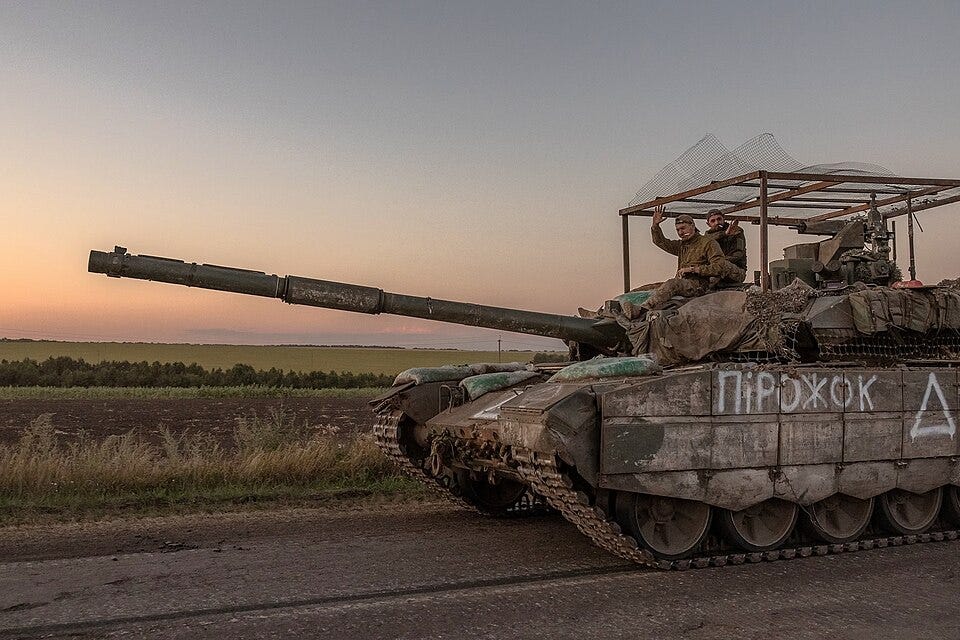
The number and age of combatants is somewhat offset by two other realities of modern warfare: the increasing demand for manpower in support roles away from the frontline, and the degree to which drones and other long-range weapons have rendered combat much more static. Yet it is also true that an aging population reinforces these static, attritional dynamics. As much as tactical and technological factors may be the biggest constraint on restoring mobility to the battlefield, any eventual solution will also depend on human factors—robots are still not at the point where they can control territory (notwithstanding recent claims to the contrary). Faster and more dynamic operations require troops who can maintain a high ops tempo, which almost inevitably means young men with high endurance and good knees.
Manpower, equipment, and organization—these are the variables that limit the complexity of operations. Excellence in one might compensate for deficiencies in another, but only up to a point. Although the aging of the global population is a truly new phenomenon, there is in fact precedent for the sorts of problems it poses. Two episodes from European history show how otherwise sophisticated military establishments broke down when cut off from access to skilled personnel. The result was not a shortening of the war, but just the opposite: it became much more drawn-out and brutal.
Hundred Years’ War
The first occurred during the second decade of the Hundred Years’ War. France and England maintained fairly large forces early on, regularly fielding over 10,000 men in each of the two major theaters (Gascony and northern France). Besides their field armies, both monarchies mobilized a high percentage of their population for garrisons and expeditionary forces—little Normandy alone was called upon to furnish 24,000 men.
The Black Death put an end to this. It swept through France in 1348, devastating the population and halting major operations for several years. When the war picked back up, neither side could mobilize nearly as many men. This was strictly speaking more a fiscal than a manpower problem, but ultimately stemmed from a shrinking population. Tax revenues fell, labor became much more expensive, and the number of men willing or able to do military service plummeted; the primitive fiscal apparatuses of medieval states, already strained by a decade of war, could not cope. They tried to draw on other manpower pools by hiring mercenaries, but this just made the problem worse: they were still hard-pressed to pay them, and frequent truces unleashed bands of unemployed soldiers that terrorized the countryside and drove peasants to abandon their fields.
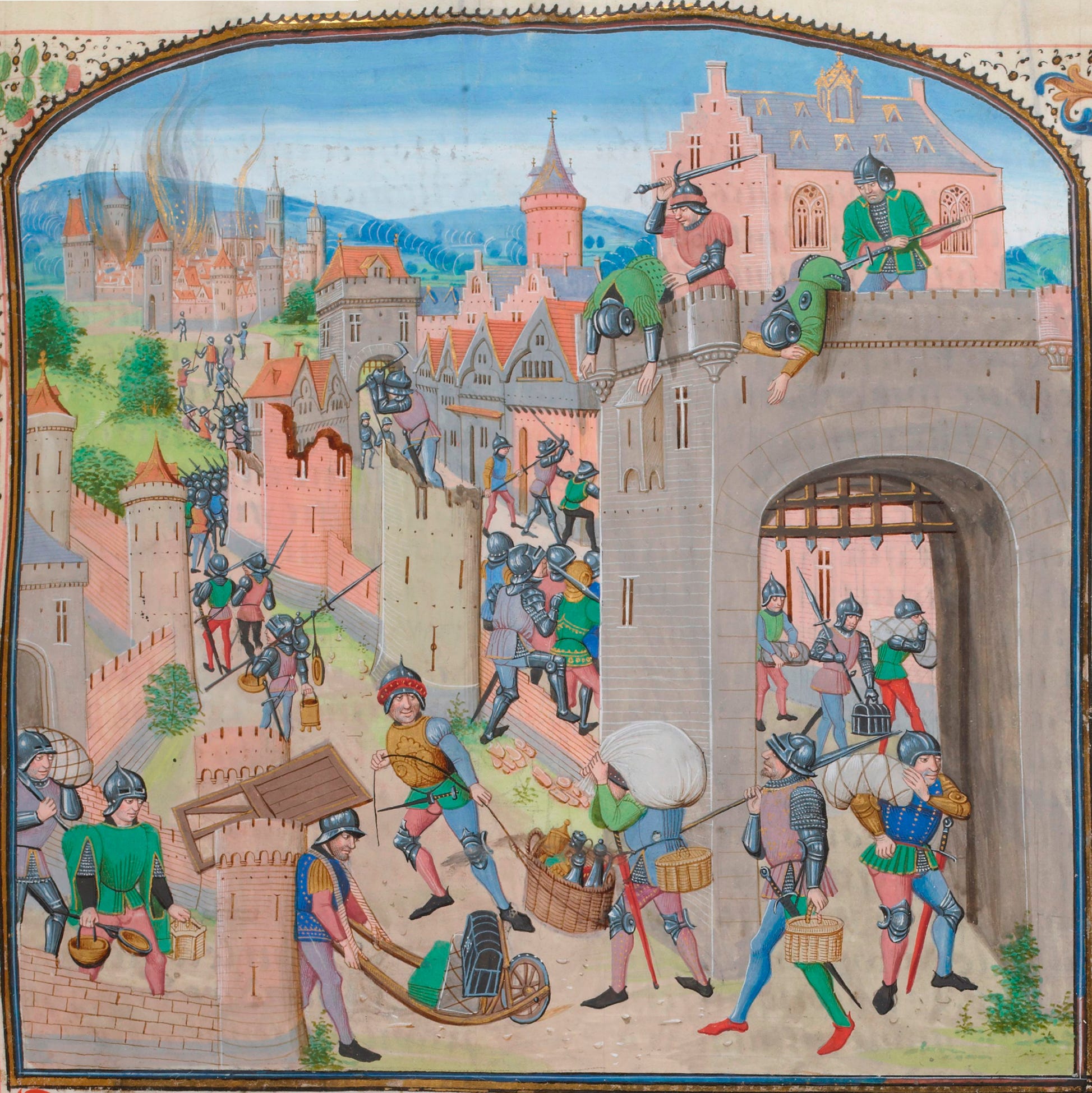
The result of this was that raiding and campaigns of devastation became the mainstay of both armies. The English had already been forced to adopt a chevauchée strategy to goad their enemies into battle—it was one such expedition that led to the Battle of Crécy in 1346—but after the Black Death these became more frequent as field actions were smaller and rarer. The next major battle was Poitiers in 1356, when around 15,000 Frenchmen brought a raiding force of 6,000 English to battle—about half what both sides had at Crécy a decade earlier. More importantly, both sides lacked the capacity to seize and occupy strongholds, and the ongoing devastation of the countryside eroded their resource bases still further.
The very different nature of the last phase of the war, initiated by Henry V in 1415, shows just how much this was a problem of demographics. Although he inaugurated it with a chevauchée in 1415, explicitly modeled on Edward III’s Crecy campaign, his full-scale invasion in 1417 numbered well over 10,000 fighting men. Field actions over the next few decades remained small, but only because both sides had much more success capturing and garrisoning fortresses. Bands of demobilized mercenaries still caused problems during truces between factions, but the population suffered far less from their depredations.
Thirty Years’ War
The dynamics of the Thirty Years’ War were somewhat different, despite sharing broad similarities in terms of disease and devastation. Germany had already been hit by outbreaks of plague in the decade before the war, followed by more serious outbreaks in the 1620s once it was well underway. This caused disruptions just as the war was ramping up, forcing all parties to recruit large numbers of mercenaries from all over Europe. A speculative bubble ensued as mercenary contractors raised companies on their own credit in anticipation of large payoffs for joining the winning side.
This created a somewhat different problem from the Hundred Years’ War. Raw numbers were not the chief constraint—field armies grew quite large, often exceeding 30 or 40,000 men—but rather quality. Recruiters had to reach well beyond the usual pool of veterans that constituted the European military market, enlisting criminals, vagabonds, and assorted riffraff. As warlords’ finances grew strained under the pressure of feeding so many mouths, they turned to a policy of raising contributions from neighboring areas.
This unsustainable arms race created a wicked knot of problems that compounded one another. Generals were forced to raise contributions from farther abroad, often in regions that had already been devastated several times over. This not only slowed the progress of armies, making it more difficult to conduct complex maneuvers, but also eroded discipline and gave opportunities for desertion. The steady wastage, aggravated by war-induced famine and pestilence, lowered the quality of the troops still further as generals cast their nets wider to fill their ranks. This period saw the worst atrocities of the war, culminating in the bursting of the bubble in the mid-1630s.
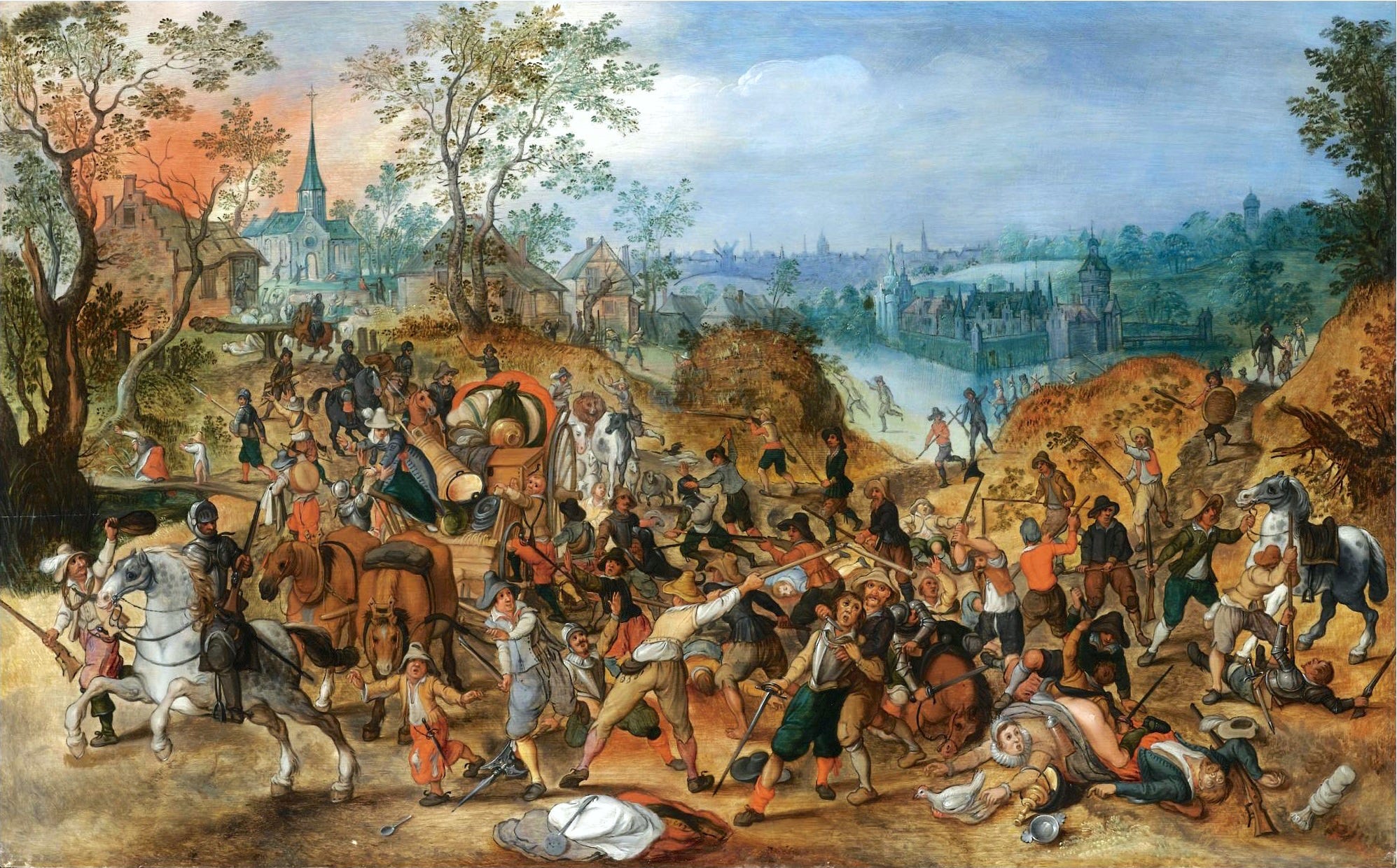
Counterintuitively, but entirely logically, operational performance improved in the last decade of the war. Bad fiscal conditions and the challenges of operating in devastated country imposed a degree of discipline on commanders. Armies slimmed down (while retaining more experienced troops) and paid greater care to logistics, allowing them to undertake lightning campaigns over several hundreds of kilometers. Thus, while a lack of experienced troops did not cause the problems of the earlier period, it certainly compounded them, posing certain difficulties that could only be resolved by scaling back ambitions.
The Question of Manpower
There is nothing in modern warfare that resembles the ravages of the Hundred or Thirty Years’ War, but there are obvious parallels to the ongoing attacks on civilian infrastructure. Drones and missiles make it possible to strike previously inaccessible targets, which faute de mieux are the most direct form of pressure an army can impose on an adversary. It is likewise very probable that aging countries will increasingly turn to mercenaries to fill manpower gaps, as we already see in small countries such as the UAE. Demand for specialized technical expertise may even make this a necessity for the more complex operations of the future.
Yet for all that, it is difficult to tell just how much demographics are a constraining factor at the present moment. What would the fighting look like if 80% of soldiers in Ukraine were under 30? Would more effective infiltration operations enable one side to collapse the other’s lines? Could a much higher operational tempo create a true breakthrough? Or would the density of ranged weapons simply negate all the advantages of youthly vigor?
I strongly suspect most observers would lean heavily toward the latter answer; given the compounding effects of small advantages, I’m not so sure. It is precisely because we have not seen a successful operational breakthrough that we don’t have a standard whereby to judge the importance of troop quality. It remains one factor among many to keep an eye on.
Thank you for reading the Bazaar of War. Most articles are free for all to read, but paid subscriptions are available to all who wish to support. Subscribers receive a pdf of the critical edition of the classic The Art of War in Italy: 1494-1529, and get exclusive access to monthly long-form pieces exploring selected topics in depth.
You can also support by purchasing Saladin the Strategist in paperback or Kindle format.
The other thing we’ve seen is Russia in particular recruiting additional fighters from more populated and usually poorer countries from Cuba to North Korea.
If we apply enough pressure the resources of Ukraine can fall into the hands of their creditors as killing off the remaining young Ukrainians will restore mobility to claims on their resources, Dead Men file no Torts.