
As the fighting in Iran nears four weeks, it is worth looking at the dynamics of the conflict thus far. Some have jokingly called it a “Special Military Operation”, a sarcastic reference to Russia’s attempt to effect regime change through a combination of force and subversion. Such a term is more apt for January’s operation against Venezuela: although there was some kinetic resistance to the assault package, there was also almost certainly prior contact between the US government and Venezuelan officials to expedite the transfer of power.
Current operations against Iran are in a wholly different category. Unlike Russia in Ukraine, which was prepared to escalate to full-blown war with several combined-arms armies and months of supplies prepositioned, neither America nor Israel have any ground troops on hand; it remains to be seen whether any will be committed (as of yesterday, 24 March, Trump has offered a 15-point peace plan, expressing a wish to deescalate).
War at Stand-Off Distance
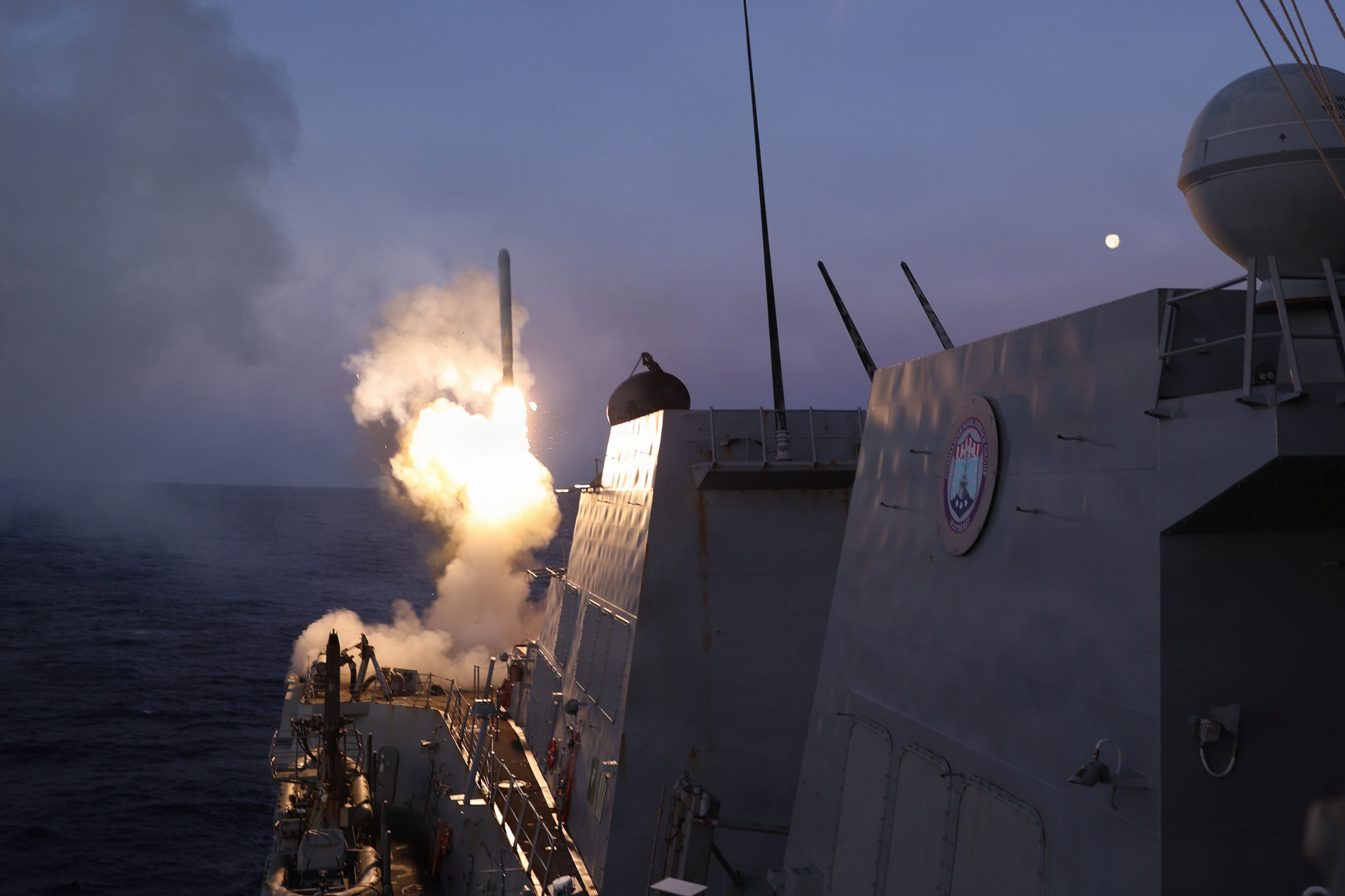
What do we call the conflict, then? Any continuing efforts at political subversion are extremely murky, leading outside observers to focus on the spectacular kinetics; unsurprisingly, almost all describe it simply as a “war”. The colloquial use of that term is not a problem in itself, but it is usually accompanied by unstated assumptions that can pose stumbling blocks.
Almost all concepts and doctrinal terminology around warfare are oriented toward conflicts that take place a) largely on land and b) between near-peer adversaries. Failure to think through the relationship between military force and political objectives has led to many failures in past asymmetric conflicts, with Vietnam and Afghanistan being the most obvious. As appears to be true in the current case, military superiority leads planners to focus overwhelmingly on that one tool, even as the nature of the conflict precludes it as a means to victory.
This brings us back to the chain of combat. Military force always supports political goals, but the question is where they meet. In large-scale interstate warfare, military force can directly support the ultimate strategic objective, but not in low-level insurgencies, in which force is rarely applied above the lower tactical levels, where it shapes political efforts on a local scale. This leaves a broad middle wherein forces may mount higher tactical- or operational-level actions, but require other means (civil outreach, diplomacy, economic policy, etc.) in order to achieve war aims—I lump these under the inadequate umbrella term “small wars”, regardless of actual intensity.
Many such small wars are asymmetric (e.g. Vietnam, the counter-ISIS campaign), but not all. Periods of extensive cross-border raiding also match these criteria, as do protracted air campaigns. Such raids by land or air can project considerable force, but lack the persistence to maintain it; they cannot exercise that elusive concept of control. What, then, is the theory of victory in Iran following the initial decapitation strikes and the failure of a popular uprising to manifest itself?
Persistence By Other Means
We must always be extremely cautious when speaking of planning assumptions during ongoing operations, as we can only see a fraction of the total picture and there is plenty of incentive for misdirection from all sides. It is unclear to what extent there are ongoing covert ground actions to incite an uprising, or whether US/Israeli leadership is simply caught between failure to secure an early victory and a looming global economic crisis.
Judging by official statements around regime change, however, the second and third weeks of the campaign appeared to focus on removing the Iranian government’s ability to exercise basic control of its own territory. A number of strikes were made against local IRGC and Basij headquarters, culminating in a fresh round of decapitation strikes on senior leadership on 17-18 March. This would amount to a test of the century-old question, whether it is possible to exert territorial control from a stand-off distance.
Decisive victory absent ground troops has proven elusive ever since Douhet’s theories of airpower were dashed in the Second World War. While I remain highly skeptical that current efforts will fare any better absent substantial ground action, past failure is not necessarily a bar to future success. There is no inherent reason that sufficient numbers of sufficiently advanced drones and missiles could not act as a substitute for the persistent presence of ground forces—even the mundane tasks of population control can be partially filled by police drones, as China has demonstrated since COVID lockdowns.


But that likely remains a long way off. The more immediate question is how countries will adapt to the updated reality of existing stand-off capabilities. As things look now, the war is the strategic equivalent of the tactical stalemates in Ukraine, where both sides hurl missiles, drones, and shells at each other without making substantive gains. Yet it also remains very much an asymmetric fight—it was only the thorough penetration of the Iranian government by Israeli intelligence allowed the initial decapitation strikes to begin with. Efforts by Russia to do the same in 2022, against a closer-matched adversary, were not so successful.
The predictable response is that weaker powers will be encouraged to decentralize command-and-control and to deepen their leadership bench. This does not come without a cost, however, and could destabilize genuinely fragile regimes; domestic unrest just provides other avenues for outside powers to interfere—civil wars in Ethiopia and Libya have shown how the provision of cheap modern weapons can decisively tip the balance in domestic conflicts.
A final note: most countries lack the leverage over oil flows that Iran’s unique geography affords. This will only highlight the importance of disproportionate deterrence—an effect most easily achieved via nuclear weapons. The unintended consequences of this extended campaign against Iran’s nuclear program may be to push the adoption of such weapons ever closer toward international acceptance.
Thank you for reading the Bazaar of War. Most articles are free for all to read, but paid subscriptions are available to all who wish to support. Subscribers receive a pdf of the critical edition of the classic The Art of War in Italy: 1494-1529, and get exclusive access to monthly long-form pieces exploring selected topics in depth.
You can also support by purchasing Saladin the Strategist in paperback or Kindle format.
It strikes me that Iran so far is the country that got closest to possessing an effective conventional deterrence. Nukes are the gold standard, but if Washington rhetoric is anything to go by this conventional umbrella negatively influenced those pushing for belligerency for some time.