
The 3 January operation to capture Nicolás Maduro is striking for its use of manned helicopters to execute a high-risk mission, despite the presence of abundant air defense platforms. I have argued for some time that there is still a future for rotary-wing platforms in active combat operations, even beyond the critical resupply function they currently serve in Ukraine. The Venezuela operation helps us sketch out what a proof-of-concept might look like.
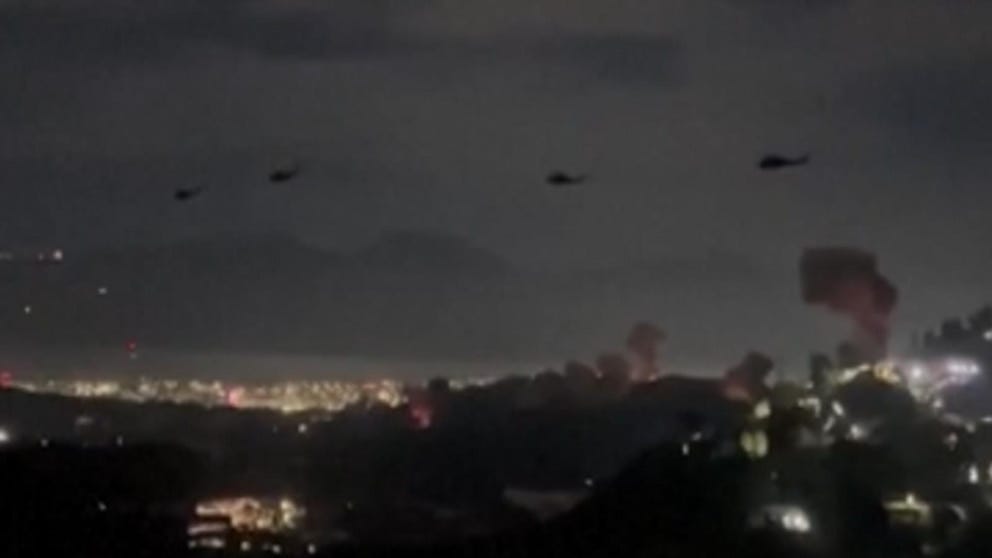
Operation Absolute Resolve
We of course must be cautious in drawing direct lessons from the operation. As a one-off mission that had the benefit of surprise and overwhelming air superiority, US forces had the means to clear a path for the assault package with EW and kinetic strikes. Opposing forces were badly trained, badly deployed, and not even positioned to use the weapons they did have—Russian-made S-300s and Buks were not even tied in to the Chinese-made early-warning radar.
After penetrating Venezuelan airspace, there remained the challenge of protecting the helicopters as they flew over the dense urban landscape of Caracas. Here too, any takeaways must be heavily qualified. The Venezuelan possesses no MANPADS more advanced than third-generation Iglas, which can be defeated by modern flare cocktails. And even with such primitive defenses, the defenders managed to hit the lead CH-47 several times with gunfire, although this was not enough to force a wave-off.
What is more interesting is the role drones played in protecting the raid force. The helicopters appear to have been preceded by a wave of one-way attack drones that neutralized potential threats, and were escorted by drones that struck sources of ground fire. Reactive fire is no protection against the passive targeting of MANPADS, of course, and higher-generation weapons would still pose a danger when facing a stronger opponent.
A Sketch of a Concept
Contemplating such a high-stakes operation against even a modestly capable adversary is enough to make any mission planner blanch. However, that is not to say that a helicopter insert would be entirely out of the question in a less-defended sector. This where I think the future of assault support lies: inserting long-range ground-based fires into the enemy’s unprotected flank or rear in support of major offensives elsewhere. Although extremely risky, this could help redress the imbalance that modern weapons impose on the battlefield.
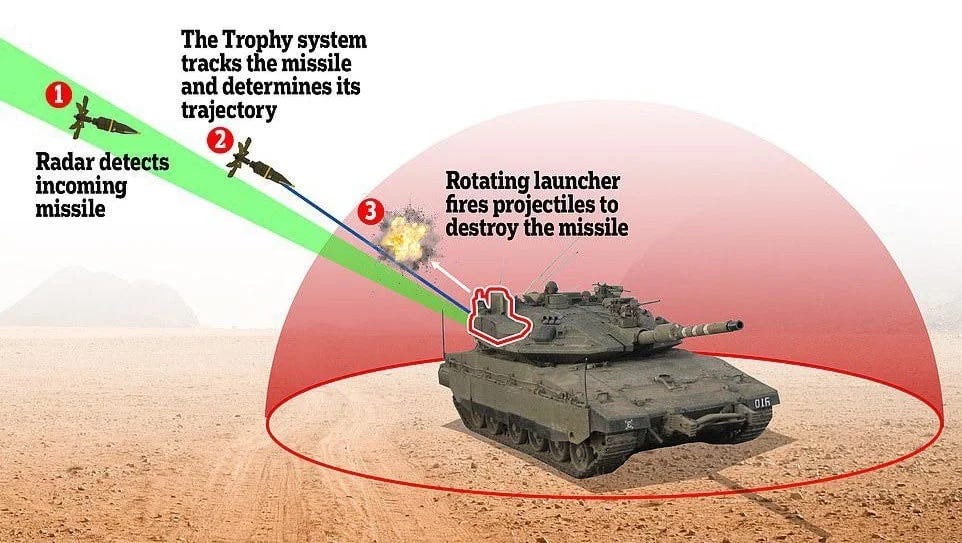
The threat profile for such a mission might look rather similar to what we saw in Caracas. The main air defenses would presumably be suppressed or otherwise occupied during the frenetic opening phase of a conflict, where a pulse of combat power would help neutralize any remaining threat. Even the most remote flight paths would face some sporadic ground fire or MANPADS, of course, although the number of higher-generation MANPADS is bound to be limited—and at any rate, short-range systems cannot provide dense coverage along all avenues of approach. That is only a mitigating factor, of course, and helicopters would still need some sort of hard-kill protection. For that, drone escorts could function like APS on a tank, providing a close screen that intercepts any incoming missiles and suppresses any ground-based gunfire.
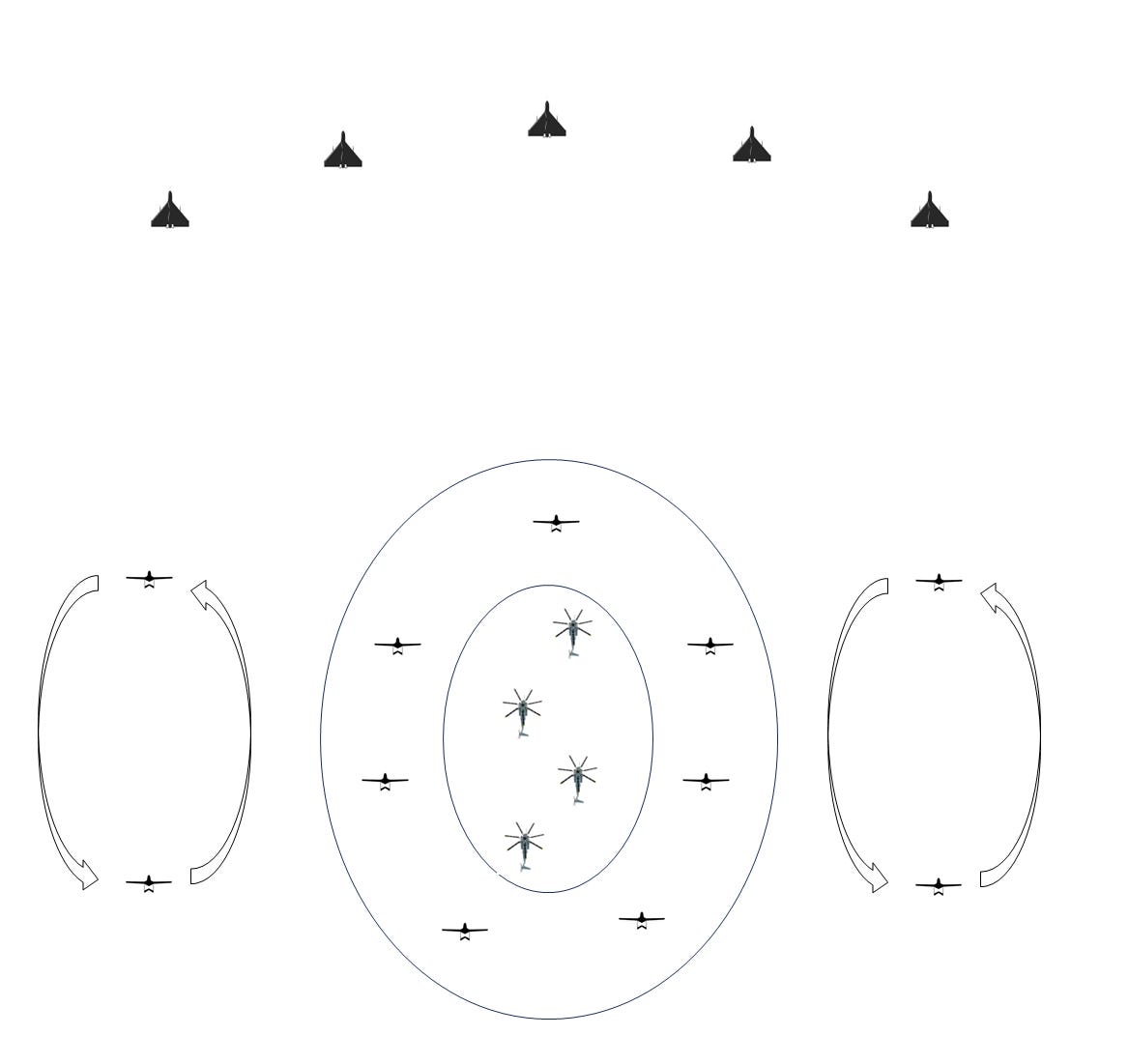
We can imagine what a scheme of maneuver might look like: a wave of one-way strike drones clears a corridor for the assault package, which consists of rotary-wing closely screened by a large number of interceptors, and protected on the flanks by orbiting attack drones to suppress any ground-based gunfire.
Operation Absolute Resolve serves as a very loose proof-of-concept for this, showing how it is possible to employ large numbers of drones in close coordination with a few helicopters embedded in a much larger air campaign, with all the deconfliction headaches that entails. Employing hard-kill systems so close to rotary-wing platforms introduces yet another degree of technical complexity amidst even more congested airspace. Yet all the elements are there, and it may show a way forward.
Thank you for reading the Bazaar of War. Most articles are free for all to read, but a subscription option is available to all who wish to support. Subscribers receive a pdf of the critical edition of the classic The Art of War in Italy: 1494-1529, and will have exclusive access to occasional pieces.
You can also support by purchasing Saladin the Strategist in paperback or Kindle format.
Agree on the concepts .
====
What was glossed over in all the accounts of the Maduro snatch was the role of Cyber and Space command only briefly being mentioned.
This is perfectly just, of course it shouldn’t be public.
It’s still very interesting.