
I was recently at Sekigahara, site of the climactic 1600 battle that led to Japan’s reunification under Tokugawa Ieyasu. This was the largest-ever battle on the Japanese mainland and arguably the most important in the country’s history, yet is little more than a name to most Western students of military history. The battlefield itself is remarkably well-preserved and accessible, so I thought I would give an overview using the photos I took.
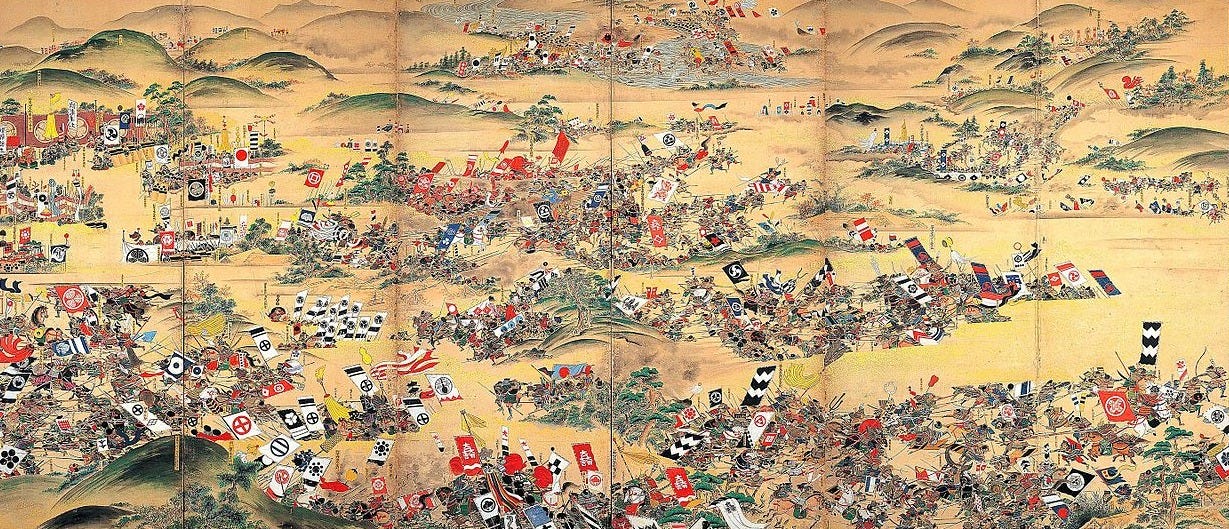
Studying Sekigahara
Two of the biggest obstacles for Westerners learning Asian military history are lack of familiarity with the major political events and with the geography. It is for this reason often easiest to start with individual campaigns. While there is no getting around the complications of a campaign’s political context, which must be embraced to a certain extent (certainly true for those of China’s Warlord Era), focusing on a single campaign provides the best tradeoff between level of detail and external information.
Both political history and geography make Sekigahara an excellent point of entry for Japan. The battle was epoch-defining, marking the end of the chaos of the Sengoku (Warring States) Period, while heralding the relatively peace of the Tokugawa Shogunate, which lasted until 1868. The broad strokes of the campaign were fairly simple, with a number of skirmishes culminating in a major battle at an important pass. Crucially, the battle site itself is well preserved and accessible. Although not pristine—modern development blocks some important sightlines from ground level—the battle took place in a bowl whose surrounding heights offer excellent vistas.
The battle also occurred at an interesting time in Japan. Gunpowder weapons were just becoming widespread in the last half-century of the Sengoku Period. As Tonio Andrade details in The Gunpowder Age, the Japanese rapidly began replicating matchlock firearms after the Portuguese introduced them in 1543, and already by 1575 used them to decisive effect on the battlefield.
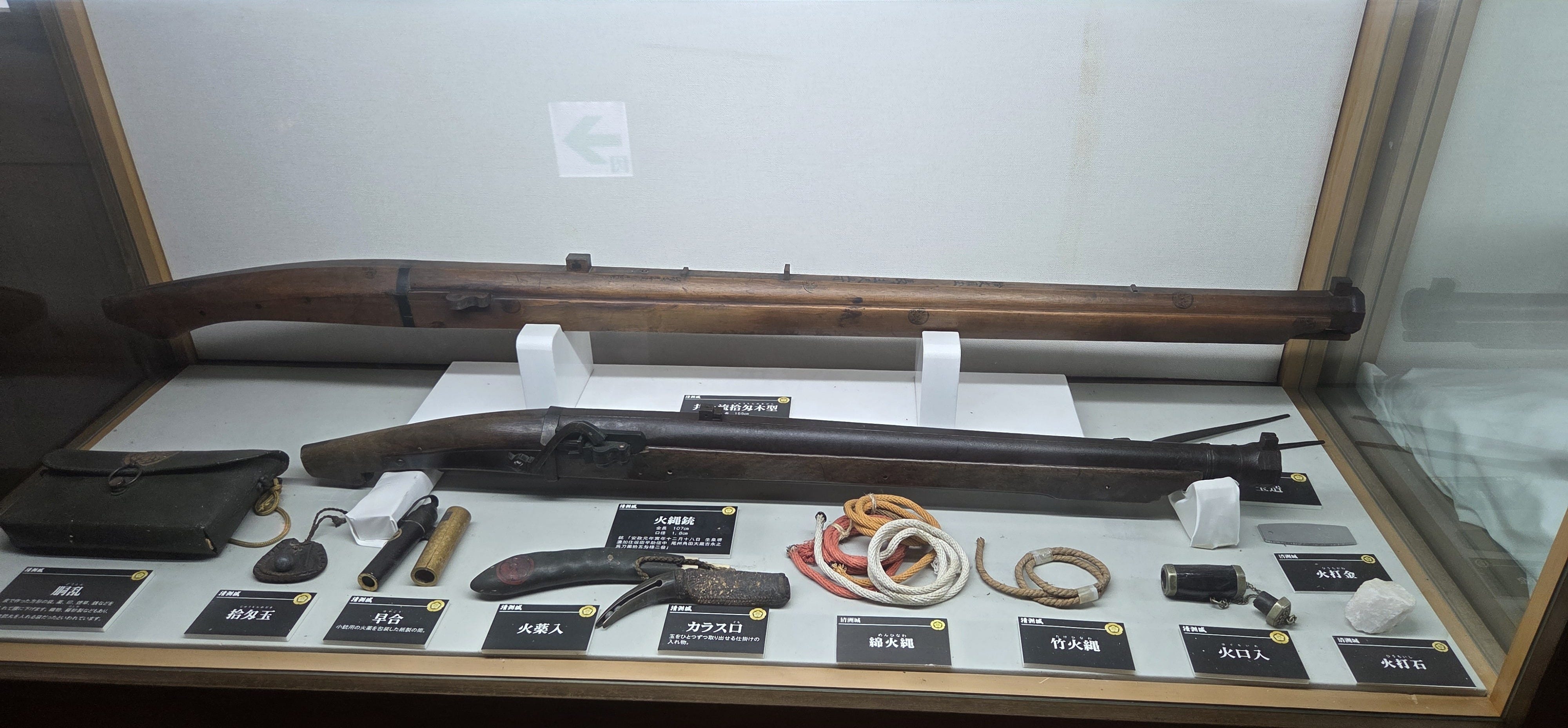
Although combined-arms tactics in East Asia were nowhere as efficient as the system worked out over the previous century in Western Europe, and field artillery did not yet play nearly so large a role, Japanese infantry tactics could be quite complex, employing muskets alongside spears, halberds, bows, and swords. We can see in contemporary depictions one or two ranks of musketeers backed and flanked by archers and melee troops.
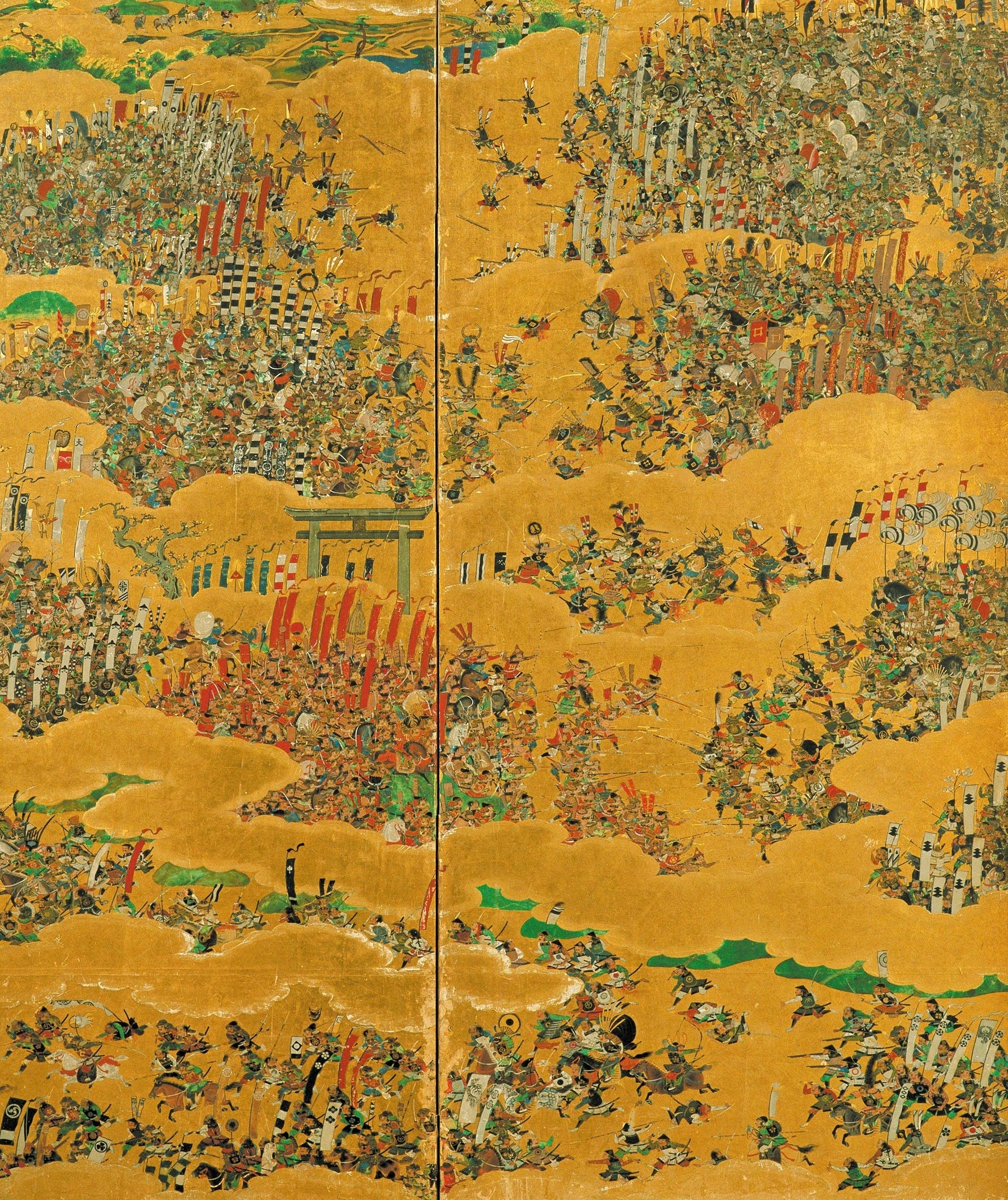
For all that, Sekigahara was not an especially interesting display of tactics. The battle was decided less by battlefield maneuvers than by treachery: a turncoat general surprised his allies with an attack on their flank, causing them to rout. Yet even so, the battlefield is useful for understanding the tactical dynamics of gunpowder-age battles. Several points around the battlefield offer clear views from the vantage of different commanders. These allow us to imagine the tempo of the battle as it unfolded over several nerve-wracking hours, putting us in the mind of those generals as they waited on events outside their control—the tentative first moves, the back-and-forth of frontal assaults, the sudden shock of a flank attack.
Background
Japan had been in a state of constant turmoil since the 1460s, when the weak Ashikaga shoguns—nominal rulers of the country—began losing their grip. Political power fractured around the major daimyo, or feudal lords, who maintained power bases built around their domains. The endemic civil wars that ensued gave this period its name: Sengoku literally means Warring States, in imitation of the more famous Chinese period.
A series of powerful warlords began to reverse the tide beginning in the 1570s, winning over the loyalty of many daimyo and exacting submission from others. When the second such warlord, Toyotomi Hideyoshi, died in 1598, his son and designated successor was still a child. Knowing that this would threaten to spark a new round of civil war and dissolve the hard-won unity, just before his death Hideyoshi put in place a five-man regency council to govern until the boy reached majority.
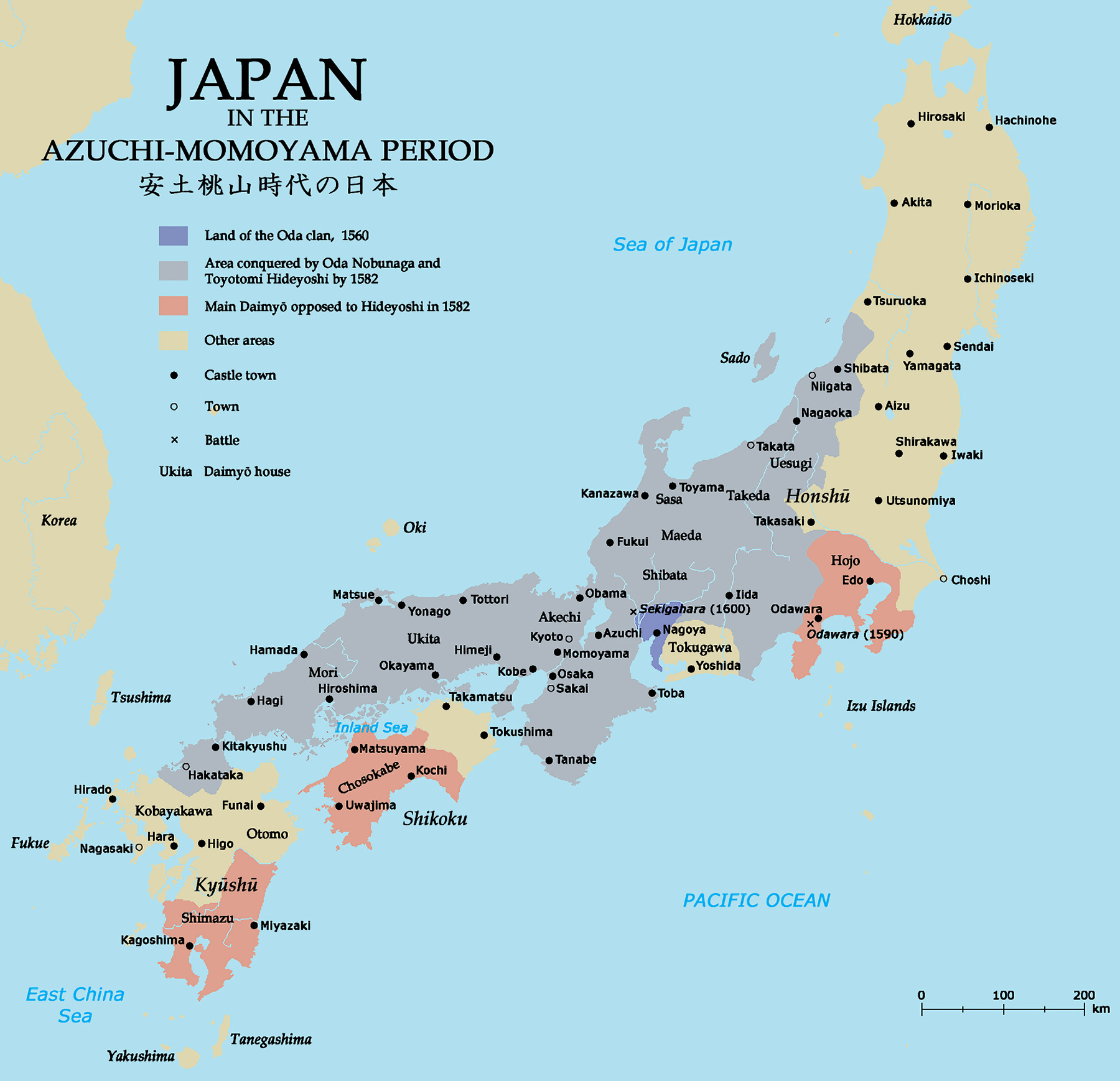
Among the councilors was Tokugawa Ieyasu, one of Hideyoshi’s most trusted retainers and the most powerful daimyo in Japan. He quickly assumed effective control of the regency and hence the country. This aroused the jealousy of his several of his fellow regents and of another five-man council: the Five Commissioners. This was an administrative body established under Hideyoshi which ran the day-to-day administration of the area around Kyoto (the official capital and seat of the emperor) and Osaka (Hideyoshi’s administrative capital).
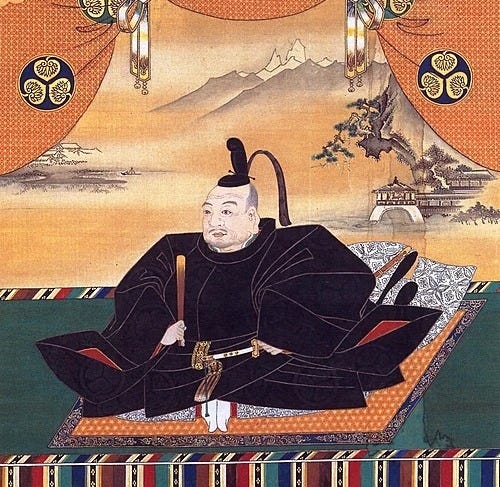
His enemies soon saw an opportunity to strike. In July 1600, Ieyasu marched north on a punitive expedition against a defiant daimyo. While he was at his feudal seat of Edo (modern Tokyo), mustering troops for the upcoming campaign, one of the Commissioners, Ishida Mitsunari, gathered several discontented daimyo to plot against their rival. On 17 August, the conspirators entered Osaka Castle and declared their own guardianship of Hideyoshi’s young son. They then issued a set of charges against Ieyasu, accusing him of usurpation, and summoned him to trial.
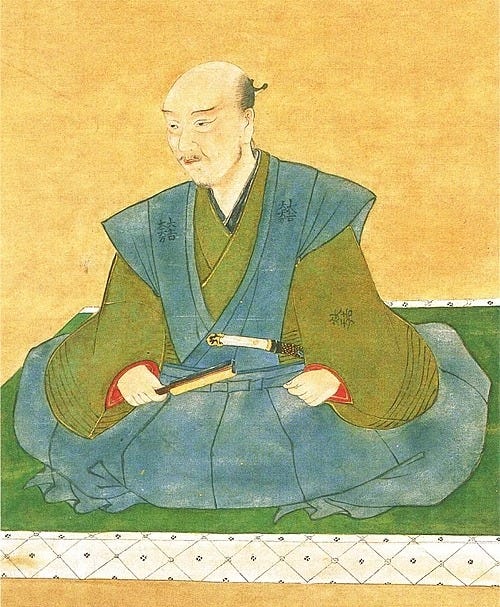
The conspirators did not sit on their hands and wait for Ieyasu to respond, but instead took the initiative. They already had a strong base of power in the Kyoto-Osaka area, and immediately set to conquering the few strongholds of Ieyasu’s allies in the area.
The Campaign
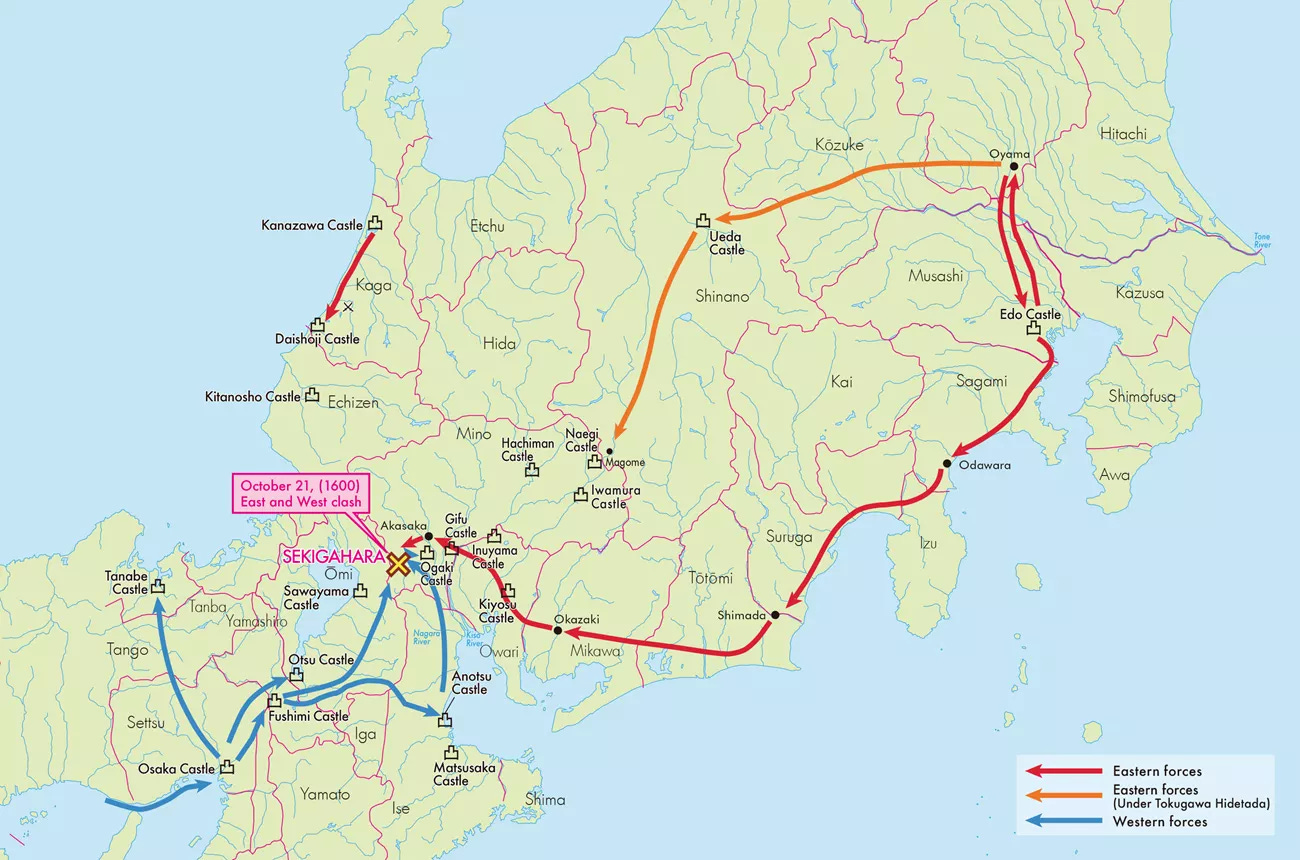
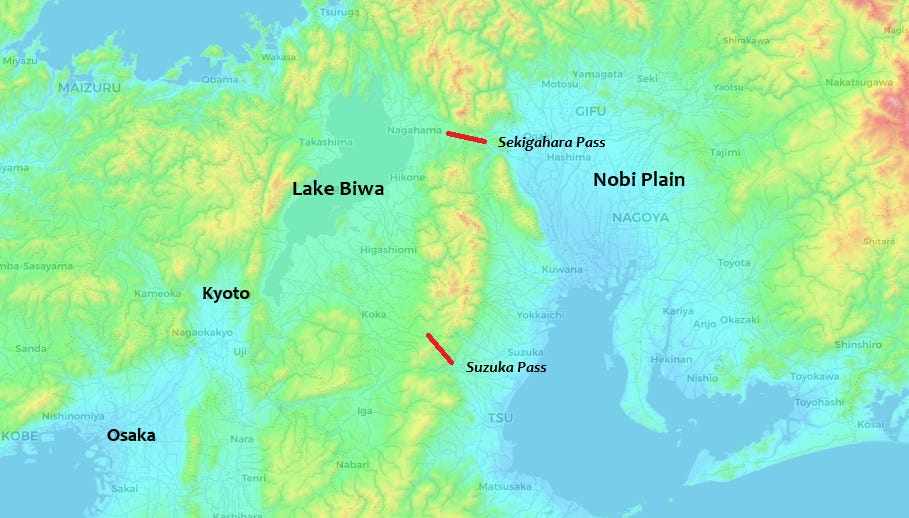
The conspirators knew that Ieyasu would soon march back toward Osaka. Japan is a very mountainous country, leaving only two practicable routes for his large army. Both ran across the Nobi Plain, the large alluvial plain where modern-day Nagoya sits, and where he had many supporters. From there, parallel routes ran through two separate passes to Lake Biwa and thence through a single pass to Kyoto and Osaka beyond. Mitsunari and his allies—what we call the Western Army—controlled castles in front of each of the Biwa passes, allowing them to challenge Ieyasu’s Eastern Army on the Nobi Plain itself.
Mitsunari arrived at the northern of these, Ogaki Castle, in mid-September. Ieyasu had many allies in the region, and for the next two weeks, Mitsunari’s forces faced off with them across the Kiso River. The Western Army had detachments distributed in a chain of fortresses on their side of the river, which cuts through the western half of the plain. At the very end of the month, 35,000 Eastern Army troops—effectively serving as Ieyasu’s vanguard—stormed across the river and captured the strong Gifu Castle before the rest of Mitsunari’s scattered detachments could muster. This gave them an excellent base of operations for attempting to storm the northern gap.
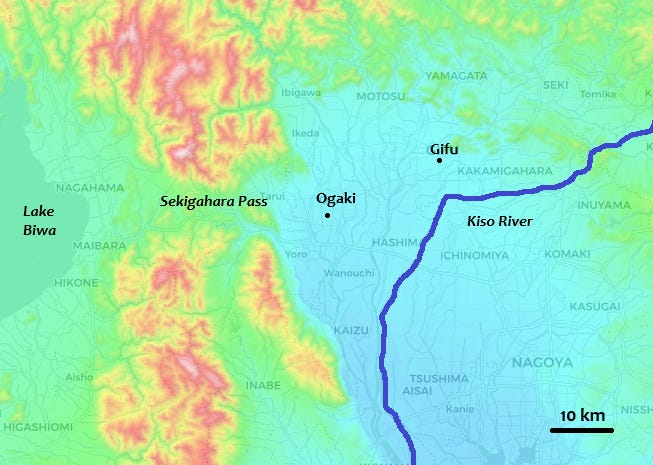
On 7 October, Ieyasu left Edo with all the forces he had mustered for his original campaign. He reached Gifu on the 19th, and on that same day his vanguard captured a small fortress 5 km north of Ogaki. The following day he joined the vanguard northwest of Ogaki near the entrance to the gap. This brought the Eastern Army to a strength of nearly 90,000, around what the Western Army had on hand; Ieyasu was now in a position to outflank his enemy and him cut off from Osaka.
The Battle
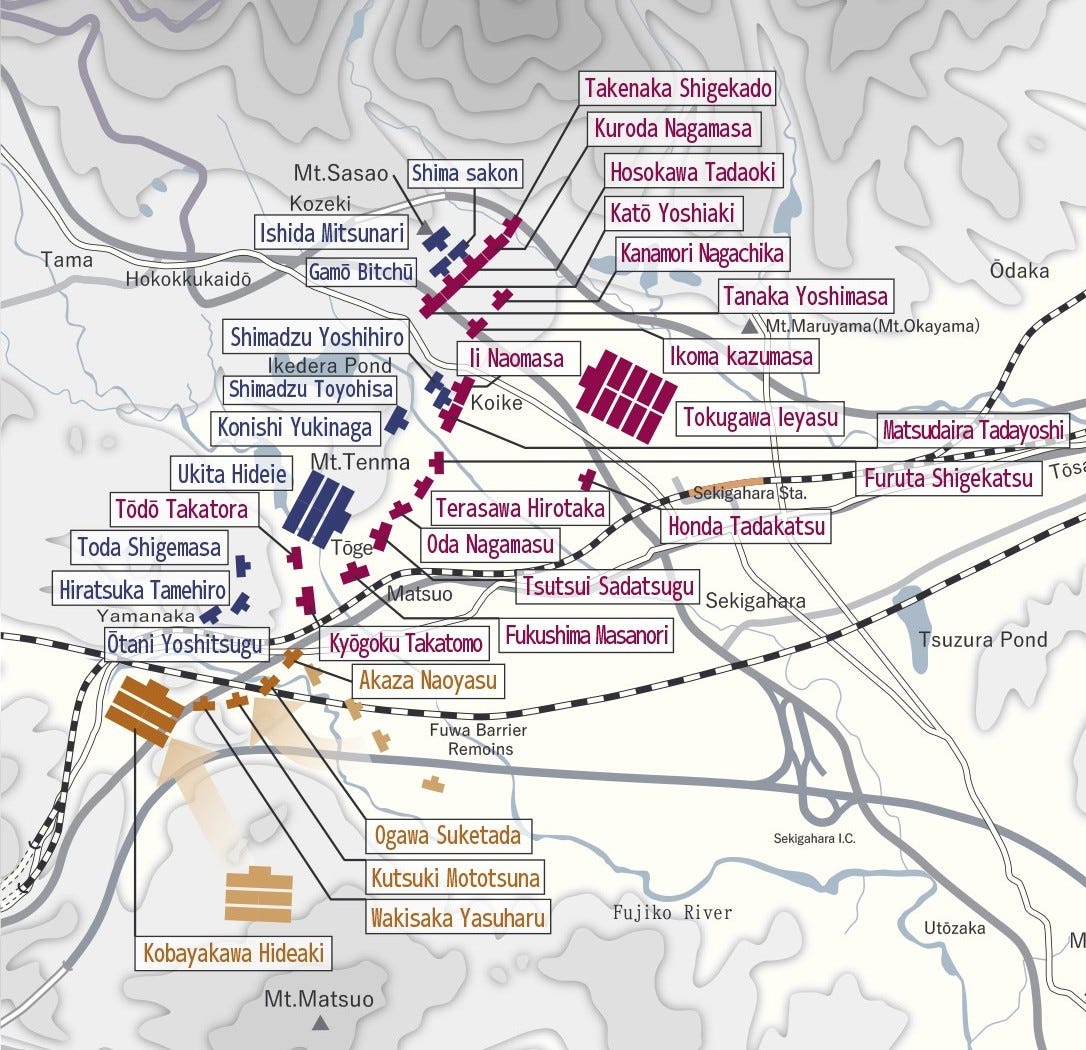
The Sekigahara Pass is shaped like an hourglass with a complex of mountains rising in the middle of each mouth. This creates a northern and southern entrance at each end of the pass and a bowl in the center. Two roads ran diagonally through these four gaps, intersecting around Sekigahara itself—a cluster of houses oriented along the northeast-southwest road. Just after dark, Mitsunari marched his army in silence through driving rain through the southern entrance, continued past Sekigahara, and occupied a position on the western slopes of the bowl.
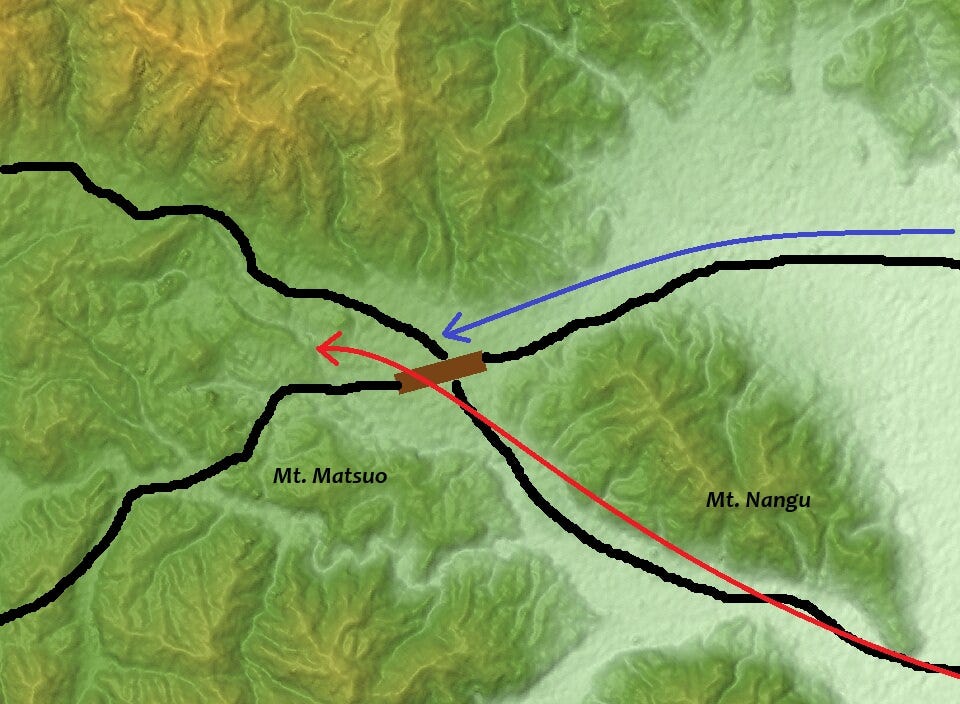
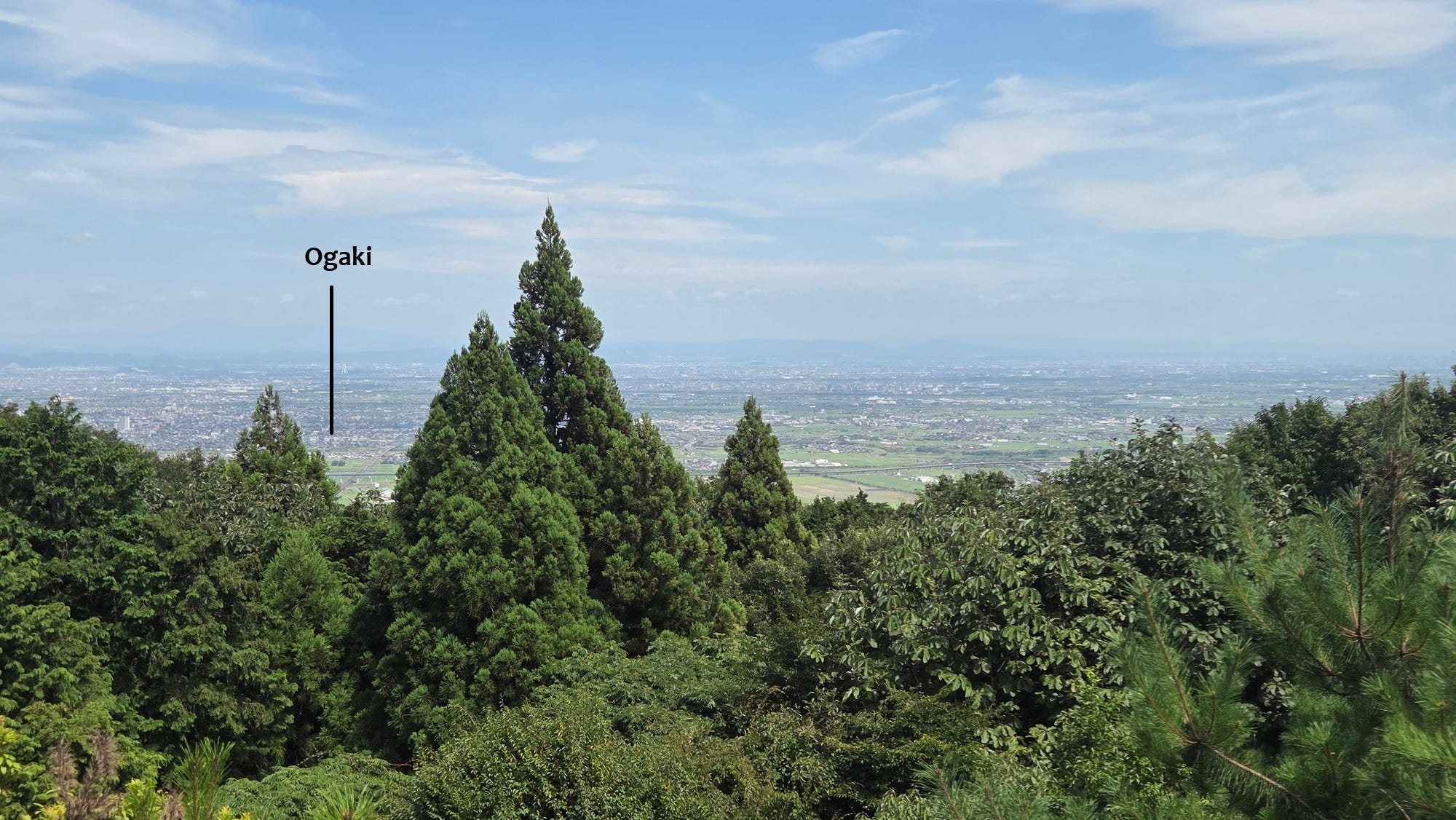
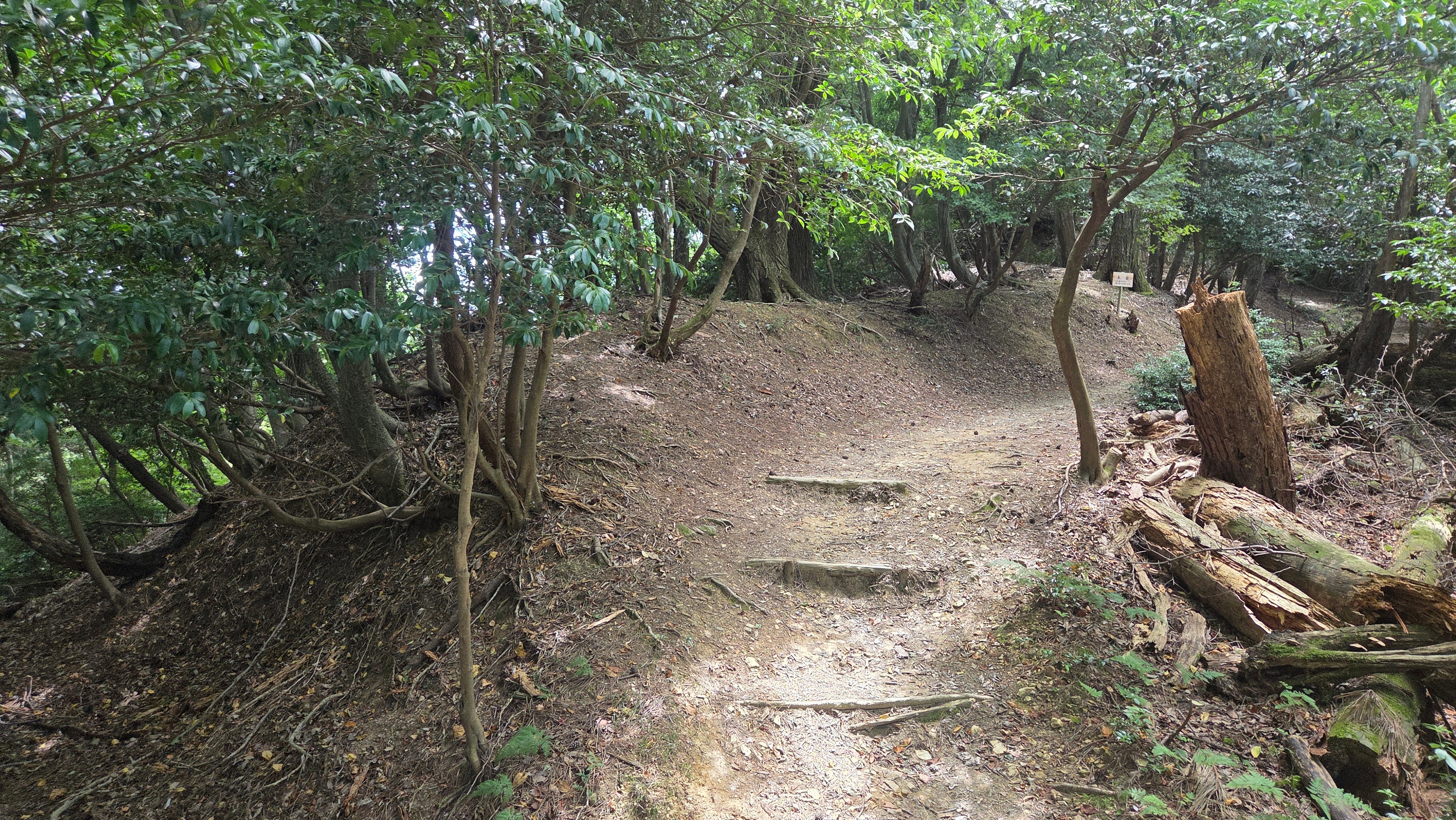
He left behind two major contingents: 7,500 to garrison Ogaki, and some 29,000 on and around Mt. Nangu, which overlooks the eastern approaches to the pass. The latter troops had occupied and fortified the heights a week before, serving as a lookout for events in the Nobi Plain. Now they served as a rearguard, positioned to guard Mitsunari’s communications with Ogaki or fall upon Ieyasu’s rear if he advanced.
The Eastern Army soon caught wind of this displacement and followed suit around in the early hours of the 21st. They advanced in three corps along the northern route: a 45,000-strong vanguard, Ieyasu’s 30,000-strong main body, followed by a rearguard of some 14,000. The northern road was much shorter than Mitsunari’s circuitous route, and before dawn the Eastern Army vanguard ran into the Western Army rearguard around Sekigahara itself. After a brief skirmish, these troops disentangled themselves: the Mitsunari’s men continued west, while Ieyasu’s men established their own positions west of the village.
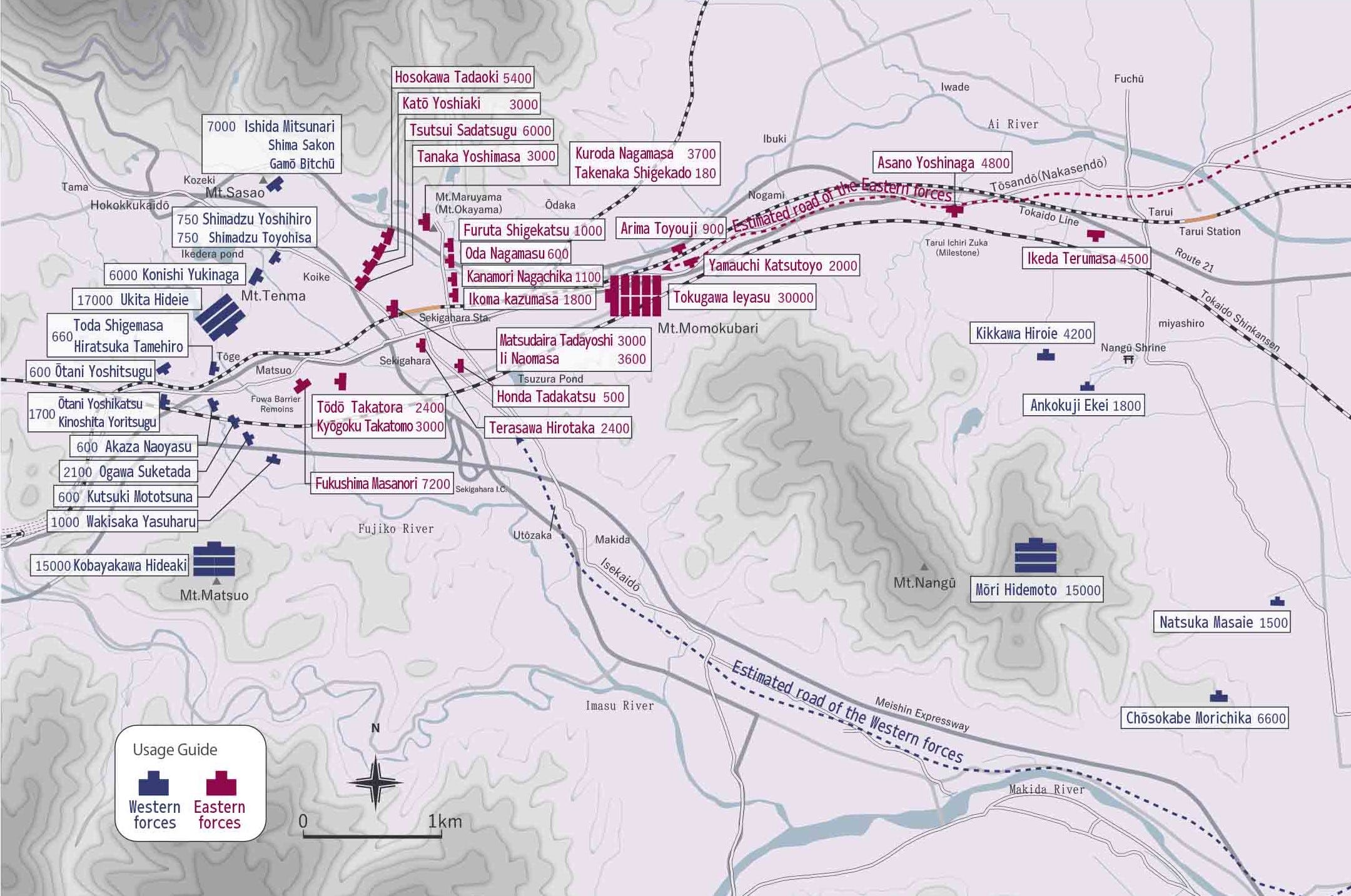
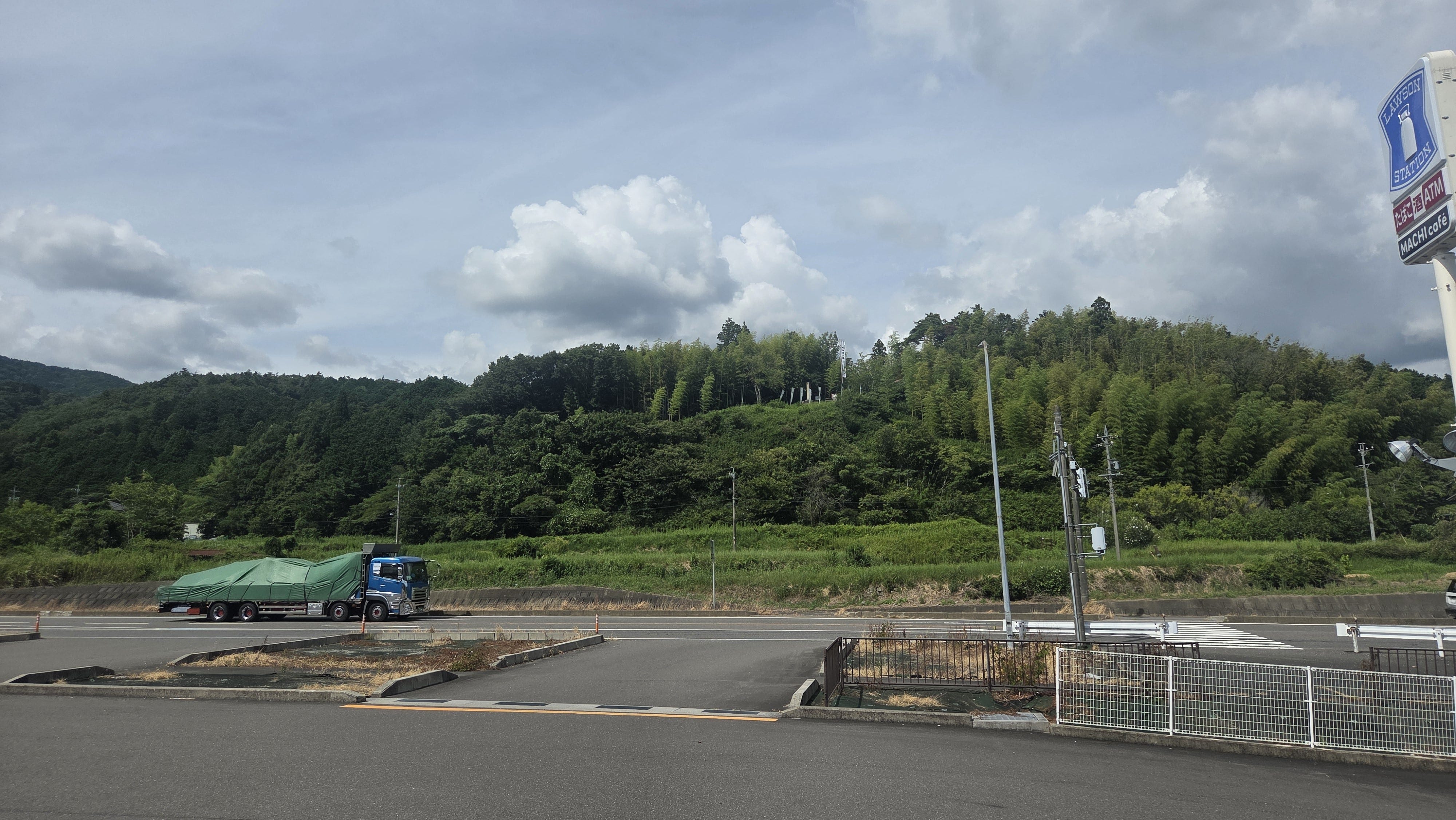
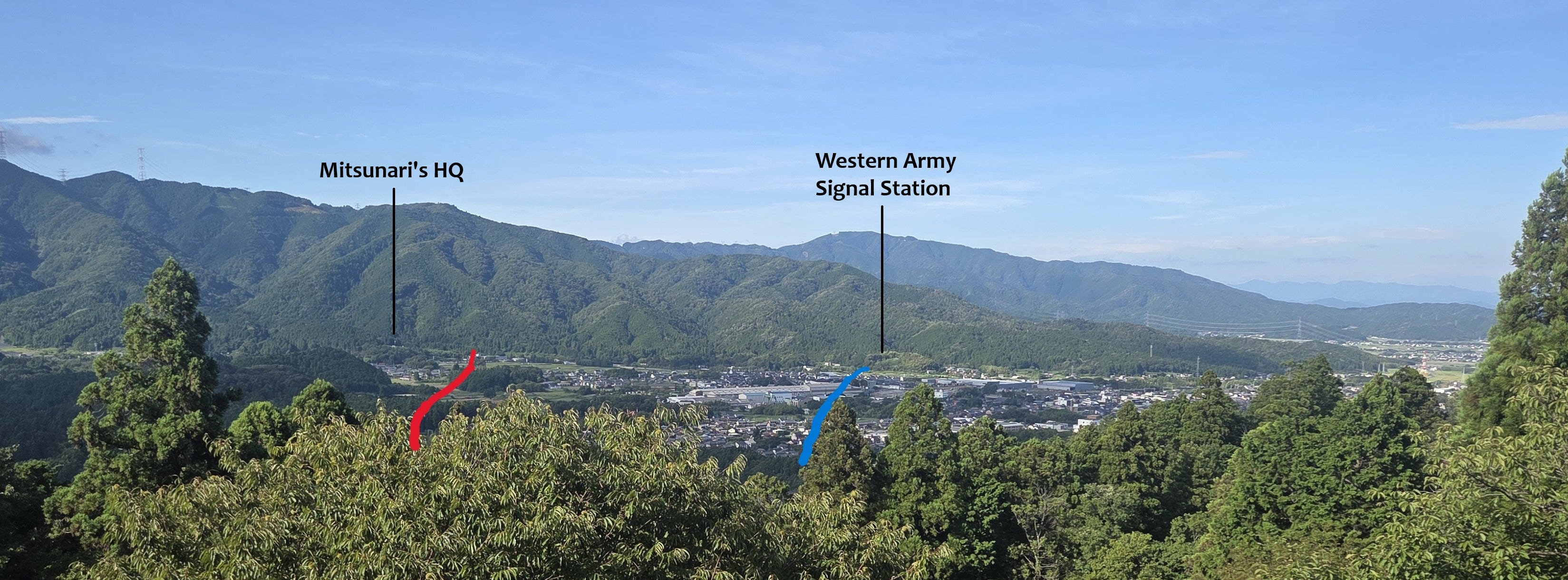
The Eastern Army vanguard was in position around dawn. The bulk of them were drawn up in the open fields between the mountains to their north and the western end of Sekigahara. It is hard to tell their exact dispositions, but they probably formed up in two lines, with several other detachments guarded the flank south of Sekigahara. A detachment occupied Okayama Hill on their right, which served as a signaling station to the rest of the army.
Ieyasu followed behind with the main body and set up his headquarters on the slopes of Mt. Momokubari, the westernmost peak on the eastern mountain complex, giving him as good a view of the battlefield as possible in the early morning fog. The rearguard was left strung out on the road behind him, keep an eye on Mt. Nangu.
The previous day, 15,000 men under Kobayakawa Hideaki had arrived in the area, occupying earthworks on Mount Matsuo, a peak on the southern rim. Mitsunari deployed his main force between the base of that mountain and a foothill to the northern mountains, forming a crescent about 2 km tip-to-tip. This gave him an extremely strong position, giving him the high ground and controlling both western exits from the pass.
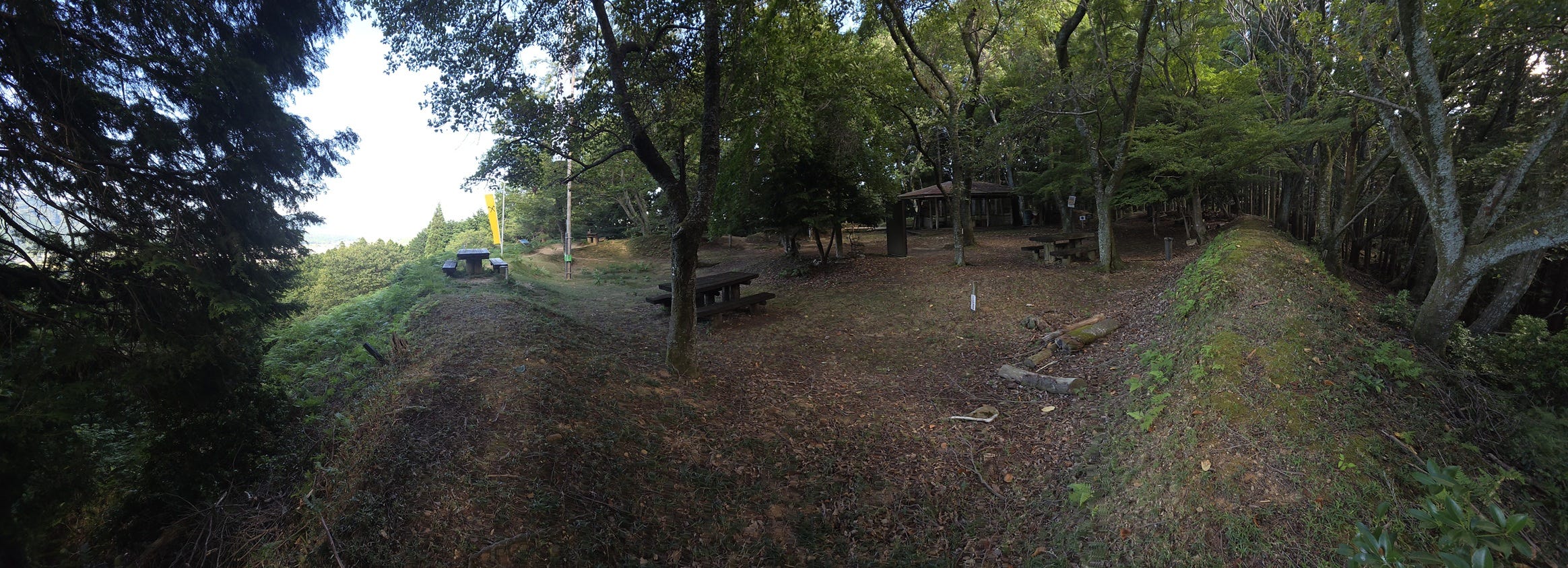
Mitsunari set up his headquarters on Mt. Sasao, a hill behind the left of the Western Army line, just a kilometer from the enemy’s signaling station. He had many of his most loyal allies around him.
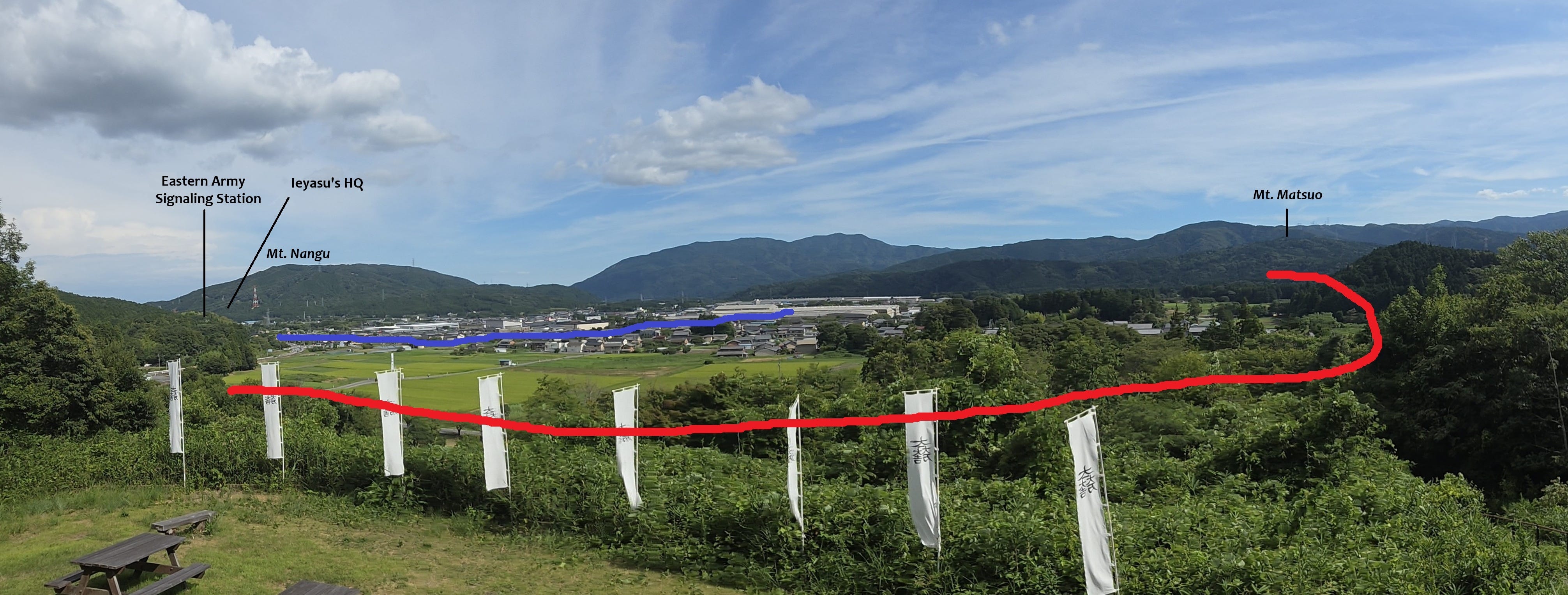
In the center, Ukita Hidei’s 20,000 troops formed the strongest contingent on the slopes of Mount Tenma, the eastern edge of the western mountain complex. On the right, Otani Kashikatsu troops were lined up beyond the Fujiko Stream, which flows through a ravine cutting across the southwest corner of the battlefield.
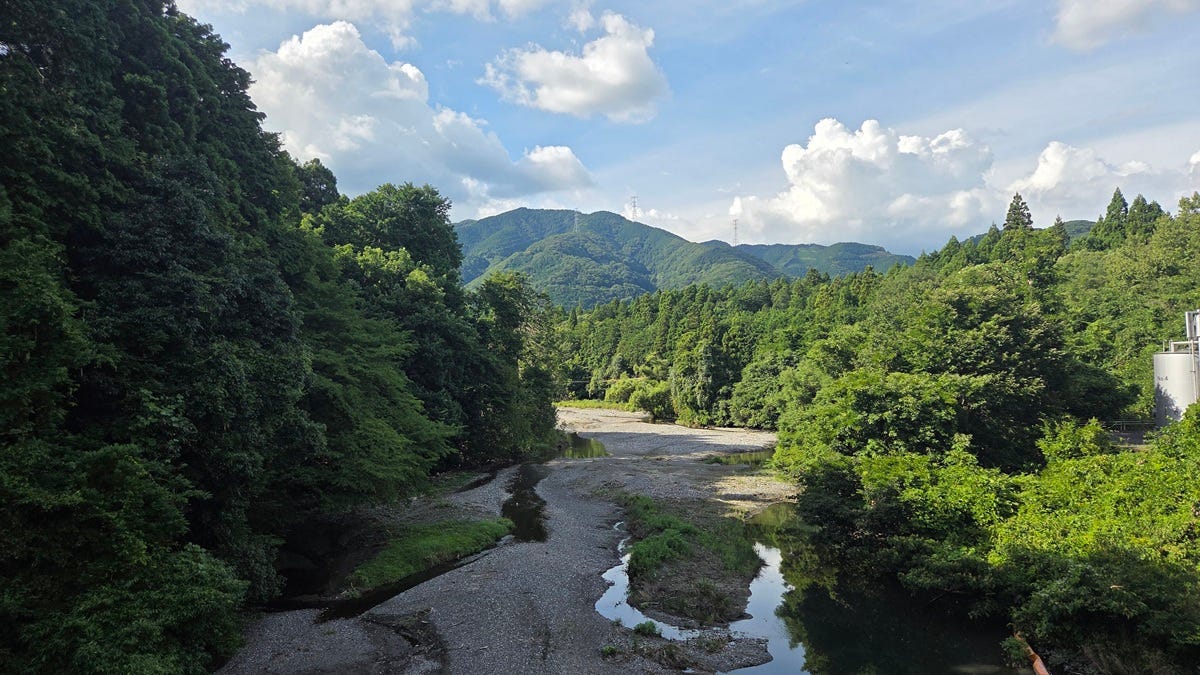
What made Ieyasu willing to chase after an enemy in so strong a position with another enemy detachment to his rear? Although the Western Army was a formidable force, it was far from unified. Mitsunari had alienated many of his own supporters, some of whom had been coerced into joining his conspiracy in the first place. Several among them reached out to Ieyasu over the preceding weeks, offering him their loyalty.
Key among them was Hideaki, whose 15,000 men occupied the heights above Mitsunari’s southern flank. He, along with several lesser commanders on the Western Army right, promised to attack Mitsunari once the battle began. Another commander in the rearguard promised to prevent his corps from interfering. Nevertheless, Ieyasu must have felt considerable anxiety as he advanced toward Sekigahara.
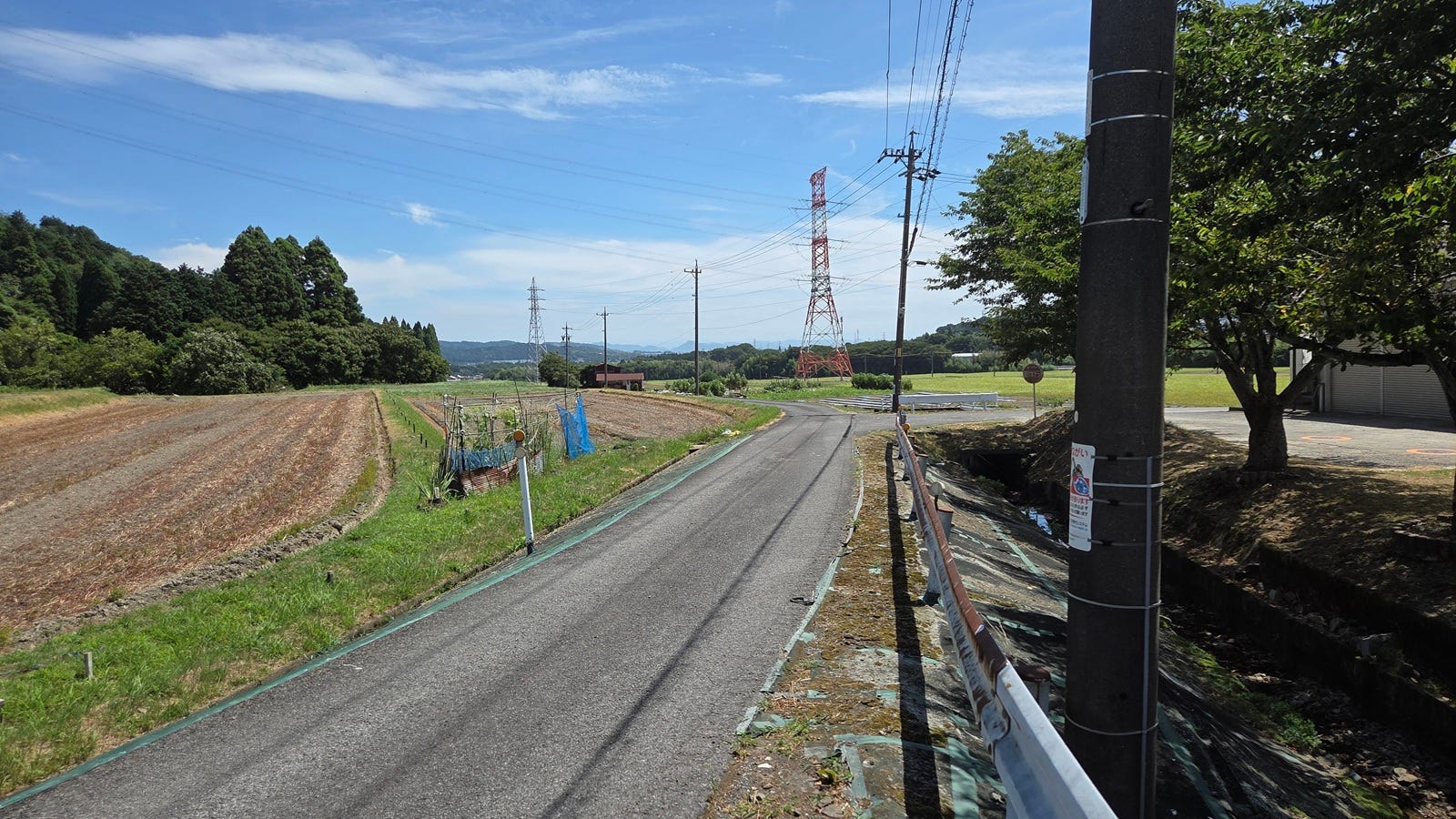
The Battle Opens
Both armies were tired after a long and difficult night march, but were determined to give battle that day. The Western Army was in a good position, leaving it to Ieyasu to initiate the fighting. Thick fog hung over the field from the night’s rain, making it difficult to attack until it cleared up after dawn.
The precise timing was determined by a dispute over precedence. The right to attack first was a point of high honor among the daimyo, one which Ieyasu had accorded to Fukushima Masanori, who had led the attack on Gifu Castle.
However, Ii Naomasa, a longtime Tokugawa ally who jointly commanded a contingent with Ieyasu’s fourth son, felt the honor belonged to him. Around 8 a.m., he led thirty spearmen into the dissipating fog to reconnoiter the enemy’s position. He soon clashed with Western Army skirmishers before dashing back to his lines. At this, Masanori charged forward with his own 6,000-man contingent to attack Ukita Hideie’s 16,000 men in the enemy center. The signaling station on Mt. Okayama gave the order for a general advance and the battle began.
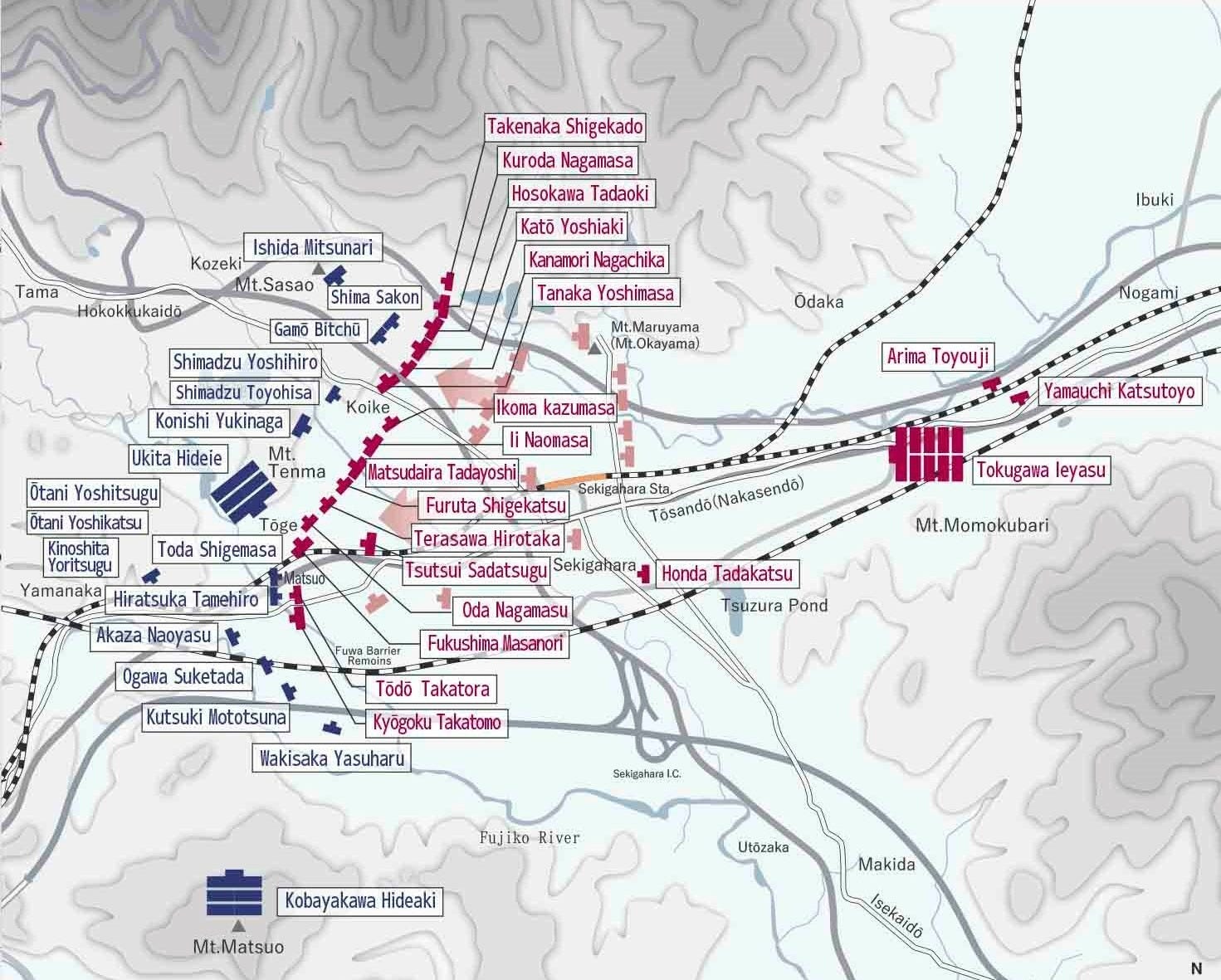
In the north, the Eastern Army right tried to wrap around the Western Army left, but they were held off by Mitsunari’s men, who had the advantage of the high ground.
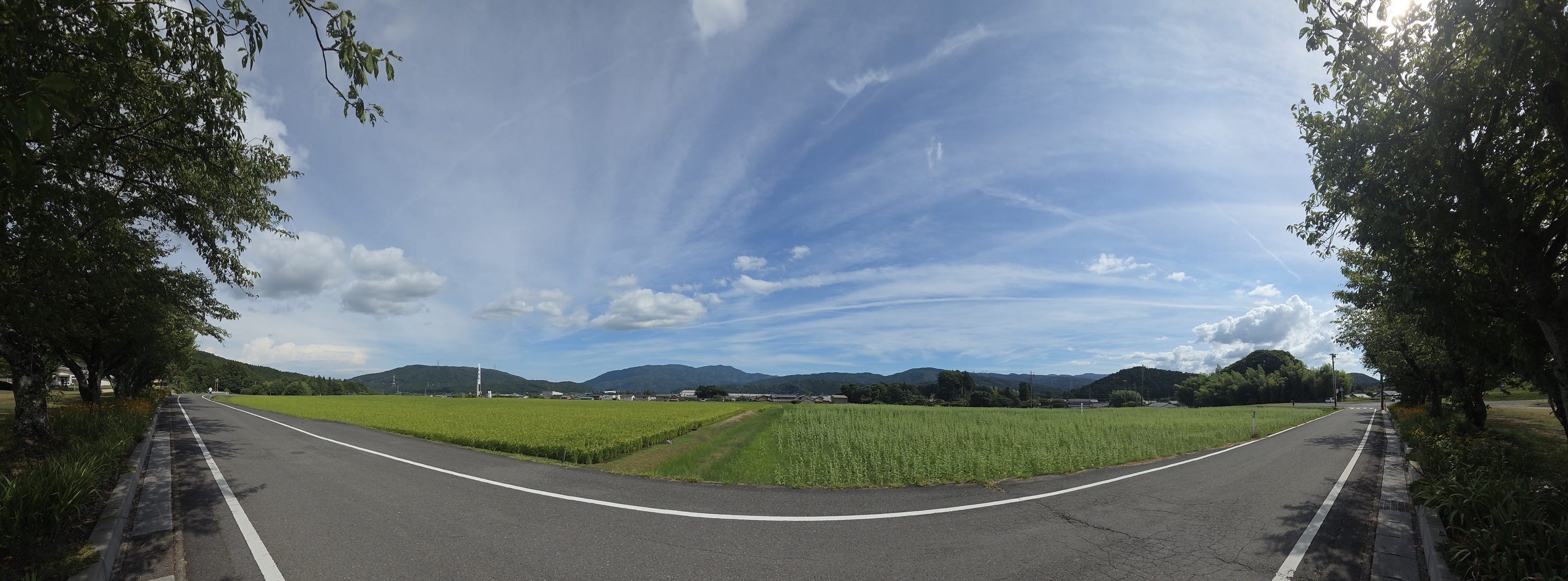
In the center, Hideie’s massive contingent and several smaller neighboring contingents held back the Eastern Army tide from the slopes of Mt. Tenma.
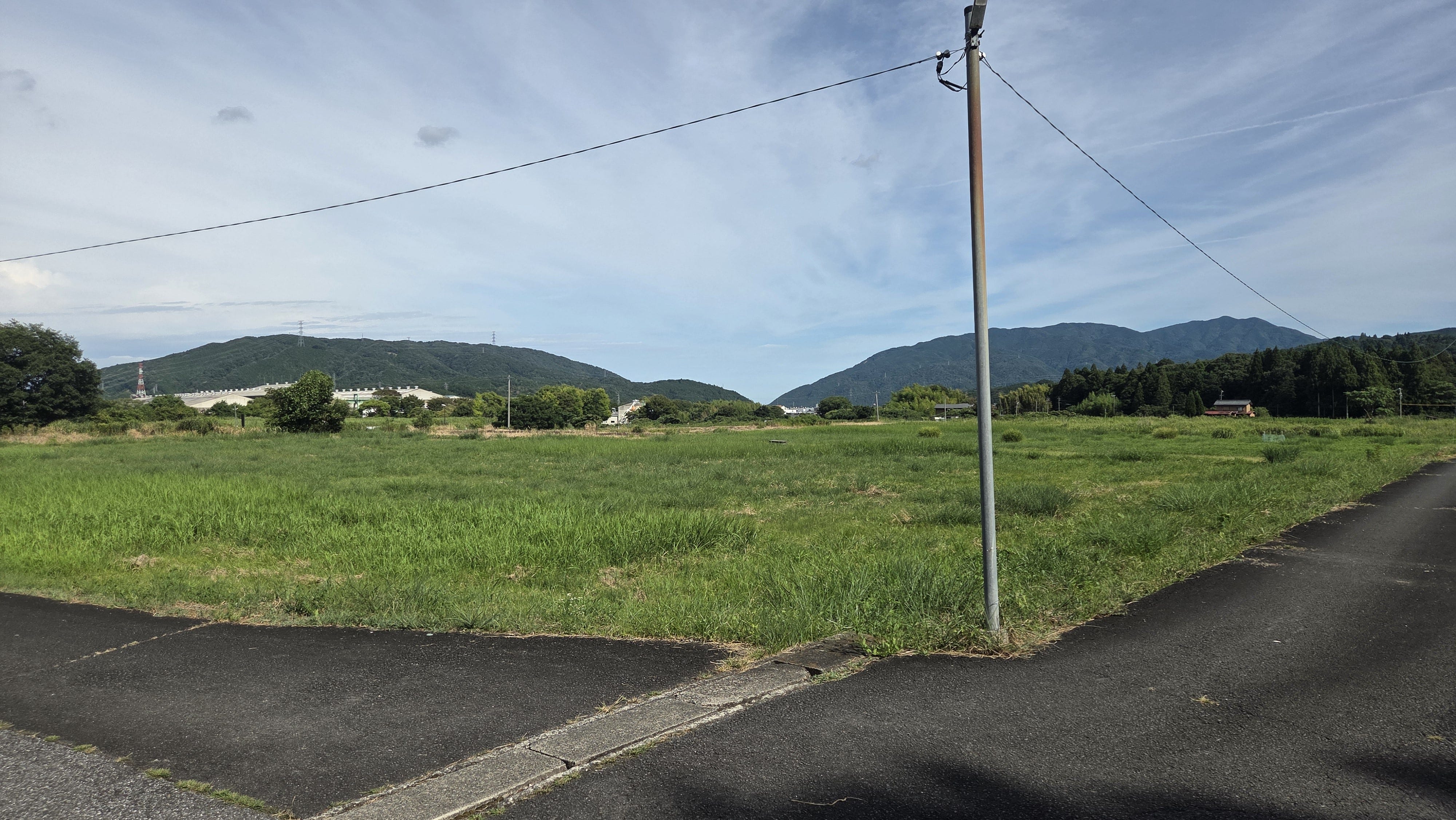
Otani Yoshitsugu came forward with some of his troops from the right to protect Hideie’s flank and himself became hotly engaged. The rest of his sector—over half the troops on the right—remained behind the Fujiko, where Western Army troops made no effort to engage them. This may have been deliberate: one of the commanding daimyo had been in correspondence with Ieyasu prior to the battle and would betray Mitsunari later that day.
Ieyasu Commits
Throughout the mid-morning, Eastern Army troops repeatedly surged forth against enemy lines and fell back in turn. They likely possessed a greater number of firearms, but their effectiveness was reduced by the damp weather. Ieyasu observed the action from his hilltop headquarters with mounting anxiety. He was too far away to control his army, and worried that his front lines would give way. Around 10 a.m. he advanced 2 km with his main body to provide support.
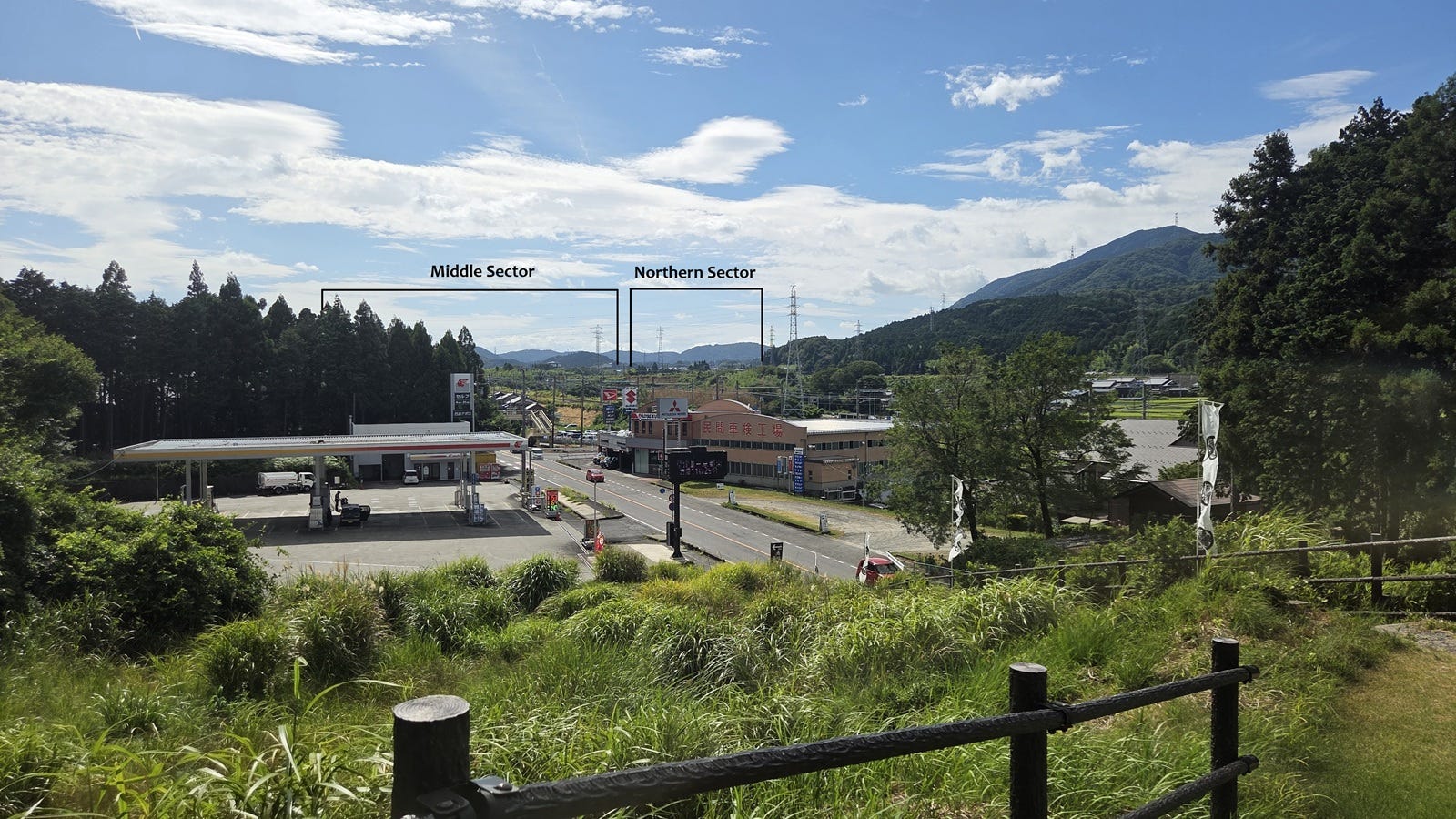
This was the moment that Mitsunari had been waiting for: with the entire Eastern Army committed, he could now spring his trap. Around 11 a.m., he ordered a signal fire to be lit on his hilltop headquarters—the sign for Hideaki to fall upon Ieyasu’s left and for the rearguard to advance upon Ieyasu’s rear.
The Betrayals
Hideaki had been watching the action all morning. He had a clear view of both armies’ signaling stations and practically their entire lines. It is not quite clear what prevented him from attacking right away. Perhaps he was genuinely undecided over which throw his weight behind, perhaps he wanted to see which side was winning before entering the fray; whatever the reason, he remained fixed in place on Mt. Matsuo for the time being. Mitsunari desperately tried to contact Hideaki to urge him to move, but to no avail.
Unbeknownst to the Western Army commander, he was simultaneously facing another betrayal. 6 km to the east, his rearguard on the slopes of Mt. Nangu had been skirmishing with the Eastern Army rearguard all morning. When they saw the smoke signals rising to the west they began moving to the attack, but were blocked by the lead element. Its commander had felt slighted by Mitsunari and secretly wrote to Ieyasu promising that he would keep the Western Army rearguard out of action. When the order to move came, he kept his men in their encampment along the narrow road and refused to budge, immobilizing the rest of the rearguard.
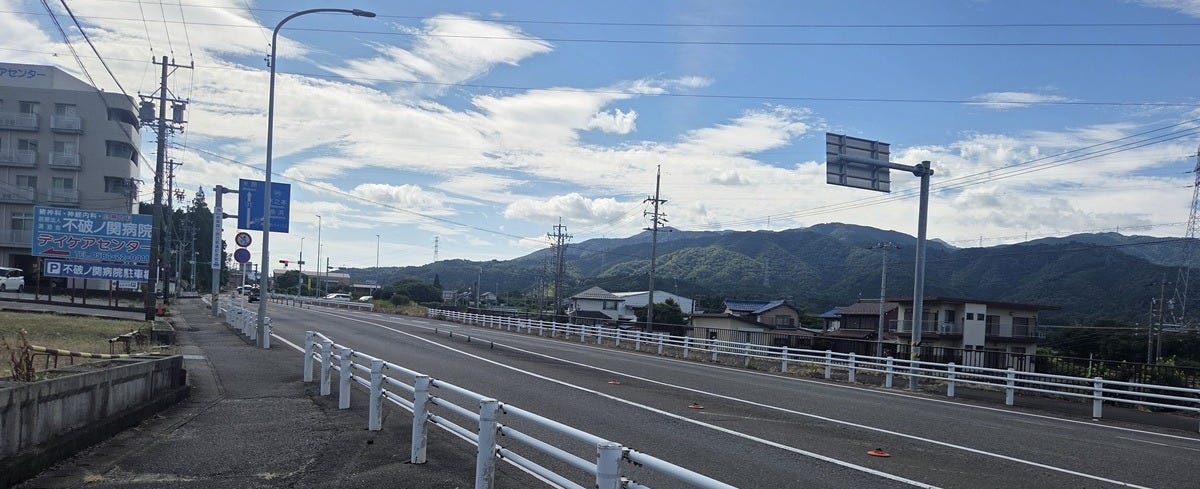
Around noon, Hideaki finally ordered his forces down the mountain. Instead of leading them to the northeast, around the Western Army right to envelop Ieyasu’s flank, he led them northwest—straight at Mitsunari’s line.
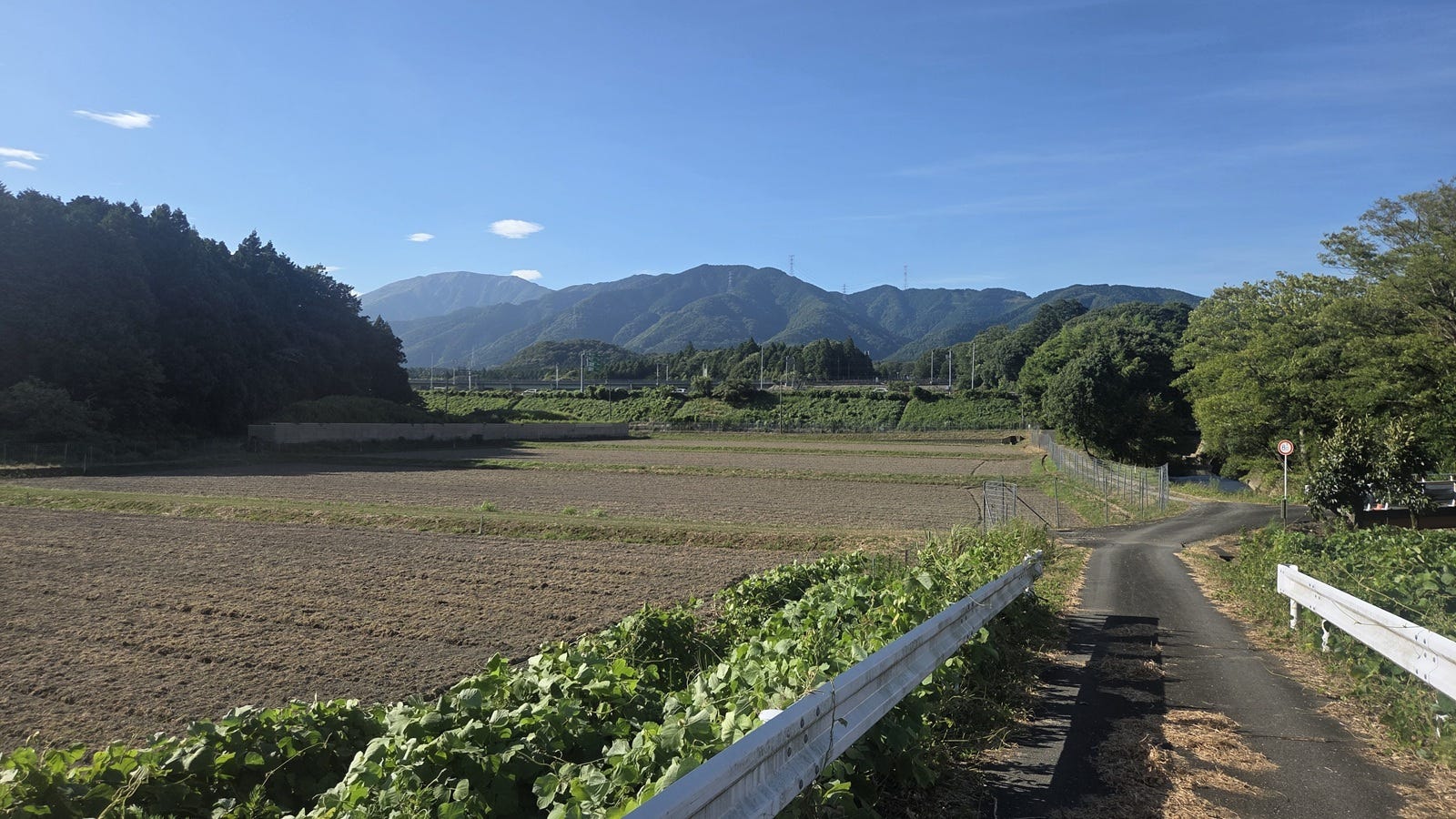
Otani Yoshitsugu, from his position commanding the right, had noticed Hideaki’s earlier passivity and suspected treason. When he saw Hideaki’s banners streaming down the mountain in his direction, he was prepared: he withdrew his flank and met the oncoming attack.
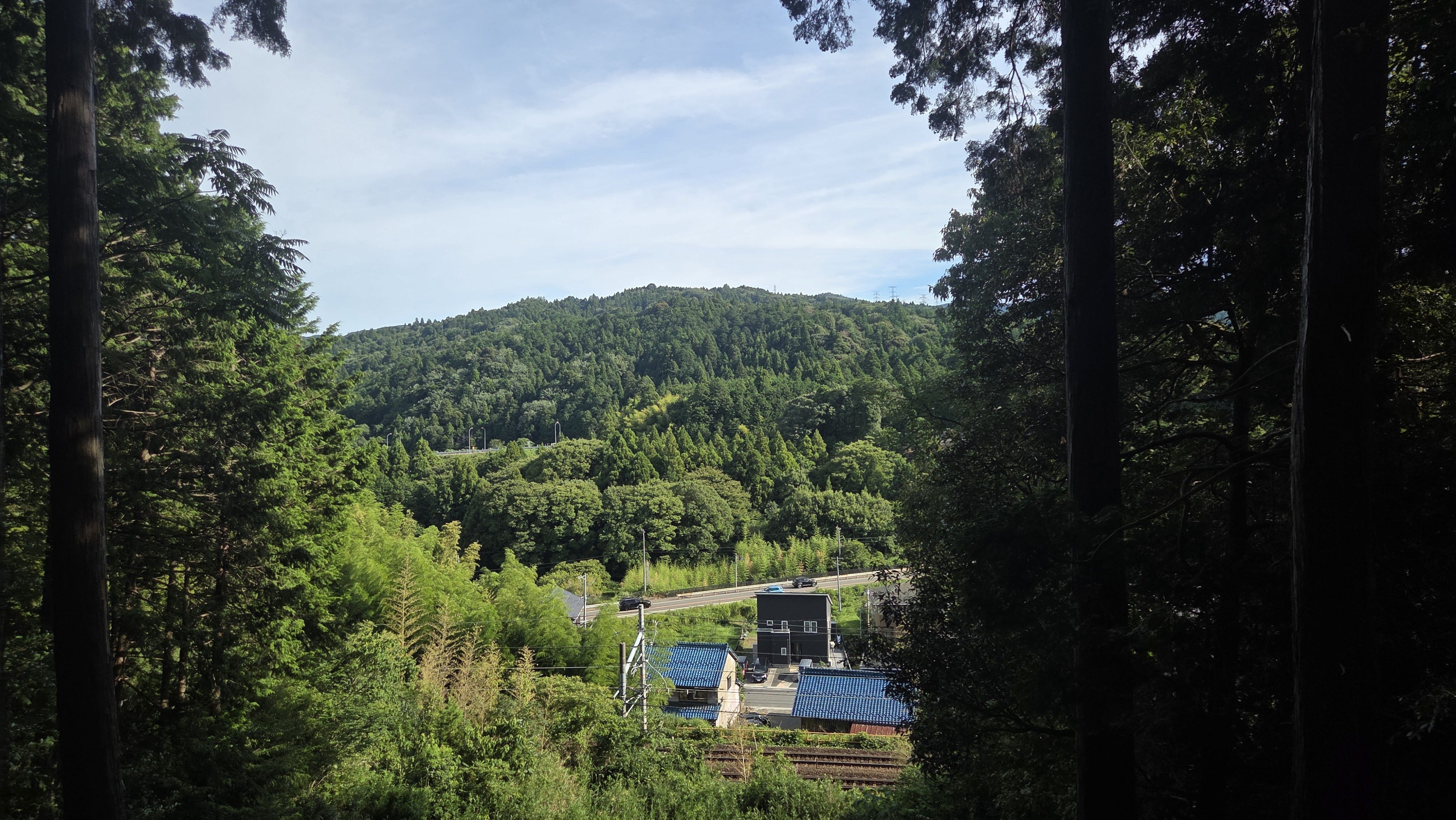
Yoshitsugu put up valiant resistance, but was quickly overwhelmed by Hideaki’s much larger force barreling down. At this, the four commanders at the far end of the Western Army’s right, who had been unengaged on the south side of the Fujiko, changed sides (it is not clear whether all of them had premeditated this betrayal, but at least one of them had been in correspondence with Ieyasu). The turncoats fell in on Hideaki’s right and began rolling up the rest of the line. By 2 in the afternoon, the Western Army had completely dissolved.
Aftermath
The Western Army commanders suffered for their defeat. Most of those who did not die on the battlefield were captured and executed, although a few—such as Ukita Hideie and the commander of the rearguard—merely had their estates confiscated. The Sekigahara Campaign was only one part of a broader war, and Ieyasu’s allies spent the next few months mopping up. In 1603, he followed a long Japanese tradition of claiming the title of shogun, the supreme military leader who governed in the name of the emperor. He moved Japan’s administrative capital to his own feudal seat at Edo, renamed Tokyo in 1868 after the fall of his dynasty.
The violence of the Sengoku Period was not yet over, but Sekigahara marked an end to the worst of it. In 1614-15, Ieyasu fought Hideyoshi’s heir—his nominal ward—besieging Osaka Castle to remove the last possible check on his power. The next 250 years were a period of remarkable peace and stability. Only a few samurai rebellions interrupted the calm until the Meiji Restoration overthrew the shogunate in 1868, inaugurating Japan’s ascent as a great power on the world stage.
Given the global significance of those later events, it is understandable that they would be far more familiar to Western audiences. Sekigahara also fits awkwardly into broad narratives of military evolution, marking an abortive end to the creative ferment of the late Sengoku Period. Whatever tactical lessons might have been drawn from the battle, whatever fighting techniques were being refined, were soon forgotten in the centuries of peace that followed.
Yet that does not make Sekigahara any less worth the study or the visit, especially considering its accessibility—just an hour by train from Kyoto and Nagoya. The core of the battlefield can be walked in an afternoon, while the wider area can easily be toured by bike, with daily rentals for under $10 (e-bikes are just a bit more, for the weak of body or spirit). Mt. Nangu and Matsuo also offer great hikes, with clear views of the battlefield and wider theater.
East Asia might not have as many well-preserved battlefields as Europe or America, but what it does have is well worth checking out.
Thank you for reading the Bazaar of War. Most articles are free for all to read, but a subscription option is available to all who wish to support. Subscribers receive a pdf of the critical edition of the classic The Art of War in Italy: 1494-1529, and will have exclusive access to occasional pieces.
You can also support by purchasing Saladin the Strategist in paperback or Kindle format.
Great article! How was the battlefield as an English speaking tourist destination? Planning a trip to Japan and was wondering if it was worth visiting
Thank you very much, very nice reading!
I wonder: Is (decisive) treason in the battlefield in that time in asian warfare more prevalent? I am not a military historian, but for Europe my gut feeling tells me that roughly ended with the establishment of larger centralised states. Is there any major campaign/war in Europe/Mediterranean won by battlefield treason of a military commander or noble lets say after the 30year war period?