
Anyone with even a passing interest in military history can point to Case Yellow, Germany’s 1940 invasion of France, as an example of decisive victory. In a stroke, an attacking army group broke through the enemy’s main defensive line and encircled the bulk of their frontline forces. By the fall of Dunkirk on 4 June, they had captured over a million Allied soldiers and destroyed a majority of their armor. In a stroke, the fall of France was all but guaranteed.
What is far less commonly known is that the hardest fighting was yet to come. The Germans suffered the majority of their casualties in Case Red, the three weeks between Dunkirk and the surrender, during which they fought through a mesh of fortified positions south of the Somme. Far from a complete walkover, they faced an army that was already absorbing the lessons of the previous month’s disaster. French morale had markedly improved following the months of passive waiting leading up to the invasion.
Nevertheless, with the loss of so many men and so much equipment, and the loss of their primary defensive lines, the French did not stand much of a chance. Knowing that the ultimate prize was within grasp, these were losses the Germans could easily endure. Within five days they reached the Seine and five days after that entered Paris unopposed; just after midnight on the 25th the armistice went into effect.
But suppose, contrary to all expectation, the Germans dawdled north of the Somme? How much harder would their ultimate victory be? Every week’s delay would give the French more time to mobilize, reorganize, and fortify. Factories around Paris continued to churn out tanks, allowing them to slowly reconstitute their shattered armored formations (production in May alone equaled about a quarter of their losses that same month).
The Allies’ air forces suffered from deeper problems—they had sustained very high loss rates in desperate counterattacks around Sedan—but the majority of France’s aircraft production was far from the front. It would take many months for the air forces to come even close contesting the skies, but rising production of anti-aircraft guns and emergency deliveries from America could in the meantime blunt the Luftwaffe’s offensive power. Given enough time, the Allies could very probably turn the material balance and halt any further incursions.
Exploitation
The purpose of this unlikely counterfactual is not to imagine how the war might have been different. It is rather to emphasize a point that is simultaneously obvious and difficult to fully absorb: a decisive action is only made so by the subsequent exploitation. No matter how crushing the victory, no matter how high the enemy’s losses, it is not until the gains have been clinched that a decision has been won. And, as Case Red illustrates, that exploitation might represent the hardest fighting of the campaign, even if the outcome is not in doubt.
Put another way, the battlefield victory and exploitation form an inseparable whole which together constitutes the decision. Up until that point, there are still plenty of opportunities to fumble the ball. The victor might get bogged down in the pursuit, or a quick-thinking enemy might organize an effective counterattack to save his army from the jaws of total destruction. Above all, failure to clinch a decisive victory comes down to a misuse of time.
This is more immediately recognizable in contained operations that are not characterized by a single large battle. Within the framework of Case Yellow, the breakthrough at Sedan was decisive, but had to be exploited within hours lest the French plug the gap. Once the breach was secured, it was imperative to keep driving toward the coast—a delay of just a few days would have allowed the Allies to organize effective resistance. Thus, although the initial breakthrough was “decisive” insofar as it heavily favored the operation’s success, that success was not truly won until Rommel’s Panzers parried the Allies’ counterattack around Arras.
The Closing Window
It immediately follows that every decisive action is characterized by a particular timeframe. The bigger the victory and the larger the scale (i.e. operational vs. tactical), the longer this typically is. Realistically, the Germans in June 1940 could have waited weeks or even months to resume the offensive, albeit at the cost of much higher casualties, while most other situations require much faster exploitation. Ultimately, the window of opportunity is highly sensitive to circumstance, and often comes down to chance.
Even so crushing a battle as Hattin, in which upwards of 99% of the Crusaders’ field army was killed or captured, would have been a hollow victory had Saladin not vigorously exploited it. He rapidly subdued most of the towns and fortresses in the Kingdom of Jerusalem in the following months, but did not besiege the crucial port city of Tyre for a full four months. By that time, the fortuitous arrival of a small expedition of knights allowed the city to hold out until the winter rains ended the campaign; when Saladin took the field again in the spring, reinforcements from Europe rendered Tyre’s immediate conquest impractical. From that toehold, subsequent waves of Crusaders clawed back a narrow strip of coast which survived for another century.
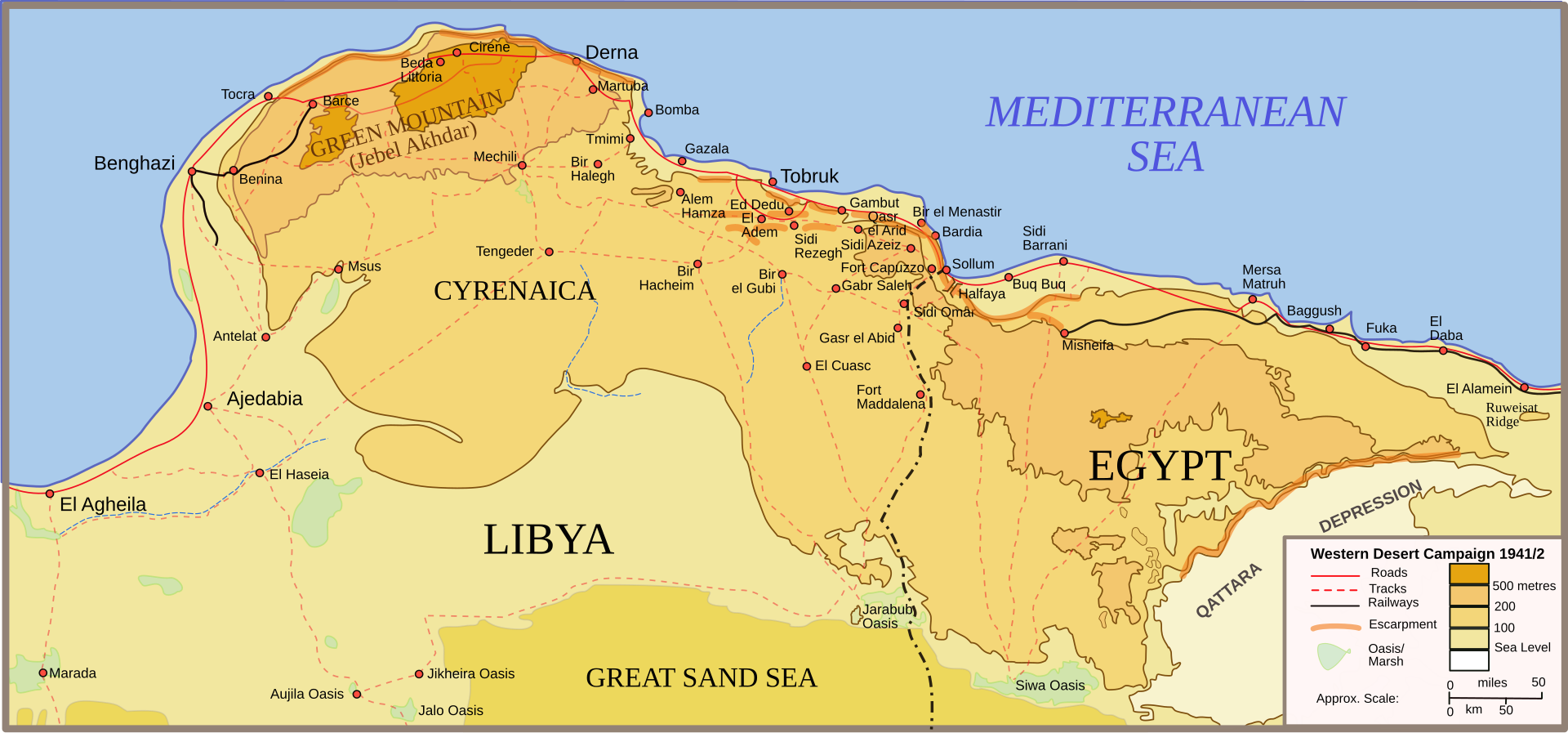
On the other side of things, exploitation that is too hasty can undermine the chances of success. Even would-be decisive battles incur losses for the victor, and requiring some kind of reconstitution before it can be exploited. Whether or not Rommel ever could have conquered Egypt, his rapid push following his victory at Gazala in 1942 undermined his odds. Instead of building up his supplies at the recently-captured port of Tobruk, his exhausted divisions sputtered to a halt at the First Battle of El Alamein. The window for successful exploitation is squeezed between the enemy’s response and one’s own need to reconstitute.
Decisive Victories in an Attritional War
What, then, should we make of those actions that are decisive by virtue of closing off one side’s path to victory? Last piece looked at battles such as Gettysburg or Borodino which left one contender on the wrong side of a war of attrition. Neither of these was followed by an immediate exploitation: after Gettysburg, the Union army famously failed to pursue and destroy Lee’s retreating army,1 while Borodino was followed by a Russian retreat past Moscow.
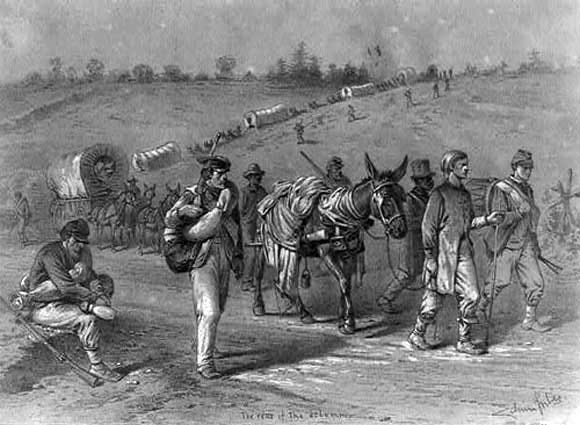
In one sense, that is because these were only weakly decisive battles, foreclosing what was already an unlikely outcome. But it also has to do with the nature of the wars themselves: wars of attrition are won by very different mechanisms from wars of decision. We will look at this in a future piece.
Thank you for reading the Bazaar of War. Please like and share if you enjoyed, it helps more people find this. You can also support with a paid subscription—supporters receive the critical edition of the classic The Art of War in Italy: 1494-1529 and get access to exclusive pieces.
You can also support by purchasing Saladin the Strategist, in paperback or Kindle format.
In truth there was little chance to exploit Gettysburg: the Confederates, although battered, were much better supplied, and muddy roads delayed Union reconstitution.
"You, Hannibal, know how to gain a victory but not how to use it."