
The question of what makes a decisive battle is often as fruitless as it is frustrating. In casual understanding, “decisive” is used in a plethora of ways: it can mean a culminating victory (e.g. the last major battle in a victorious campaign), a resounding victory (a crushing defeat of the other side), a turning point (at which the momentum seems to shift), or a causative victory (one that leads directly to the ultimate outcome of the war/campaign).
More serious theorists and historians tend toward a more nuanced version of the last definition. A decision comes less from the immediate issue of a battle than from the ensuing exploitation—destruction on the battlefield is rarely sufficient to change the course of a war by itself. Together, the main action and subsequent exploitation are decisive insofar as they drastically alter the range of future possibilities. This probabilistic view allows plenty of room contingency and variability, making the final outcome of a war much, much more than the result of a single event.
But there is another important subtlety that follows from this: decisions are rarely symmetrical. Victory in battle might offer one side the chance to win the war outright, but would not necessarily be so consequential for the other side. Indeed, it is extremely rare that the fate of an entire war hangs evenly in the balance—only in notable exceptions such as the Napoleonic Wars was the outcome commonly decided all at once.
This creates a much more productive distinction for weighing the decisiveness of battles, operations, or campaigns. It also reflects the risk/reward calculations made by the generals involved. It is worth examining a few famous battles and campaigns through this lens to get a sense of this asymmetry.
One-Sided Decision
Gettysburg fits many popular notions of decisiveness. It was the bloodiest battle of the American Civil War and occurred very close to the midpoint of the conflict; although those factors only became apparent in hindsight, many contemporaries sensed a turning of the tide. The repulse of Robert E. Lee’s second great invasion seemed to mark a change of momentum as his battered army was thenceforth condemned to the defensive.
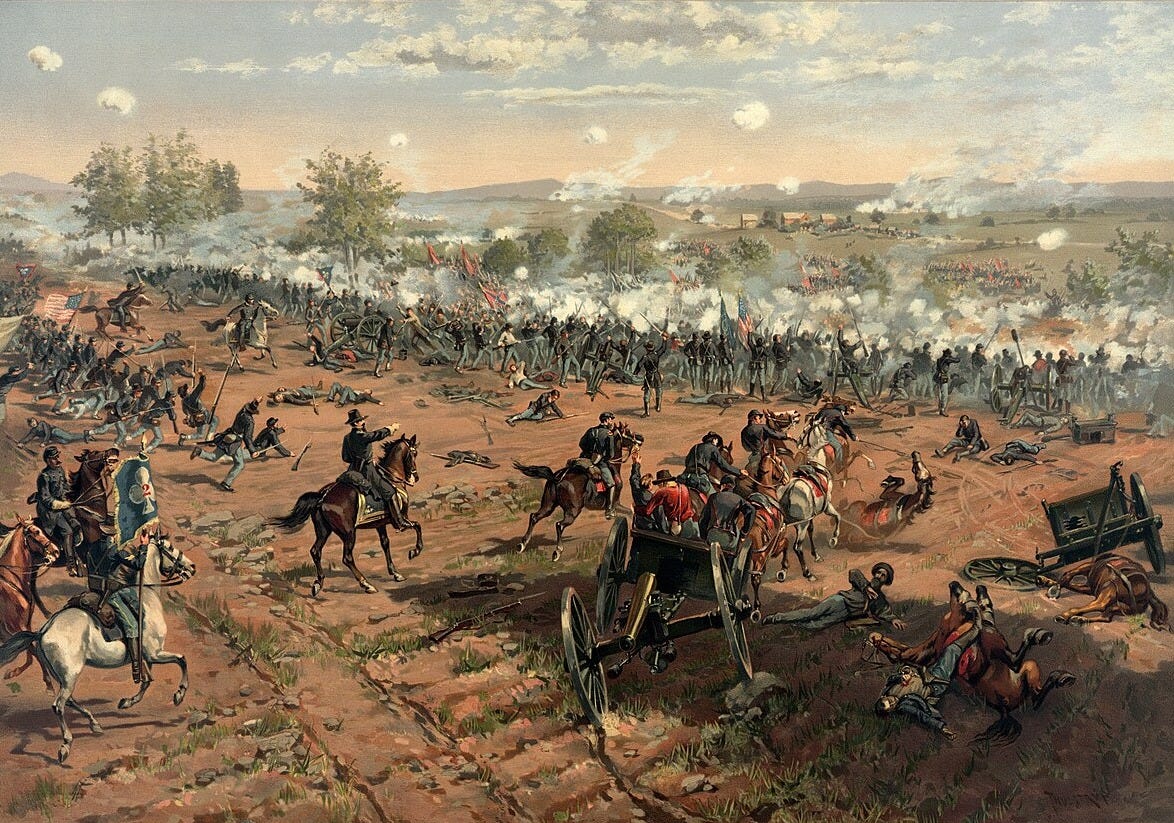
The South was probably headed for defeat no matter the issue of the battle—given their concurrent defeats in other important theaters, Union armies were likely to overrun the Confederate heartland the following year regardless. Yet Lee’s invasion remained the last plausible chance to affect Northern morale and turn popular opinion against the war. Union victory was therefore decisive insofar as it foreclosed that possibility, whereas the Confederates would have required plenty of subsequent victories and turns of fortune. By the same merit, it is easy to see how earlier Confederate victories could have been decisive had they gone the other way: a Union victory at Bull Run might have snuffed out the nascent rebellion before it gained steam.
The same might be said of Stalingrad. The immediate repercussions of the campaign were significant if overstated—men and material were to a certain extent replaceable, even if the experienced staff of the Sixth Army was not. The more important factors were less direct. A persistent German presence around the Caspian would have severely restricted the flow of Lend-Lease aid, limiting its delivery to the ice-bound ports of Arkhangelsk and the remote ports of the Russian Far East. It would guarantee German access to another year of Ukraine’s harvest—food was an important bottleneck to the Reich’s manpower and labor mobilization—while denying the Red Army access to Caucasian oil, a crucial ingredient to their deep counteroffensives.
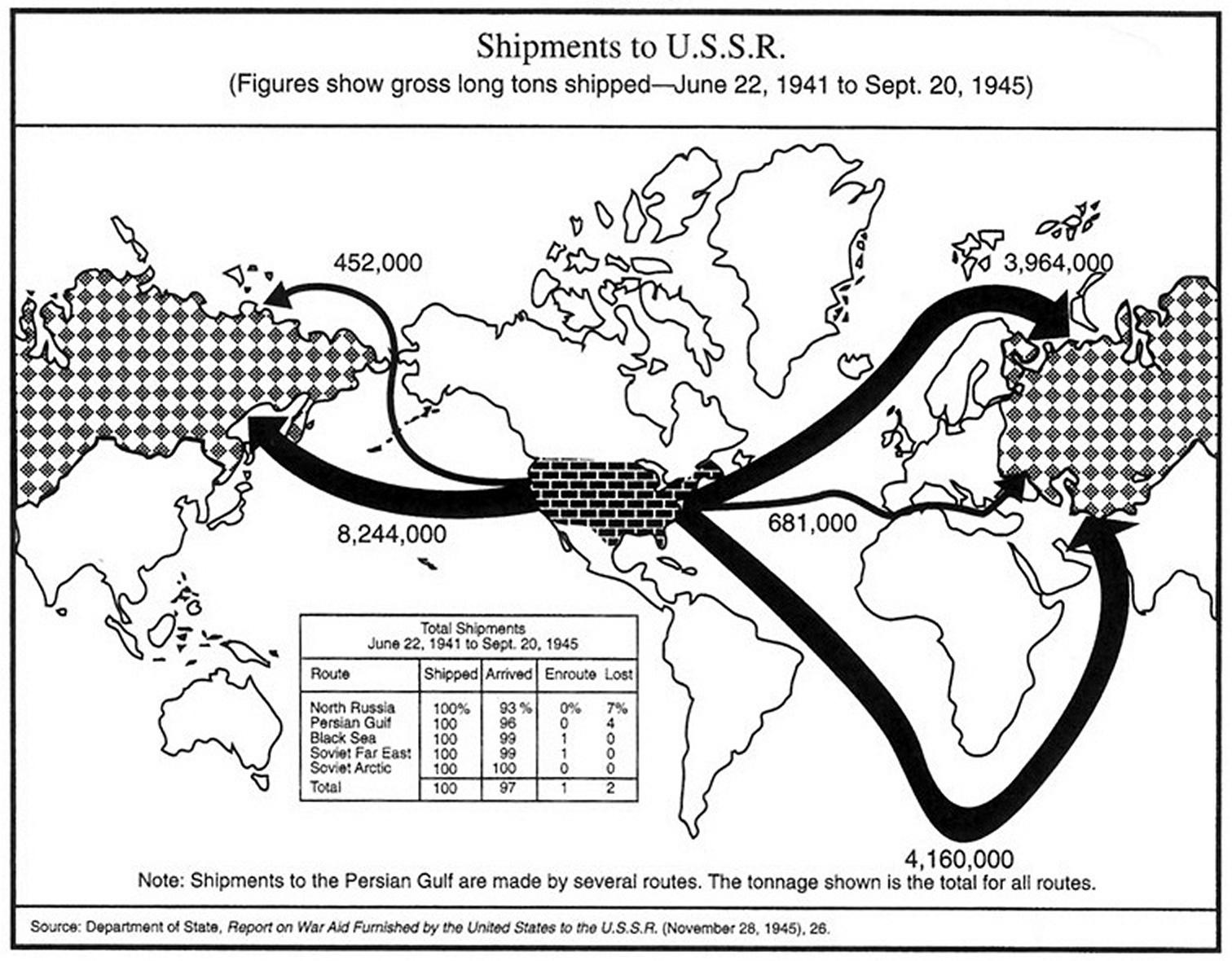
Yet even that was not necessarily enough to win the war. By the time the Red Army launched Operation Uranus, Western Allied armies had landed in North Africa and their air forces were beginning to devastate German factories, while American industry was spinning up to produce immense quantities of weapons and equipment. Germany’s defeat was still more likely than not, and many Wehrmacht generals felt that the war had already been lost at the gates of Moscow.
Insufficient Victories
Judged by this standard, a decisive battle does not even have to end in defeat for a side to lose the war; a victory may merely be insufficient. Such was the case at Borodino. By any practical standard, the Battle of Borodino was a clearcut French victory. They held the battlefield at the end of the day and inflicted substantially higher casualties on the enemy, while the Russians failed in their goal of stopping Napoleon before he reached Moscow.
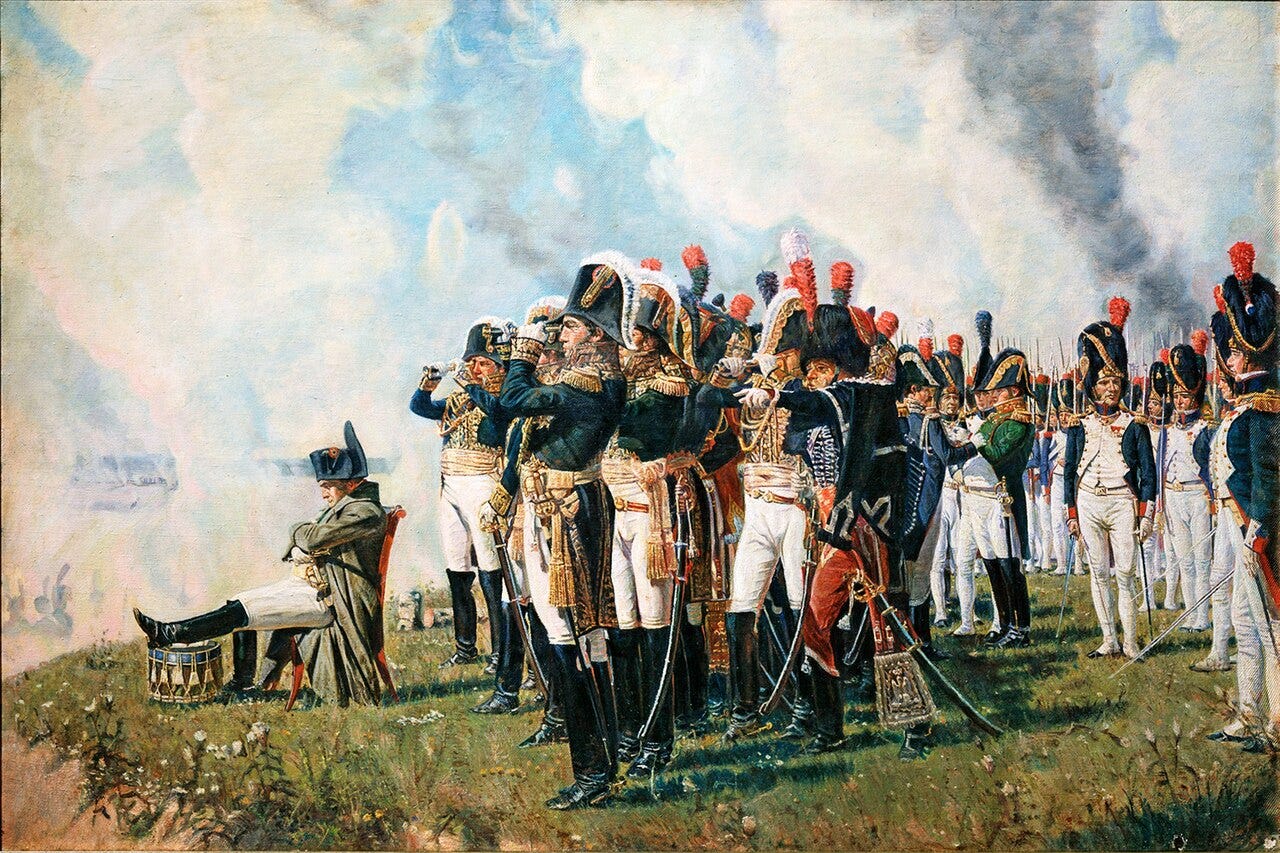
Yet, as many sensed at the time, it was a hollow victory. Napoleon had won so many wars before by destroying the enemy’s military strength in a great culminating action: the Austrians at Marengo, Austerlitz, and Wagram; the Prussians at Jena; the Russians at Friedland. Once more, the Russians obliged and offered battle, giving the Emperor a chance to smash them; but, unwilling to take his customary risks so far from home, he refused to commit his reserves at the critical moment and thereby passed up his chance to win a more resounding victory.
Even that would have carried no promise of ultimate success. Napoleon’s sick and emaciated army was in stricken country and at the end of its logistical tether, while the Russians had plenty of capacity to rebuild their own forces over the long winter. But a serious defeat may well have brought the demoralized Russian emperor to the negotiating table, and in any case represented the last French hope for victory.
Something similar happened two months after Gettysburg. The culminating action of the Chickamauga Campaign (on which part 2 will be out shortly) was the second-bloodiest of the war and a notable Confederate victory, after which Union forces were driven back into Chattanooga and besieged for several months. Yet the victors failed to dislodge their enemies from the city, an important transportation node at the far side of a difficult series of geographic obstacles. With this fortified toehold in its possession, the Union army could receive reinforcements from other theaters and resume its offensive later that year, going on to drive straight through the heart of the Confederacy.
Chickamauga’s decisiveness can only be measured in terms of the immediate theater of operations. Following the Confederate defeats at Gettysburg and Vicksburg earlier that year, there was little chance that the South could win the war. But a more thorough victory would have certainly been decisive within the Tennessee/Georgia theater, preventing the Union from driving into the South’s agricultural and industrial heartland the following year, thereby prolonging the war considerably.
The Fruits of Decision
Judging the decisiveness of a particular battle or operation is not just a philosophical question, but a useful framework to study the underlying dynamics at play. Assessing the asymmetric payoffs forces us to consider the overall balance of forces, the options available to opposing sides, and the role of chance in the larger picture. It also sharpens our sense of
More practically, it offers a study in decision-making, as the asymmetric decisiveness of a particular battle or operation closely reflects the risk/reward balance for either side. It is easy to see why the Union would risk battle at Gettysburg or the Soviets at Stalingrad, but why would their enemies be so obliging when the expected payoff was stacked so far against them? We get a sense of how desperate the Confederacy’s situation was in summer 1863 by how much of a gamble Lee was willing to take; German plans at Stalingrad meanwhile reveal a certain obliviousness to the stakes amidst their own deteriorating situation.
It is nevertheless easy to overstate things. Many argue against the very notion of decisiveness, rightly pointing out that emphasizing singular actions ignores many other more material factors. Next Dispatch will look at the ultimate cost of exploiting a decisive action and the mechanisms of victory.
Thank you for reading the Bazaar of War. Most articles are free for all to read, but a subscription option is available to all who wish to support. Subscribers receive a pdf of the critical edition of the classic The Art of War in Italy: 1494-1529, and will have exclusive access to occasional pieces.
You can also support by purchasing Saladin the Strategist in paperback or Kindle format.