
July 4th 1863 was among the most significant dates of the American Civil War. It was on that day that Robert E. Lee’s Army of Northern Virginia began its retreat from Gettysburg, conceding defeat in the bloodiest battle of the war. It was also the day that the fortress of Vicksburg surrendered to Ulysses S. Grant, cutting off the states west of the Mississippi River from the rest of the Confederacy. Much less celebrated, but hardly less significant, was a third victory. In a nearly bloodless campaign of just 12 days, the Army of the Cumberland under William S. Rosecrans drove Braxton Bragg’s Army of Tennessee out of middle Tennessee.
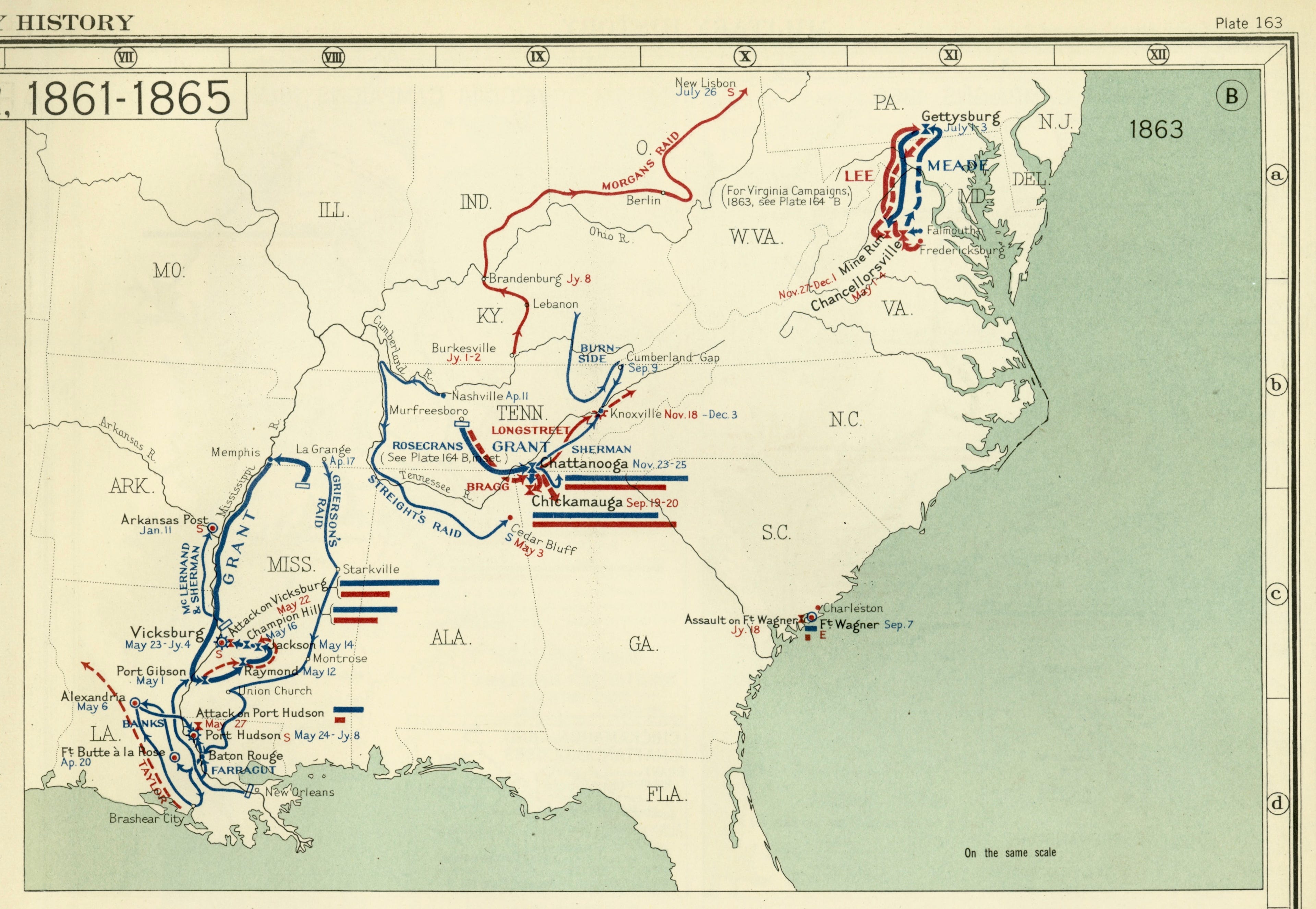
The fruits of the Tullahoma Campaign, as this operation was called, were less tangible than the other two, but more promising. In northern Virginia, Lee’s battered army remained a formidable obstacle to any advance, while in Mississippi, Grant had accomplished most of what could be done. In the central Tennessee theater, by contrast, Union forces were poised to conquer one of the key cities of the South: Chattanooga.
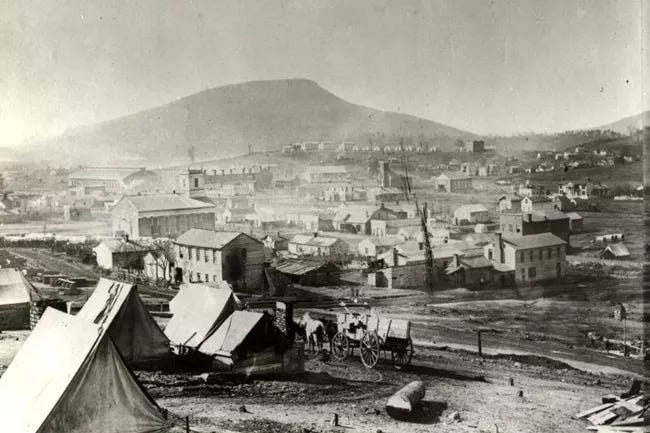
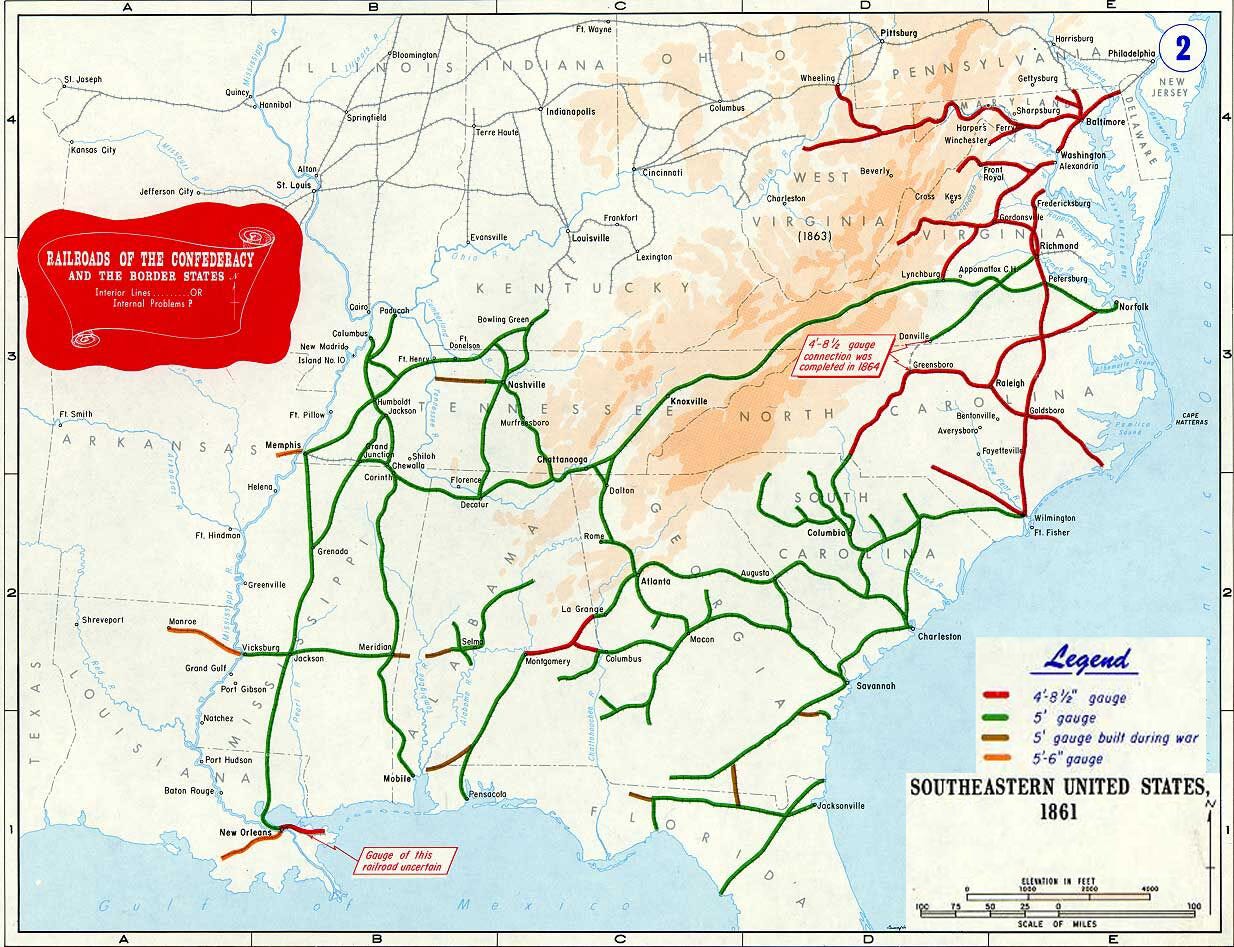
This small and unprepossessing rail town, tucked away in the southeastern valleys of Tennessee, was deceptively important. It formed the center of gravity of the Confederate transportation network, the hub which connected the Upper South, the Deep South, and the West on a single gauge. Without it, supplies could still be shipped around the Confederacy on alternate routes, but this required multiple transfers between overworked lines using a variety of gauges—a slow and laborious process.
Chattanooga also provided an ideal base of operations for an advance on Atlanta. In addition to being an important regional rail hub in its own right, the burgeoning city lay at the heart of the Confederacy’s best agricultural land and remaining war industry—it and nearby towns such as Augusta, Macon, Rome, and Columbus were major arms and powder producers.
The states west of the Mississippi, by contrast, contained only 12% of the Confederate population and a correspondingly low proportion of the economy. Although Confederate President Jefferson Davis famously said that Vicksburg was “the nail head that holds the South’s two halves together” and Lincoln called it the “key” to winning the war, the same could be said with far more justice of Chattanooga.
The Campaigns for Chattanooga
Union armies had been trying to capture the city for over a year. In June 1862, an advance guard even reconnoitered the outskirts of Chattanooga before a Confederate counteroffensive diverted Northern efforts elsewhere. It was not until June 1863 that they renewed their efforts—this time with more success: in three campaigns over five months, they captured Chattanooga and drove the Confederates entirely out of Tennessee.
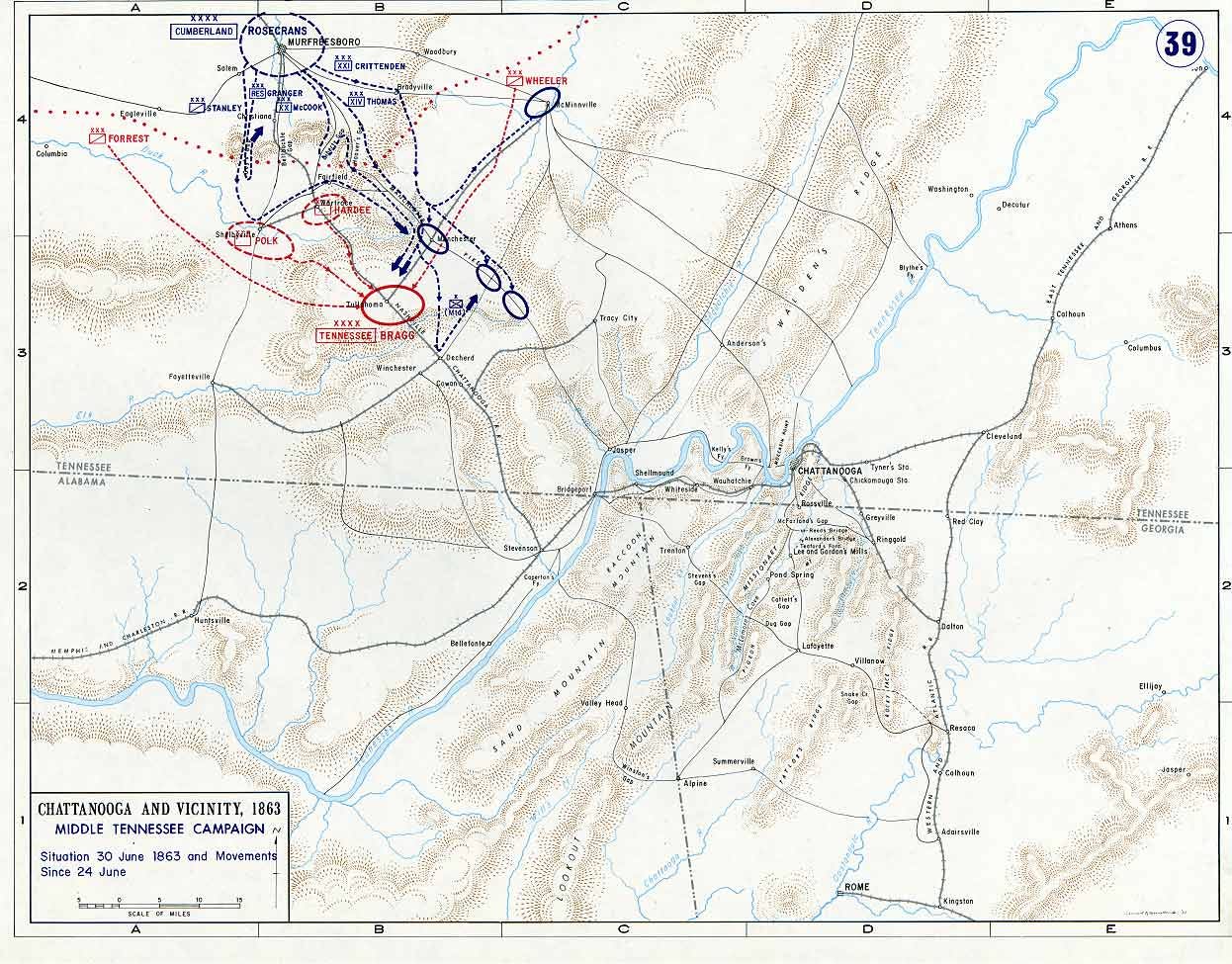
Beyond their incredible strategic importance, these campaigns are fascinating from the perspective of operational art. They provide an excellent case study of complex maneuvers across a broad front over difficult terrain. The Tullahoma Campaign (23 June – 4 July) saw Union forces push through several gaps onto Tennessee’s Highland Rim, nearly enveloping their Confederate enemies in the process. The Chickamauga Campaign (21 August – 20 September) was an even more impressive feat of maneuver that brought the Union army through a rugged series of parallel mountains to capture Chattanooga, but ended in a bloody defeat at the Battle of Chickamauga. The Chattanooga Campaign (22 September – 27 November) encompassed the ensuing Confederate siege of its namesake city, during which Union forces restored their lines of communication before going back on the offensive.
This installment looks at the first of these: the operational leap of Tullahoma and the tactical innovations that enabled it. It examines the operational difficulties of defending a series of passes, and the offensive difficulties of maneuvering during a once-in-a-lifetime weather event. Part 2 will look at the more complex maneuvers that delivered Chattanooga to the Union, as well as an accompanying strategic-level maneuver that supported it. An eventual Part 3 may look at the logistical efforts of supplying that city during the siege.
The Campaigns of 1863
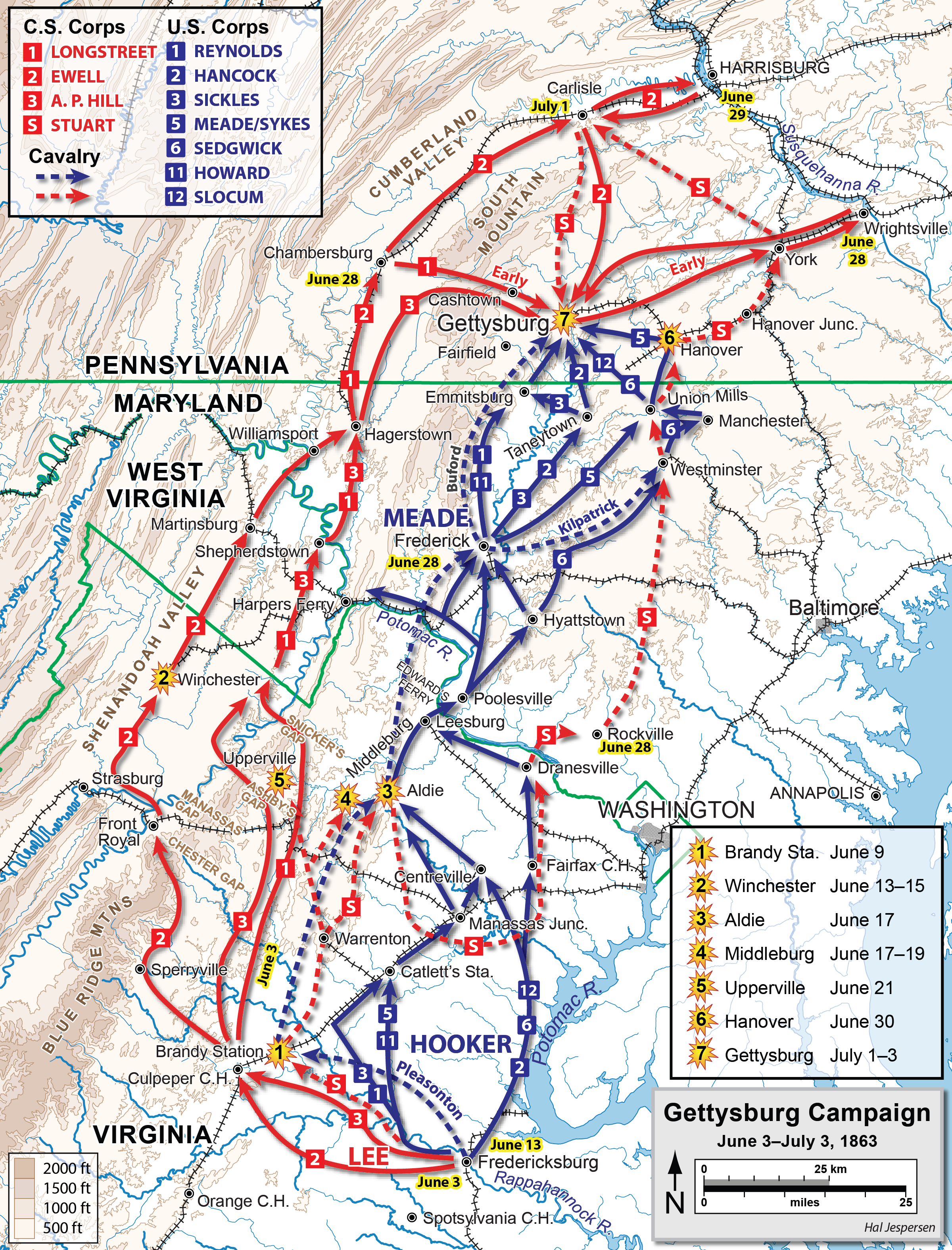
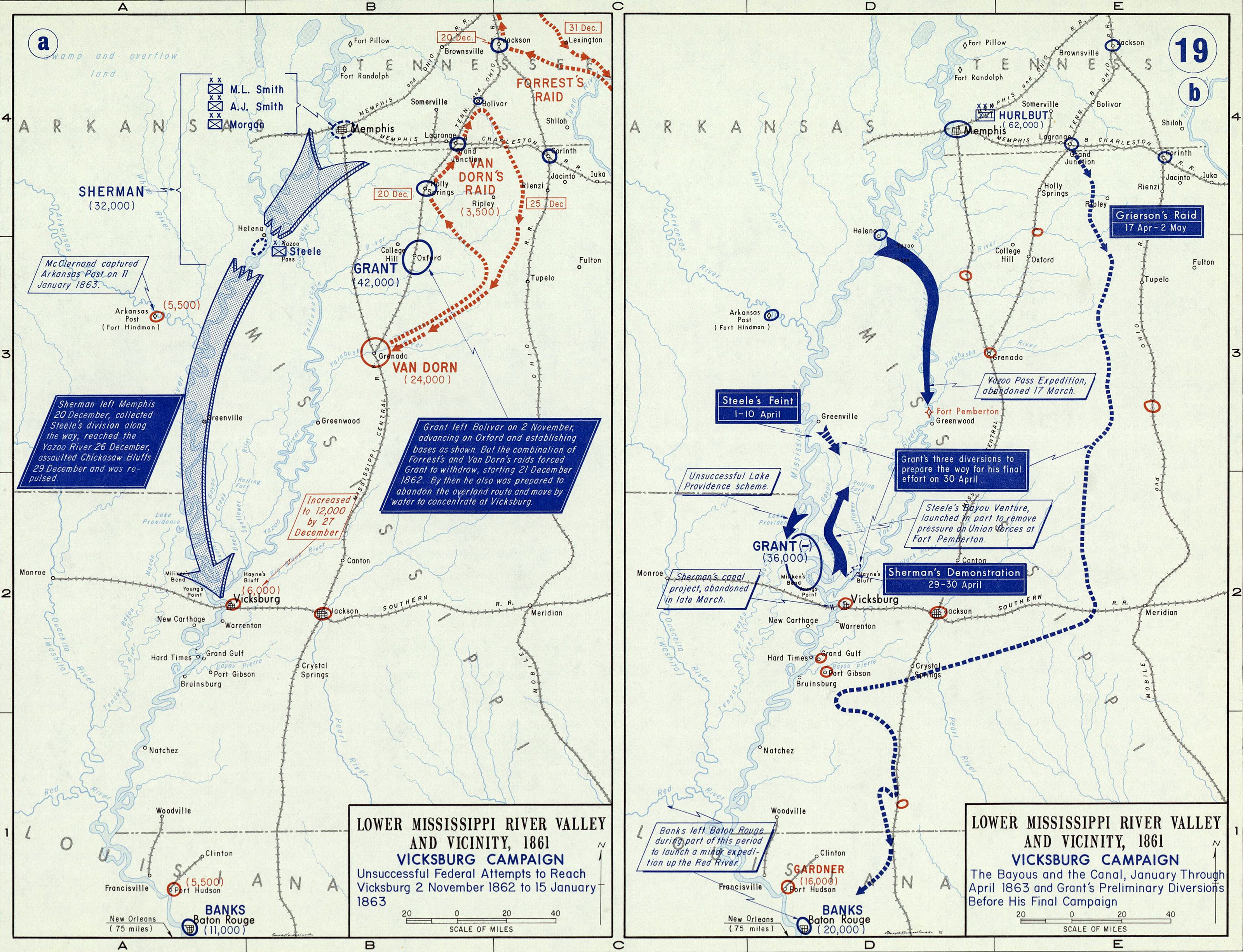
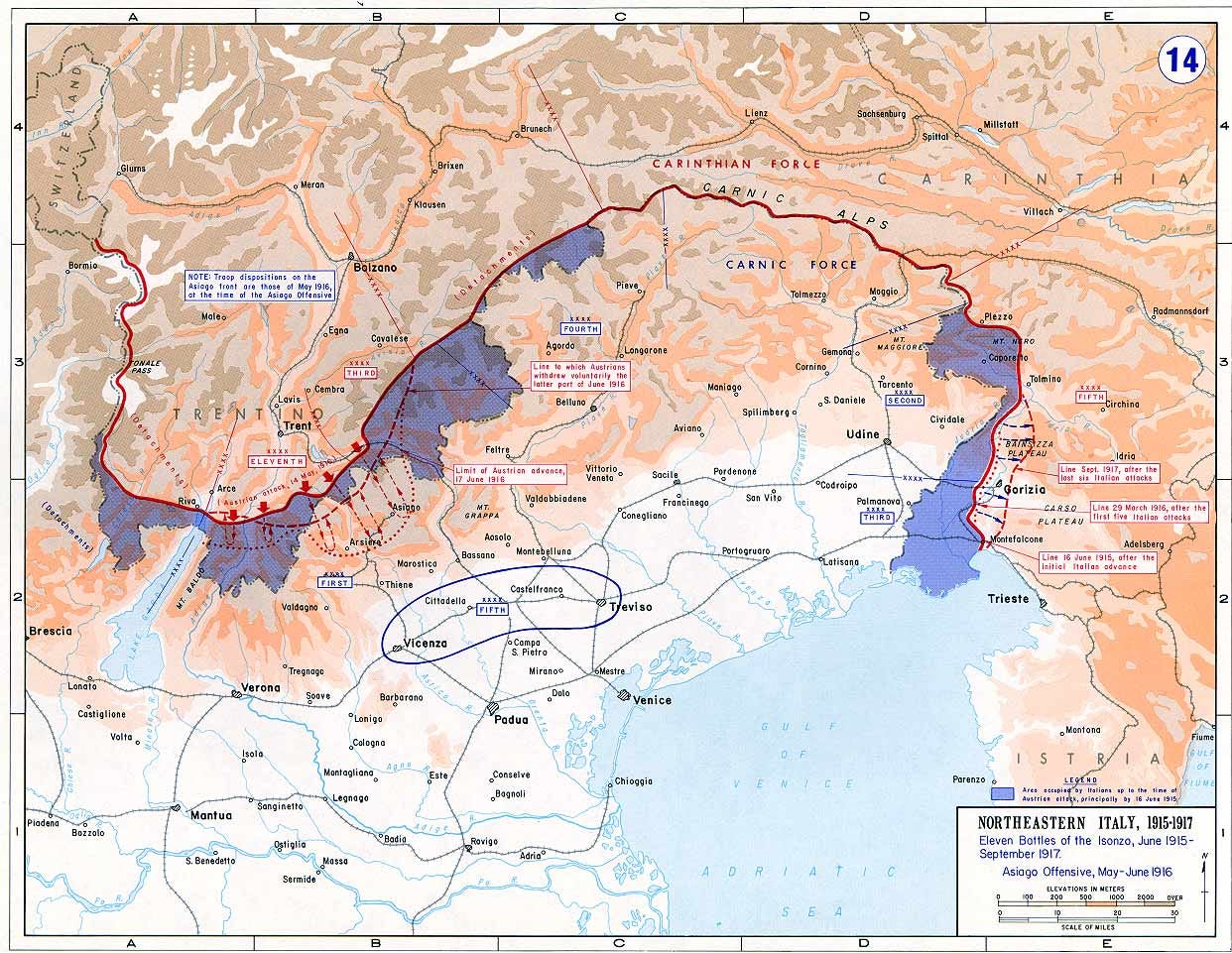
Union plans for 1863 resembled Allied strategy in 1916: three simultaneous offensives as the war entered its third year, designed to squeeze the outnumbered enemy on all fronts at once, hoping that he would crack on at least one. If we really wanted to push the analogy, we could compare each of the individual theaters: the Virginia to France, Tennessee to Italy, and Mississippi to the Eastern Front.
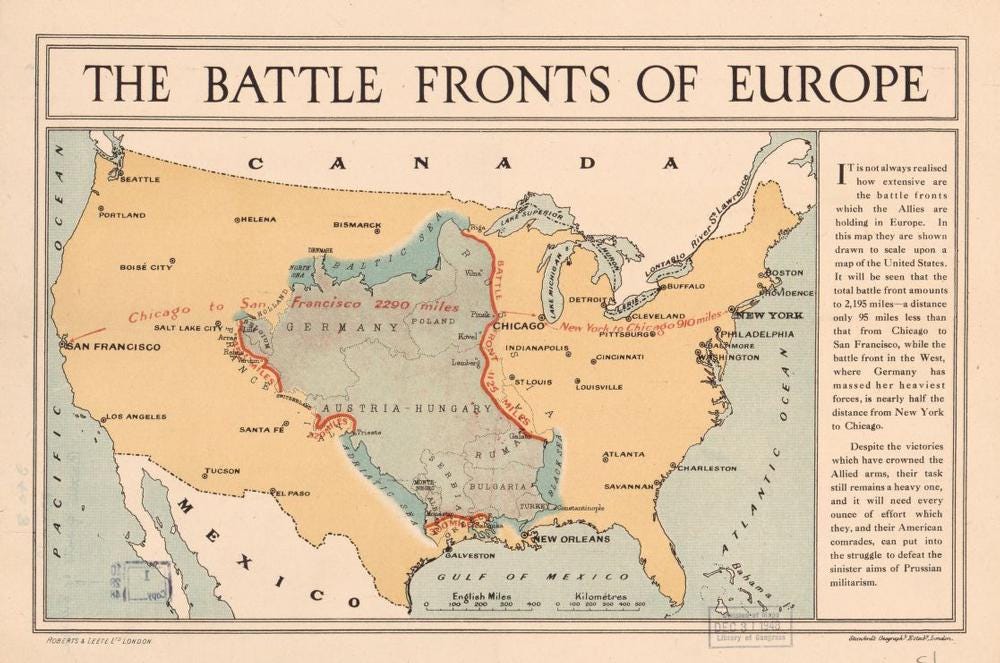
Northern Virginia, like the Western Front, was considered by popular prejudice to be the main theater of the war. Troop densities were highest there, and, despite the absence of fixed fortifications, the Rappahannock River created a firm if elastic front. Like the Germans’ Verdun offensive, Robert E. Lee’s invasion of Pennsylvania stole the thunder from Union efforts that year (although for very different reasons: Verdun preceded the Somme offensive by several months and ran concurrently, whereas the Gettysburg campaign came only after they defeated the Federal offensive at Chancellorsville). But the ultimate result was the same: the year ended with a bloody repulse for the Confederates that forced them back to their initial positions.
The greater distances of the Western Theater, like the Eastern Front plains of Russia and Ukraine, left more room for maneuver. Although Ulysses S. Grant spent the first months of the year stuck in the mire of the Mississippi valley, his cavalry ranged the length of the state of Mississippi, and his own eventual breakout restored movement. Similarly, the Brusilov offensive was the most dramatic movements of 1916, pushing the front back as far as 100 km in some places.
Finally, Tennessee and Italy bear a passing resemblance: neglected theaters sandwiched between two much larger neighbors, wherein Union/Allied forces faced the daunting task of attacking from fertile lowlands into mountainous redoubts. In terms of outcome, however, the two could not have been more different. The Gorizia offensive, the most successful Allied offensive in Italy, gained a mere 5 km in the foothills of the eastern Alps; at the end of 1863, by contrast, the Union had cleared the mountains of eastern Tennessee and had opened the path to the heart of the Confederacy.
Competing Strategies
The Confederate high command was certainly aware of the difficult tradeoffs it would face in 1863. They were outnumbered in every theater, and it was a matter of guesswork as to how best to balance available forces against the incoming blows. The overriding strategic question was not just how to distribute forces among theaters, but also how to provide for mutual support between them.
General Joseph Johnston, who held supreme command of all Confederate forces between the Mississippi River and the Appalachian Mountains, correctly assessed Vicksburg to be the primary Union objective. In response, he advised redrawing theater boundaries to unite the Trans-Mississippi Department with his own subordinate Department of Mississippi and East Louisiana. This would allow coordinated operations on both sides of the river to contest the advance on Vicksburg. Meanwhile, the Army of Tennessee and Army of Northern Virginia could be made to support each other, sending reinforcements as needed.
His reasoning was based on the state of Confederate railroads. The network in Virginia was well developed, making it possible to travel directly between Richmond and Chattanooga on a single gauge—a journey of mere days. Traveling west was more difficult. The loss of northern Mississippi in 1862 severed any direct connection between Chattanooga and Vicksburg, while the rest of the western rail net was a jumble of partially completed and overworked lines of varying gauges. Between the transfers and overland marches this would entail, and troop movements would take several weeks at a minimum.
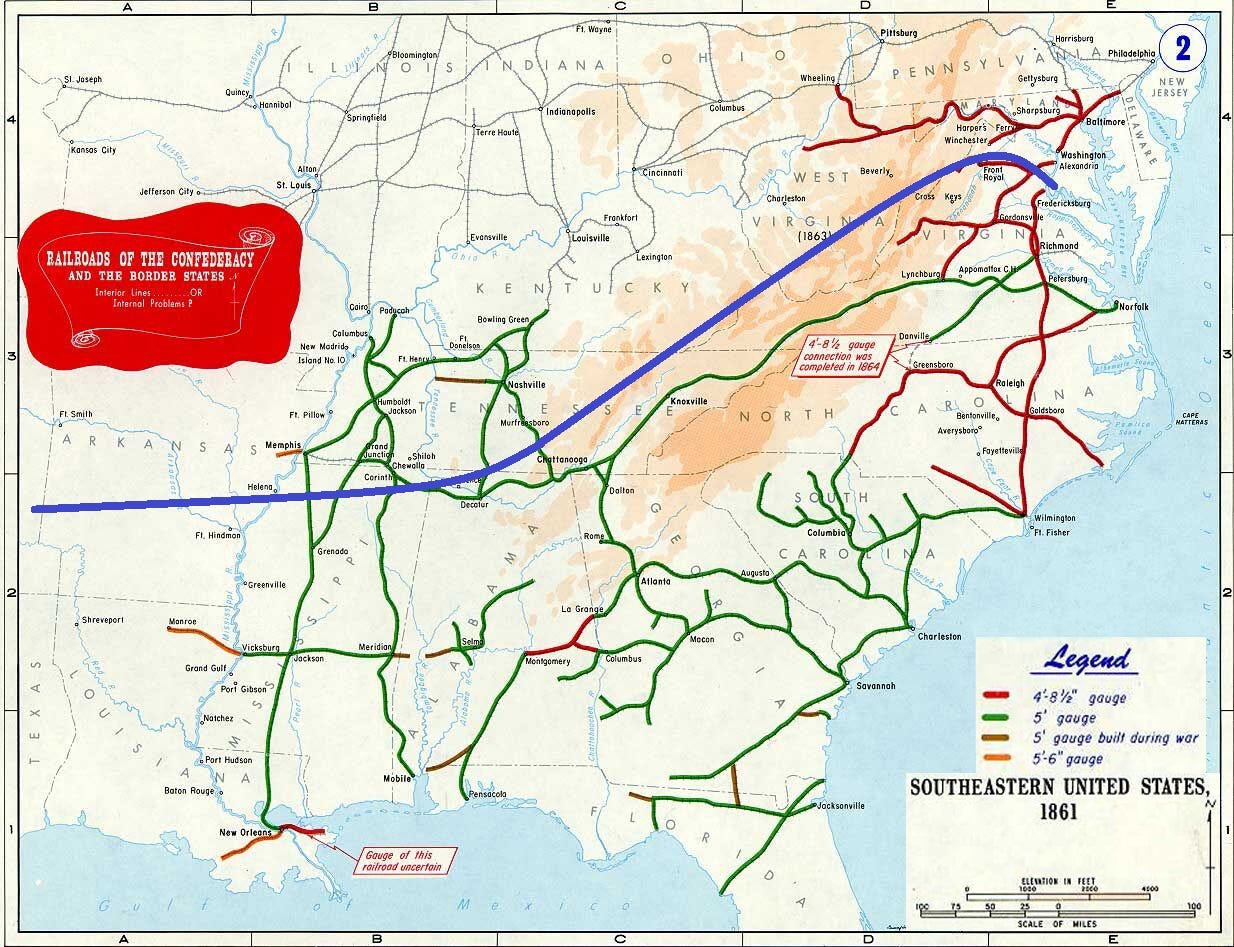
Despite this compelling logic, Confederate president Jefferson Davis preferred that the Armies of Tennessee and Mississippi support each other. He was more ambivalent about Union plans, which in late 1862 remained unclear. Grant’s headquarters at Memphis were equidistant from Vicksburg to the south and Rosecrans’ army at Murfreesboro, and he wished to allocate his forces in response to Union movements.
Grant was, of course, fully intent on taking Vicksburg that year. What did that mean for Union plans in Tennessee? The aims were twofold. Lincoln’s primary concern was to draw attention away from what was bound to be a difficult fight at Vicksburg—to exploit precisely those tradeoffs between the Mississippi and Tennessee theaters that Johnston was keen to avoid. Secondly, he was to press on to Chattanooga. Both would require an extensive campaign in middle Tennessee; and for that, geography played just as much a role as force ratios.
The Operational Picture
The Union Army of the Cumberland and Confederate Army of Tennessee had been facing off in middle Tennessee since autumn 1862. Two features dominate the region: the Central Basin, rich farmland and horse-raising country, separated by a steep escarpment from the surrounding tableland of the Highland Rim.
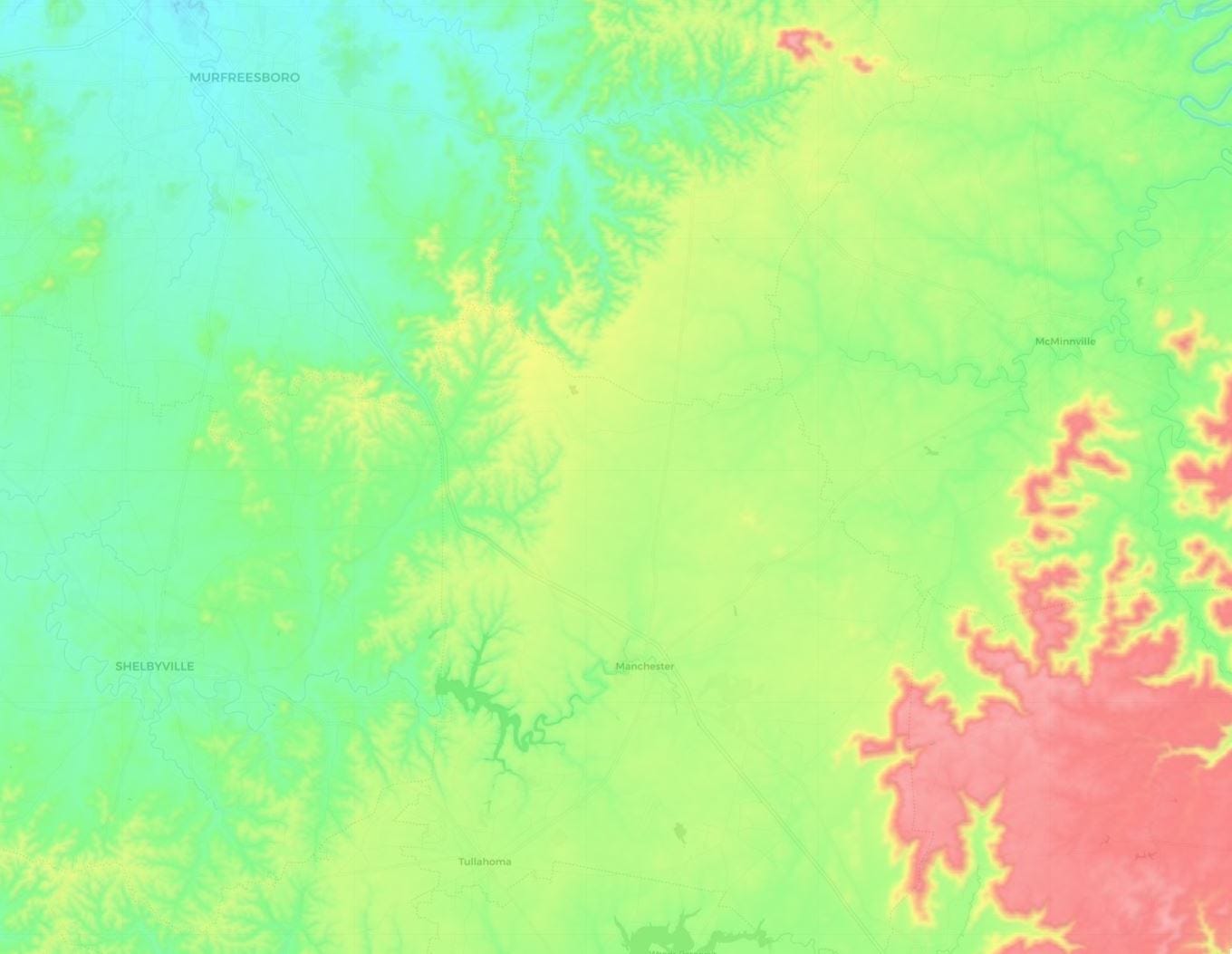
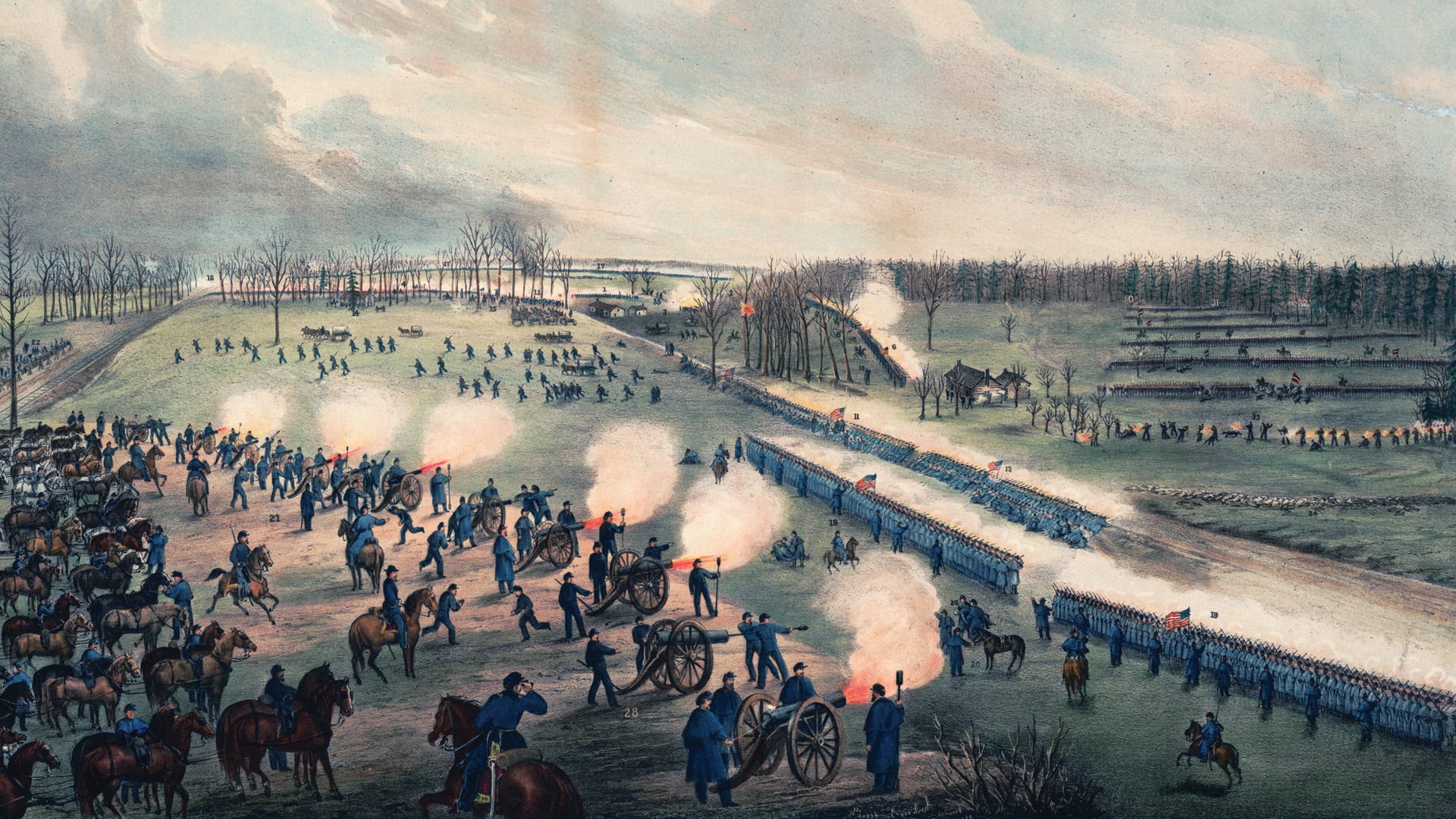
From 31 December to 2 January, the two armies fought a major battle at Stones River near Murfreesboro, the geographic center of the Basin. The bloody encounter forced Bragg’s Confederates to withdraw to a defensive position at Tullahoma on the Highland Rim, while Rosecrans’ Union soldiers established themselves at Murfreesboro.
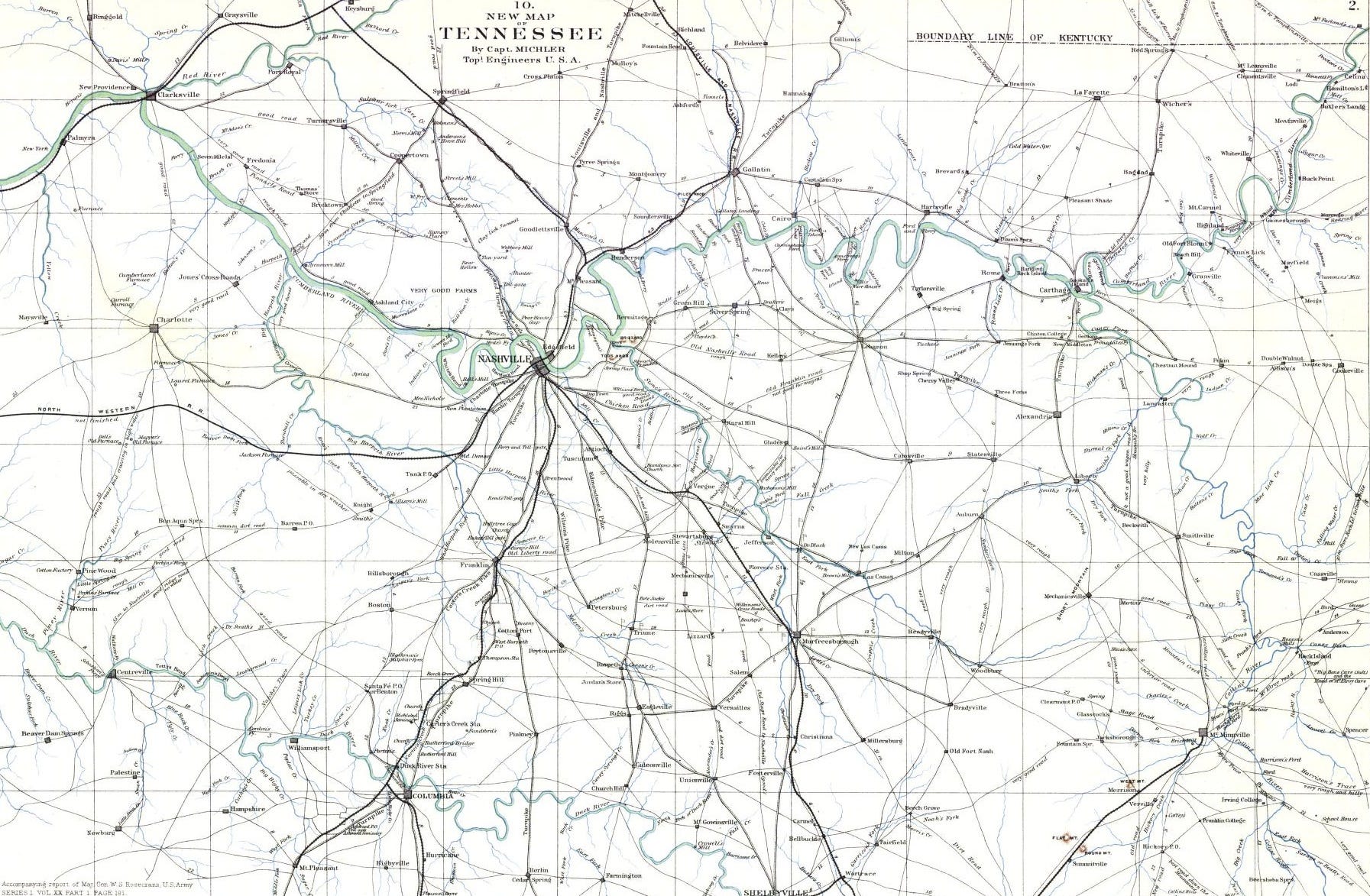
Over the next several months, the two sides occupied a wide V-shaped front, bisected by the Nashville-Chattanooga rail line. Bragg’s two infantry corps guarded the passes onto the Highland Rim in front of Tullahoma, his base of operations, while a two-division cavalry corps screened the passes as far as McMinnville, 50 km to the northeast. Another cavalry corps occupied an 80-km line along the Duck River, which flows westward from the Highland Rim around Tullahoma. Rosecrans, for his part, kept most of his forces concentrated around Murfreesboro, with his cavalry arrayed to the west to guard the southern approaches to Nashville.
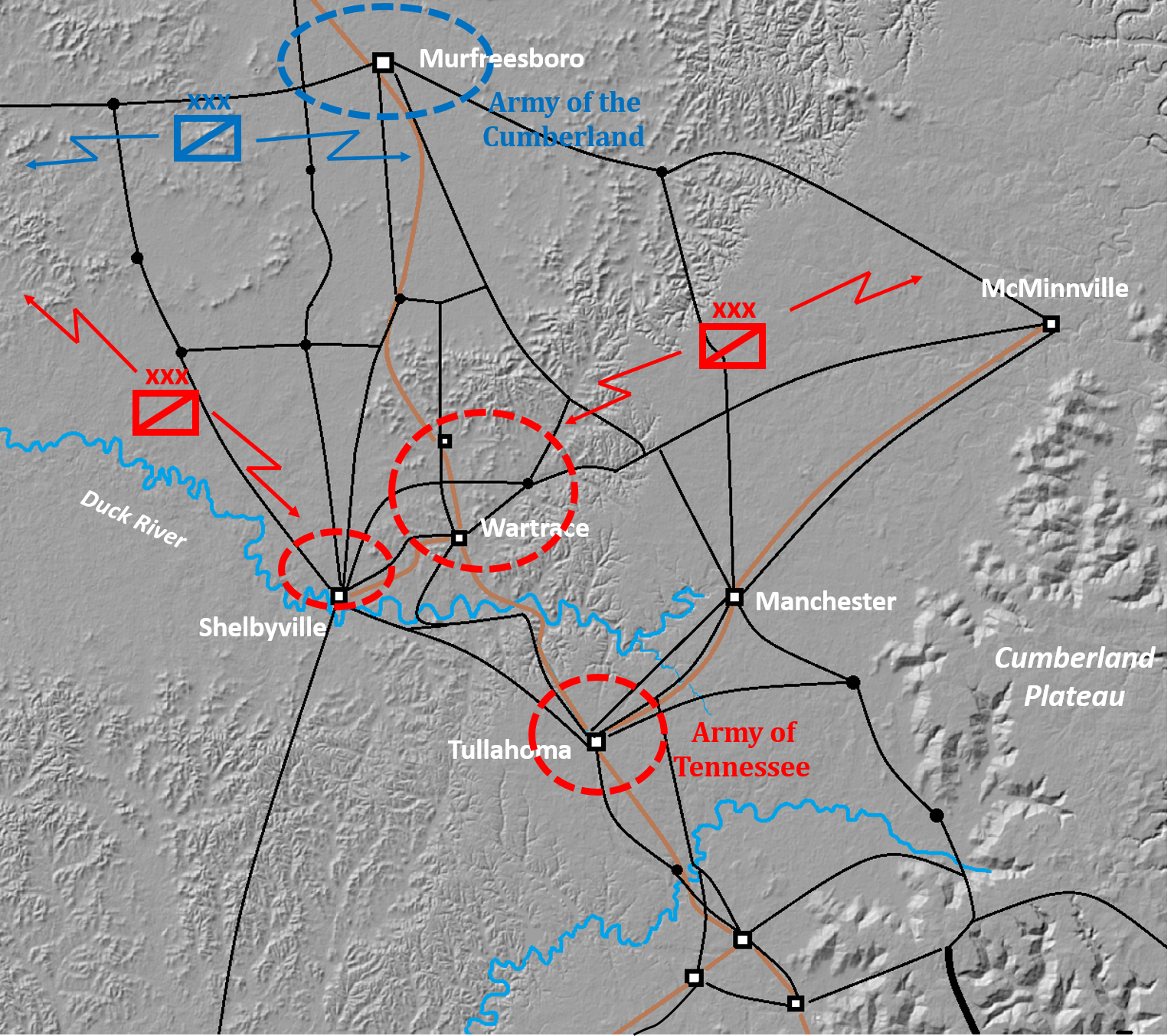
Both armies faced significant logistical hurdles. The Army of Tennessee occupied a part of the Highland Rim known as the Barrens, a long stretch of poor soil from which few provisions could be extracted. This meant that all the army’s supplies had to come nearly a hundred miles from Chattanooga on a single-track line through difficult mountainous country. It also faced a shortage of wagons and draft animals, preventing it from marching more than a couple days from the railheads—only the cavalry in the Central Basin could operate with much freedom.
On the face of it, the Army of the Cumberland was in a much better position, located in the midst of fertile farmland. However, the countryside had been depleted by two large armies’ occupation of several months, and continual harassment by Confederate cavalry denied them the ability to forage at will, leaving Union forces dependent on supply shipments over great distances. Unlike its sister armies in Mississippi and Virginia, the Army of the Cumberland could not receive many supplies by water: although some were shipped up its namesake river to Nashville, 50 km to the rear, falling water levels over the winter reduced the flow, leaving the army dependent on a single rail line back to Louisville, Kentucky.
The fragility of Union logistics was demonstrated by a particularly effective raid by Confederate cavalry general John Morgan in August 1862. On the 12th of that month, his division destroyed a rail tunnel in northern Tennessee, putting it out of commission for 98 days. Rosecrans desperately set himself to repairing it once he took over the Army of the Cumberland, and it reponed just a month before the Battle of Stones River.
Throughout the following winter and spring, Confederate cavalry continued to harry the rail lines and river traffic. The left-hand cavalry corps, under Earl Van Dorn, was particularly effective. Van Dorn had led the raid on Ulysses Grant’s supply depot in Mississippi the previous December, frustrating the Union general’s plans to march overland to Vicksburg, while his subordinate divisional commander, Nathan Bedford Forrest, was a proven commander of irregulars.
Transforming the Army of the Cumberland
Nearly six full months passed between the Battle of Stones River and the commencement of the Tullahoma campaign, during which both armies busied themselves getting in fighting shape. Rosecrans had inherited a difficult situation. His immediate priority was to secure his supply lines and reorganize the Army of the Cumberland. The second of these was the simpler affair. Officially designated XIV Corps, Rosecrans’ command consisted of a cumbersome nine infantry divisions and one cavalry division. He reorganized them into three corps: XIV Corps under George Thomas, XX Corps under Alexander McCook, and XXI Corps under Thomas Crittenden. He formed his remaining infantry into a Reserve Corps under Gordon Granger, whose chief responsibility was to defend the rear areas.
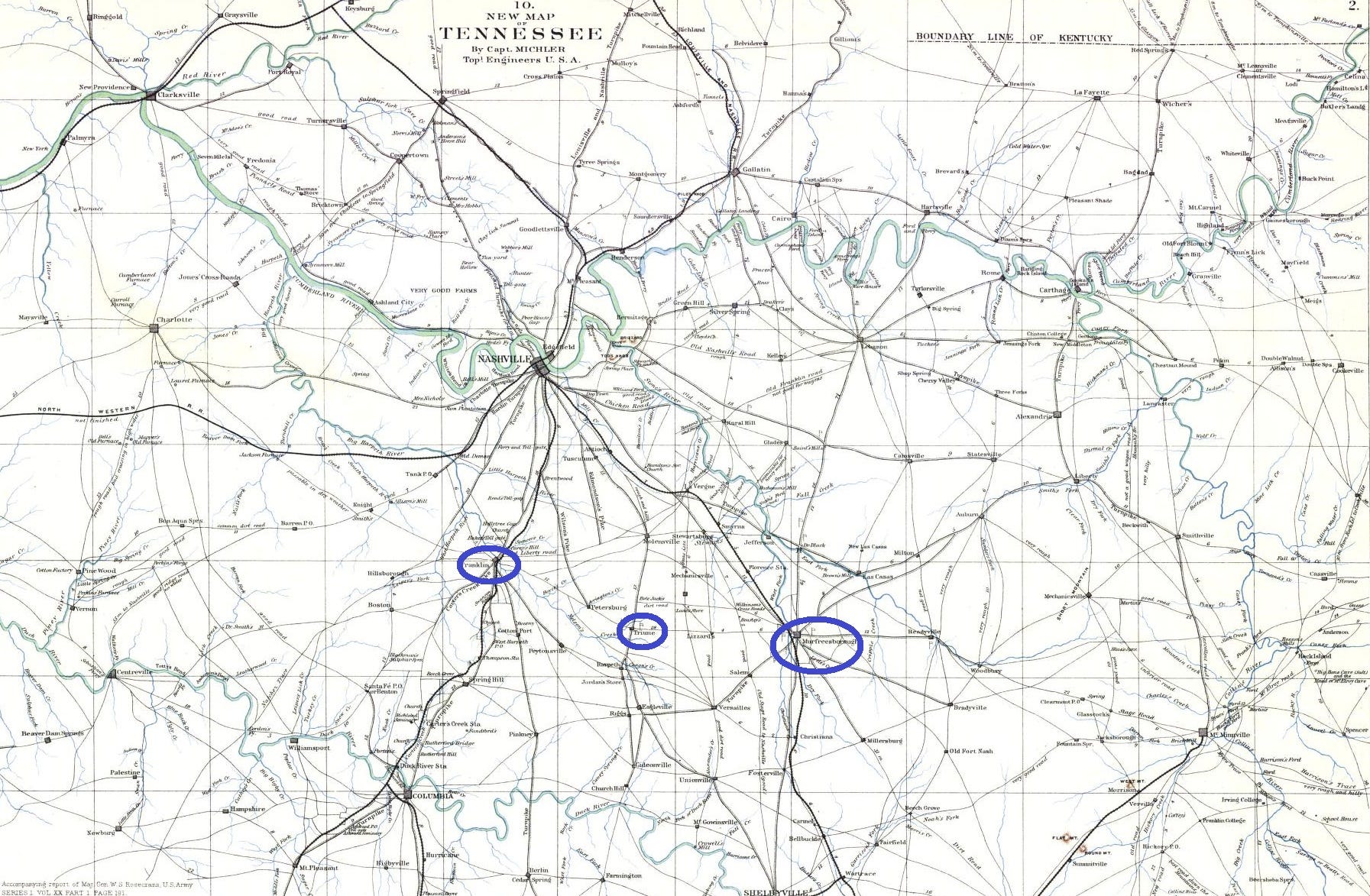
Securing his lines of communication was a more difficult matter. Morgan’s raid the previous August had showed just how vulnerable his long, thin lifeline was. Figuring that such disruptions were inevitable, Rosecrans sought to make himself more resilient. In January, construction began on a gargantuan earthwork at Murfreesboro, dubbed Fortress Rosecrans. 4.5 km of fortifications enclosed over 200 acres (80 hectares), eventually storing enough provisions to feed 65,000 men for 90 days—more than enough to buffer his army against any future disruptions. He also built fortifications at Triune and Franklin, respectively about 20 and 40 km west of Murfreesboro, guarding the southern approaches to Nashville.
Rosecrans next set himself to expanding his cavalry arm. By March, the Confederates were reinforced to over 15,000 troopers, against little more than 5,000 for the Army of the Cumberland, compelling its commander to beg the War Department for reinforcements. It was not just for defensive purposes that he wanted these, but to scout out routes and screen his movements in the campaign ahead.
Between reinforcements from other departments and efforts to raise units locally, a two-division Cavalry Corps was established under Major General David Stanley in May. A month later, the army reached a strength of nearly 10,000 mounted troops. Crucially, Rosecrans was able to procure for most of them Spencer repeating carbines, seven-shot lever-action rifles that could put up an impressive volume of fire against slower muzzle-loading weapons.
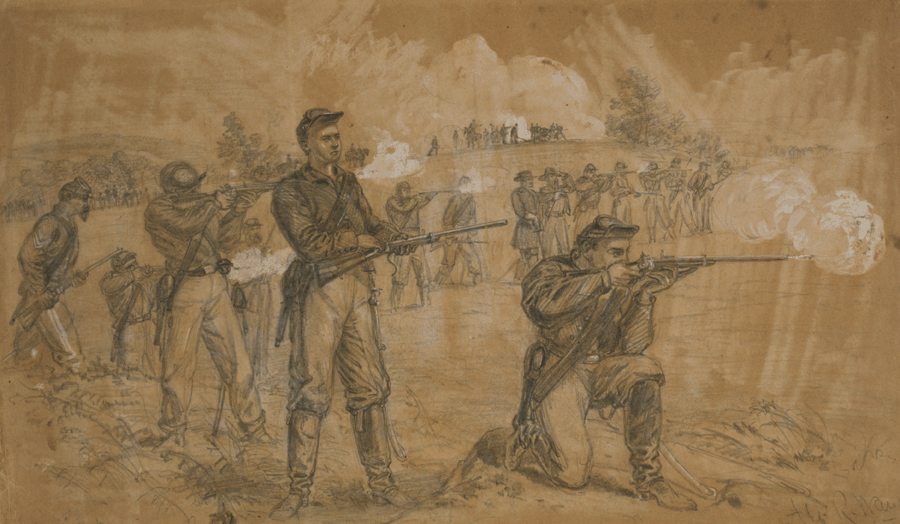
Not all mounted troops were cavalry. In February, Rosecrans began mounting formations in each of his infantry corps on requisitioned horses and mules to increase their mobility, arming them with Spencer repeaters. These included Abel Streight’s brigade from XXI Corps and John Wilder’s from XIV Corps, which also had a ten-gun light battery. Only a single regiment was mounted in XX Corps, the 39th Indiana, but its parent brigade adopted new shock tactics for the other regiments. Soldiers formed up in four ranks, instead of the usual two: after the first rank fired, it began reloading while the rear rank rushed forward and fired in turn, allowing the brigade to maintain a continuous barrage while rapidly advancing. Because of the bugle calls used to synchronize these evolutions, this formation was dubbed the Bugle Brigade.
Even as Stanley organized the Cavalry Corps, he began directing raids against Bragg’s lines. These did not have much luck against the Confederate left, where Van Dorn and Forrest repulsed all probes, but saw some success on the right. Most notable was a raid on McMinnville, a major road junction at the end of a 50-km rail spur extending northeast from Tullahoma. In late April, a combined force of 6,600 occupied the town, captured supplies, prisoners, and tore up sections of track before withdrawing unharmed.
Things did not go as well with the mounted infantry. Rosecrans had great ambitions for these units, hoping they could fulfill the screening and reconnaissance functions of ordinary cavalry, but events would prove them much more effective in a closer supporting role. They got their first test in April, when Streight led his brigade, mounted on mules, on a deep raid through northern Alabama (see the map at the top). Forrest set off in pursuit and rapidly caught up, killing or capturing nearly all of Streight’s 1,700-strong command within two weeks of its departure, their inexperienced riders and inferior mounts no match for the Confederate general’s seasoned troopers. This was a hard blow, depriving the Army of the Cumberland of a critical asset for the upcoming operations.
Not all animals were intended for the mounted arm: many were also destined for his massive wagon trains. By May, he had more than 2,000 wagons and over 15,000 draft horses and mules in his three infantry corps alone. Although these would impose a heavy logistical burden in the long run, they were also essential to the complex maneuvers he envisioned. By June, his frontline strength reached some 64,000; maneuvering them effectively would require careful staff work. To that end, he undertook many other careful preparations. Routes were scouted; maps were drawn; a far-flung telegraph and signals network was set up to connect him to his subordinate commanders.
Evolving Confederate Plans
In the face of these frenetic Union preparations, Bragg was necessarily more reactive. Despite his great advantage in cavalry, a weakness in overall numbers limited his options. Following Grant’s attempted march on Vicksburg the previous December, he had been ordered to detach ten thousand troops to Mississippi—this deprived the Army of Tennessee of crucial numbers on the eve of Stones River, yet arrived far too late to be of any use in Mississippi—proving Johnston’s strategic intuition basically correct. In May, Bragg was ordered to send another 10,000 infantry and 3,000 cavalry to Mississippi, leaving him with just 45,000 total effectives against Rosecrans’ 64,000.