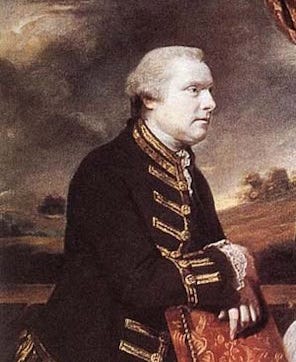
We left off in Part 1 on the Franco-British rivalry in the Indian Ocean on the last day of 1750, with the French governor in India, Joseph-François Dupleix, triumphant. For several weeks, he and his allies had faced down an enemy coalition. After a series of engagements in which the reigning Nizam of Hyderabad was killed and his army dispersed, Dupleix’s allies Muzaffar Jung and Chanda Sahib were proclaimed Nizam of Hyderabad and Nawab of the Carnatic, respectively.
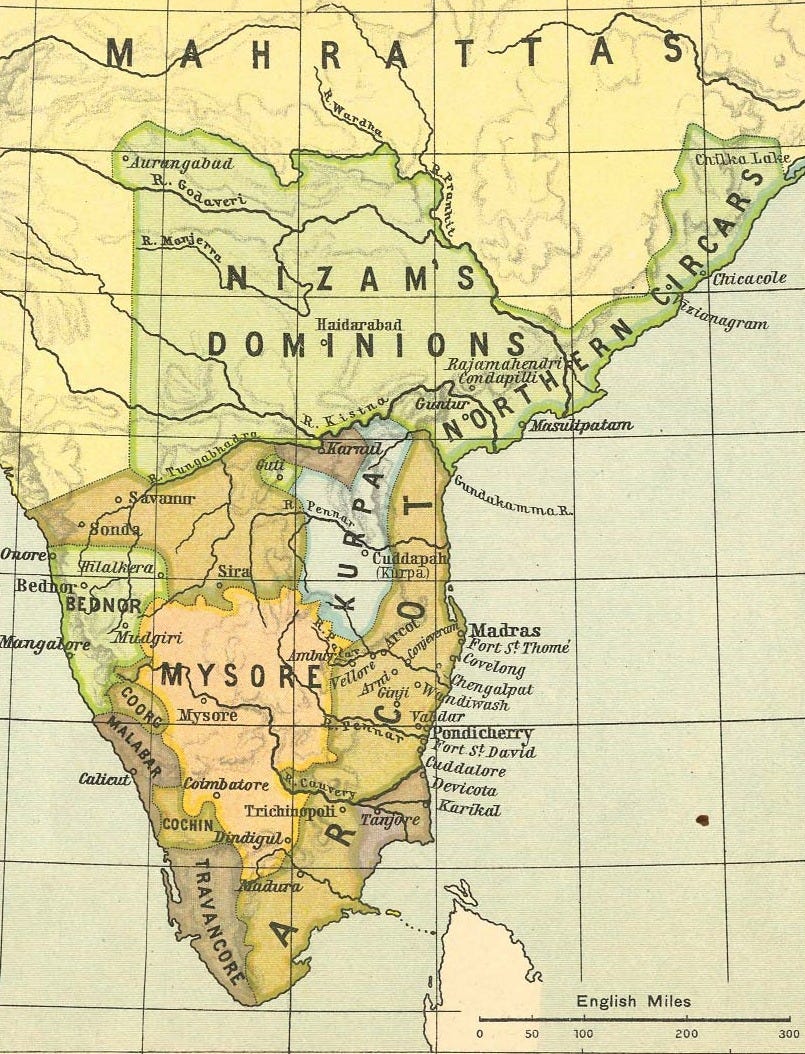
The war, which had lasted not even 18 months, appeared to be over. The French were left in a strong position in southeastern India; all that remained was to assist their allies consolidate their hold. Chanda Sahib’s rival for the throne, Mohammad Ali Wallajah, had taken refuge at the impressive fortress of Trichinopoly in the southern Carnatic, but appeared open to a diplomatic solution.
The war had seen little direct confrontation between the French and British East India Companies. Their home governments were at peace, which ruled out any major naval confrontation—they were only permitted to fight each other in service to their Indian allies.1 Dupleix had been an active driver of events, however, while the British played only a supporting role in their allies’ designs. This changed after 1750. The rapid dissolution of the allied coalition threatened to leave the British position entirely at the mercy of French allies—something which alarmed Thomas Saunders, the new EIC governor in the Carnatic.
Yet the British position was not as bad as it appeared at first glance. So long as their candidate for the Carnatic held out, they maintained some leverage. The remainder of the Second Carnatic War would see the British exercise the same diplomacy and selective application of force that Dupleix had used so effectively. Although the French maintained the upper hand throughout, their British antagonists were able to stretch them thin and deny them a decisive victory, setting conditions for a future conflict in which sea power would come back into play.
As with the First Carnatic War, the Second was waged principally between alliance systems. The Europeans were not true imperial powers in India as they were in North America: they did not control vast territories in their own right, nor could they raise large armies from amongst their settlers. Colonies in India, such as they were, were limited to trade stations on or near the coast, with at most small patches of the surrounding countryside to support them. The French and British East India Companies therefore depended heavily on Indian troops to fight their wars: both the armies of their native allies and the sepoys they raised and trained in contemporary European tactics.
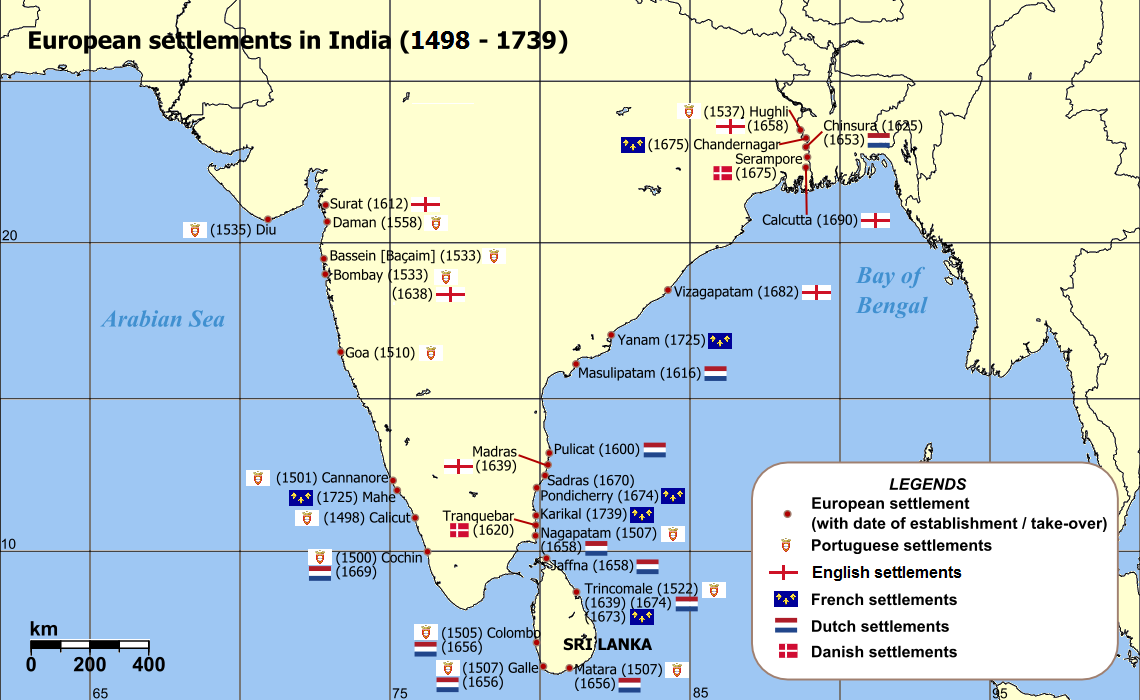
The stakes were nevertheless high for the European powers. The Carnatic was an important source of trade goods in its own right. It also controlled the sea lanes to Bengal, which had become the most valuable trade region in India—not to mention an important source of saltpeter, a critical ingredient for the manufacture of gunpowder. The outcome of this war would therefore have serious repercussions on strategy in the next global conflict.
To the Gates of Trichinopoly
Dupleix spent the first few months of 1751 negotiating with Wallajah to find some mutually-satisfactory solution, such as compensatory territory elsewhere in southern India. In the meantime, he sent a contingent of French troops to accompany the new Nizam to his realm on the Deccan Plateau—these were commanded by Charles de Bussy, Marquis de Castelnau, one of his most capable officers.
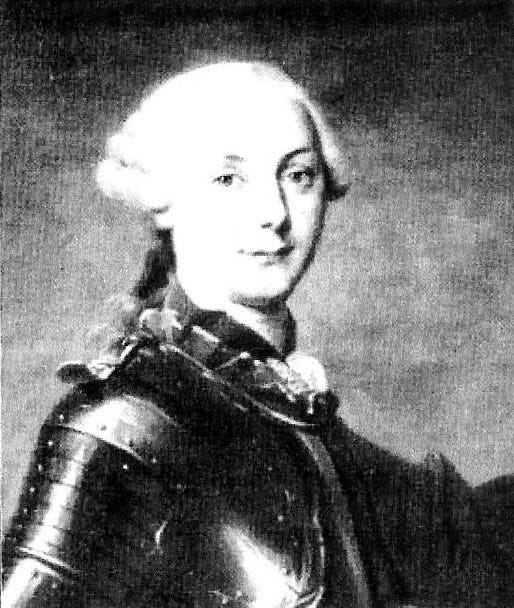
It was at this point that things started to go wrong for the French. While proceeding across the Deccan, Muzaffar Jung was attacked and killed by several of his own vassals. Bussy was able to fight off the attackers and take charge of the situation, securing the elevation of Salabat Jung, the late Nizam’s uncle. Wallajah was in the meantime stalling in his negotiations, collecting taxes from the winter harvest to rebuild his military strength while sending feelers to the British for renewed support. With the bulk of French troops tied up in the Deccan, Saunders saw his opportunity, and in March sent about 600 soldiers to reinforce Trichinopoly; Wallajah thereupon dropped all pretenses and openly defied Chanda Sahib’s authority.
Dupleix and the nawab resolved that Trichinopoly had to be reduced by force. Their expedition was delayed by several months—Chanda insisted on a detour to Arcot to raise more men—but eventually got underway in June. By this time, Saunders was able to gather another 1,600 European, Indian, and African troops under the Swiss officer Captain John Gingens, who was instructed to meet up with Wallajah’s field forces and intercept the enemy column.
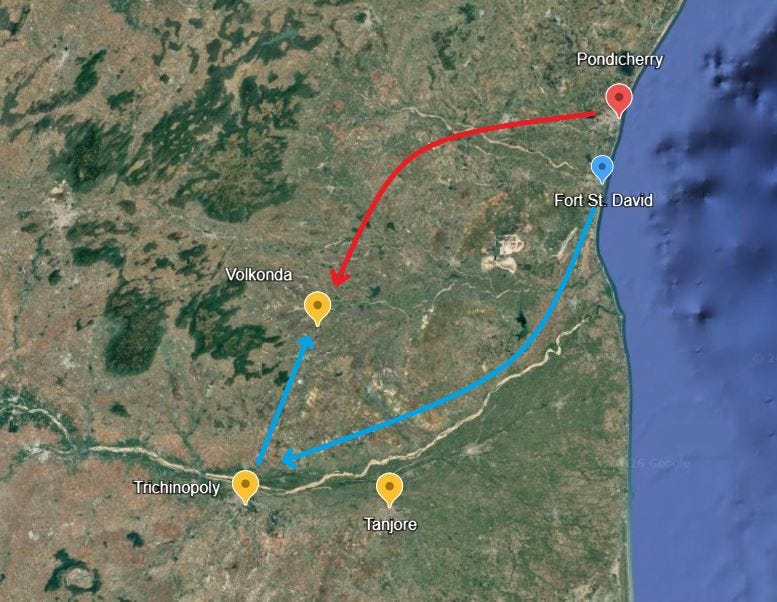
There followed a strange standoff that reflected the highly uncertain political climate of the Carnatic. Gingens tried to occupy Volkonda, a strongly-fortified town on the road to Trichinopoly, but its governor was uncommitted and refused to admit them. He had good reason to be indecisive: Chanda Sahib and the French arrived soon after, bringing 8,000 Carnatic soldiers and 400 Frenchmen to face Wallajah’s 5,600 and 1,700 British-provided troops.
The armies faced off for two weeks, until on 19 July Gingens lost patience and tried to storm the walls. His first attempt failed and decided the governor against Wallajah, who that night agreed to admit Chanda Sahib’s forces. When Gingens renewed his efforts the following morning, his men were met by well-aimed musketry from the walls and French artillery from their flank. They recoiled with heavy losses, but the Carnatic and French troops pursued only sluggishly, allowing the British and their allies to escape to Trichinopoly.
Chanda Sahib’s army arrived before that city a week later. It was soon joined by Jean Law, nephew of the disgraced John Law (who had run France’s finances earlier in the century—it was he who consolidated the various royal monopolies into a single Compagnie des Indes, what we here call the French EIC). Law neveu had previous experience in India—he participated in the successful defense of Pondicherry in 1748—and had just returned from France. Dupleix assigned him to replace the ailing D’Auteuil as commander.
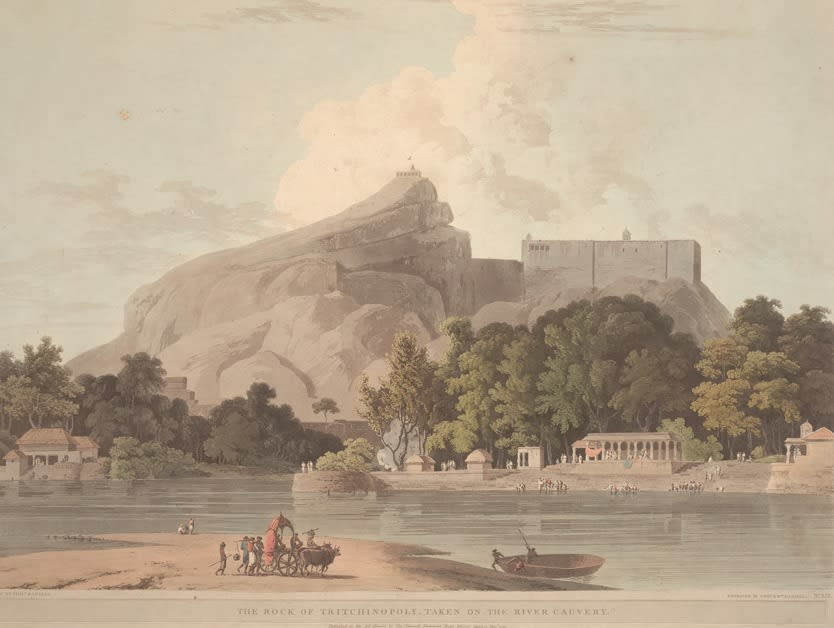
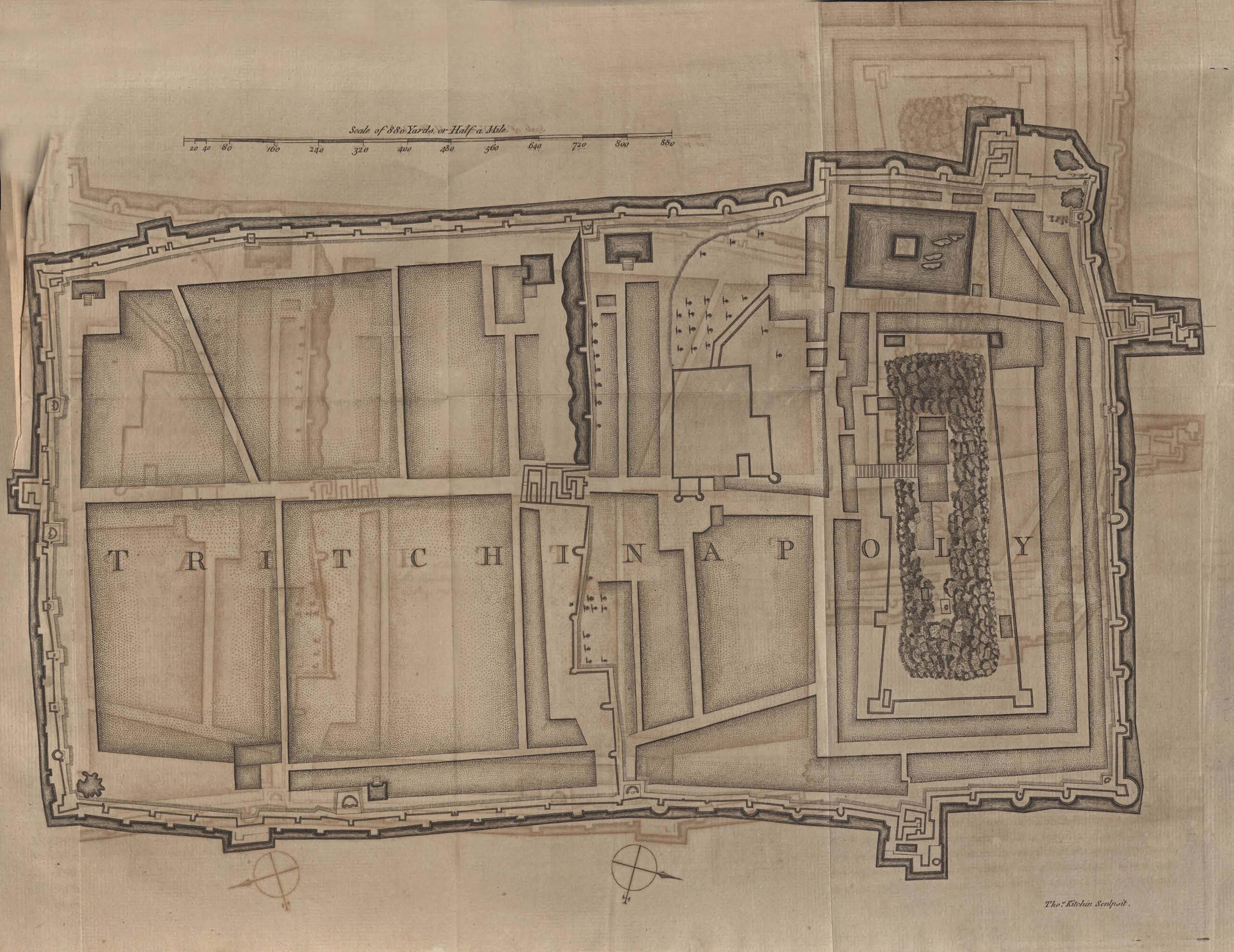
Trichinopoly was an impressive fortress, protected by a double wall roughly 6 km in circumference and a wide moat. The citadel, on a high rock, allowed the defenders to cover the approaches from the river. The allies did not have a large artillery train to batter through these works, but had a great advantage in numbers: Law therefore decided to blockade the place, spreading out through the surrounding countryside to seize its provisions and deny them to the garrison.
War on the Deccan
A second theater of operations had meanwhile opened in the Deccan. Bussy had gone with a majority of French forces—over 2,000 French and sepoys—to establish Salabat Jung as a faithful ally on the throne there. He was induced to accompany the new Nizam as far as Aurangabad (at the time the actual capital of the Deccan), fearing to be left alone in the viperous court. Bussy consented, and the princely procession arrived there at the end of June.
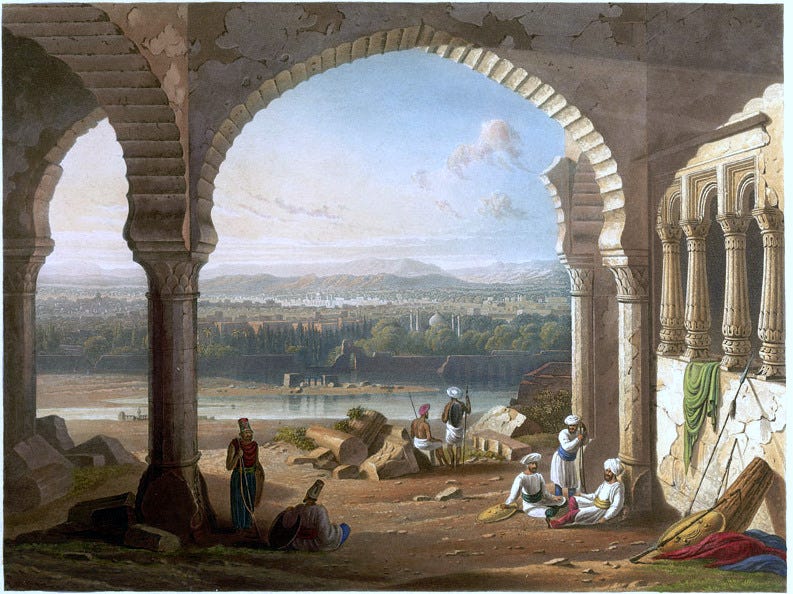
The grateful Nizam richly rewarded his French allies with huge sums of money and grants of land. He even offered to make Dupleix nawab of the entire Carnatic, effectively deposing Chanda Sahib (the governor demurred, thinking it impolitic to betray an important ally). Bussy meanwhile made himself Salabat Jung’s righthand man, gaining great influence over the court’s politics.
This partnership soon proved its value for both parties. Salabat thus far only held de facto control of the Deccan—the office of Nizam could only be formally granted by the Mughal emperor. Before his own entreaty for the title could be heard, his elder brother Ghaziuddin, a court official in Delhi, managed to get himself appointed successor. That autumn he marched south with a very large army, which was joined by another large army of his Maratha allies, commanded by the Peshwa Balaji Rao (the Peshwa was a hereditary office in the Maratha Empire: nominally something like a prime minister, but by this point held effective power).
Salabat immediately fell back to a more secure position near Hyderabad. Rather than wait to receive the enemy there, on Bussy’s advice he went on the offensive and attacked Pune, the Peshwa’s capital just 200 km southwest of Aurangabad and 500 km west of Hyderabad. This greatly alarmed Balaji, who attempted to block their way with an estimated 40,000 cavalry. Salabat’s army was much smaller, but he was augmented by Bussy’s contingent. The Frenchman had raised the number of European-trained native troops from an initial 2,000 to 5,000, in addition to his 500 European soldiers and ten field guns.
Since at least the rise of the Mughals in the 16th century, their superb Central Asian cavalry had been dominant in Indian wars, forcing local rulers to adapt. The Maratha state, the greatest Hindu power on the Muslim-dominated subcontinent, responded by breeding a hardy pony suited to India’s rugged western mountains. These made superb light cavalry with the endurance to range long distances, but lacked the powerful charge of larger horses. The infantry, by contrast, was a decidedly subsidiary arm in India, not yet trained to European standards of drill and musketry.
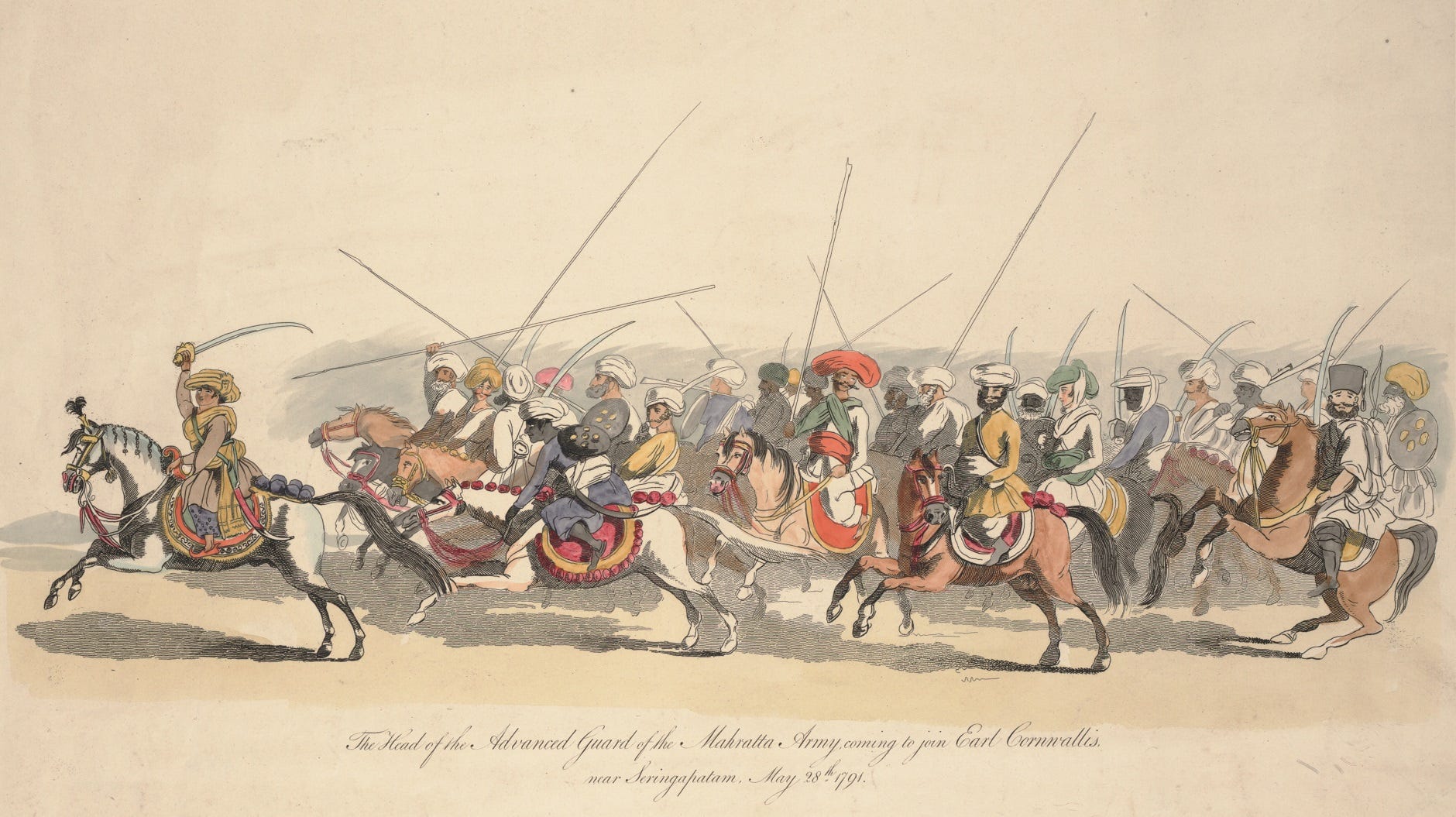
The Nizam and his French allies set out on 31 October. On 20 November they met the Maratha army near Parner, 80 km northeast of Pune. Salabat Jung drew up his army to receive the Maratha charge, while Bussy placed his guns on a height on his flank, with the infantry placed in support. The engagement proved to be little more than a skirmish, as the rapid artillery drove back the Marathas tentative probes. The allies pressed on: they surprised the Marathas in their camp on 22 November, capturing most of their baggage, then over the next few days plundered several towns on the road to Pune.
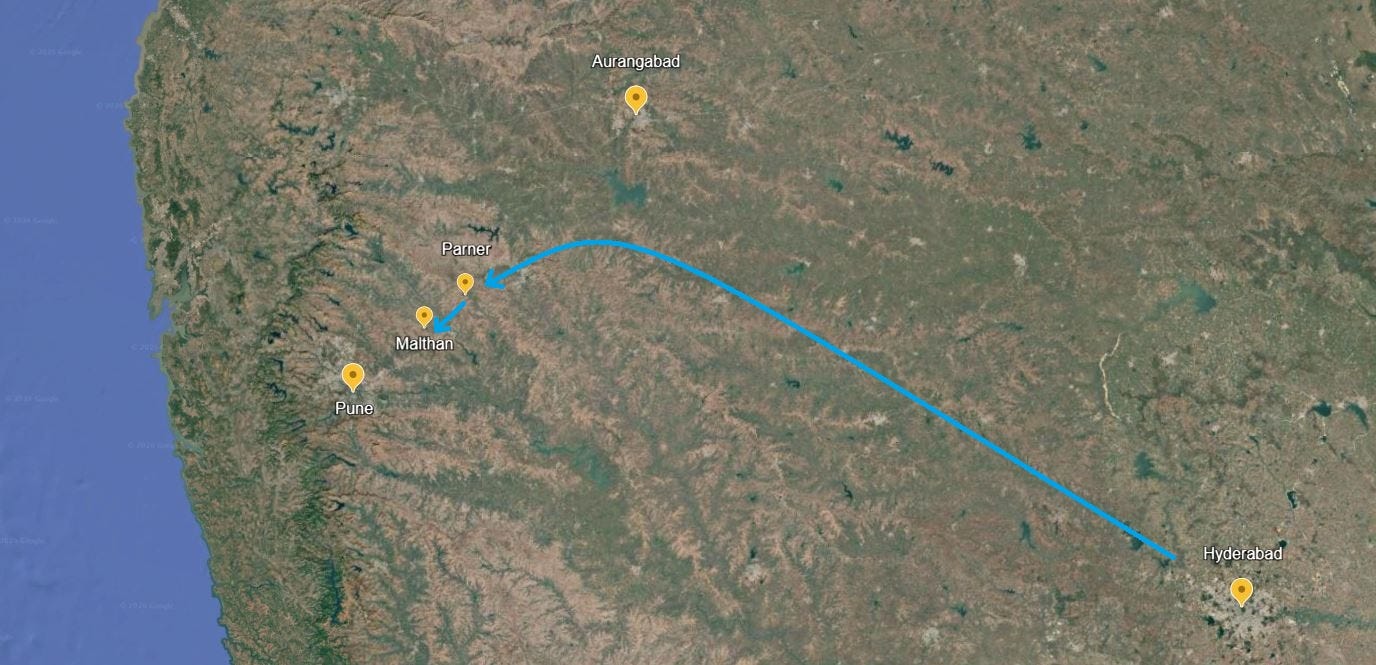
By this point, Balaji Rao was desperate to halt the enemy advance. When the two armies met again on the 27th near Malthan, their dispositions were largely the same; this time, however, the Maratha cavalry was ordered to drive its charge home. They managed to drive Salabat’s line back, capturing four elephants and several hundred horses before being driven back again by Bussy’s accurate flank fire.
Although the Deccan forces took much heavier casualties than the Marathas, these numbered in the hundreds, not thousands, and the battle was in no way decisive. Having failed to block their advance, Balaji employed his cavalry to better use by sending them to raid into Deccan territory. The capture of an important border fort drew the Nizam off, and after a few weeks of skirmishing, the two sides agreed to an armistice on 7 January 1752. At this, Salabat returned toward Hyderabad. His older brother Ghazziuddin was too strong to attack at Aurangabad, but neither was he in any position to advance against Salabat. The war went dormant for the next several months.
The Affair of Arcot
As Salabat Jung’s fortunes hung in the balance in the Deccan, Chanda Sahib’s final victory appeared but a matter of time. It was at that point that one of the most significant figures of these wars came on the scene: a young captain named Robert Clive, who more than anyone shaped British fortunes in India. He had first arrived in that country as a clerk for the EIC in 1744, and was one of the prisoners who escaped Madras amidst the confusion following its surrender to the French in 1746. He subsequently received a commission and rose through the junior ranks.