
A famous, if apocryphal, quote attributed to Moltke dismissed the American Civil War as “two armed mobs chasing each other around the country, from which nothing could be learned.” There were certainly lessons to be learned—it could hardly be otherwise in so long and intense a conflict. The war showcased many new technologies on a large scale, including rail and telegraph, while the growing accuracy of firearms showed the growing importance of field fortifications in pitched battle. It also gave witness to many expedients and innovations, including the first known employment of indirect fire (although that would take much longer to be appreciated).
Nevertheless, the readiness with which Moltke’s spurious quote was accepted is suggestive of fundamental differences between Europe’s large professional armies and the hastily-raised volunteers that fought for both North and South. The Civil War saw a mobilization of unprecedented scale, expanding from a pre-war regular army of 15,000 to a total of nearly 2 million at its peak.
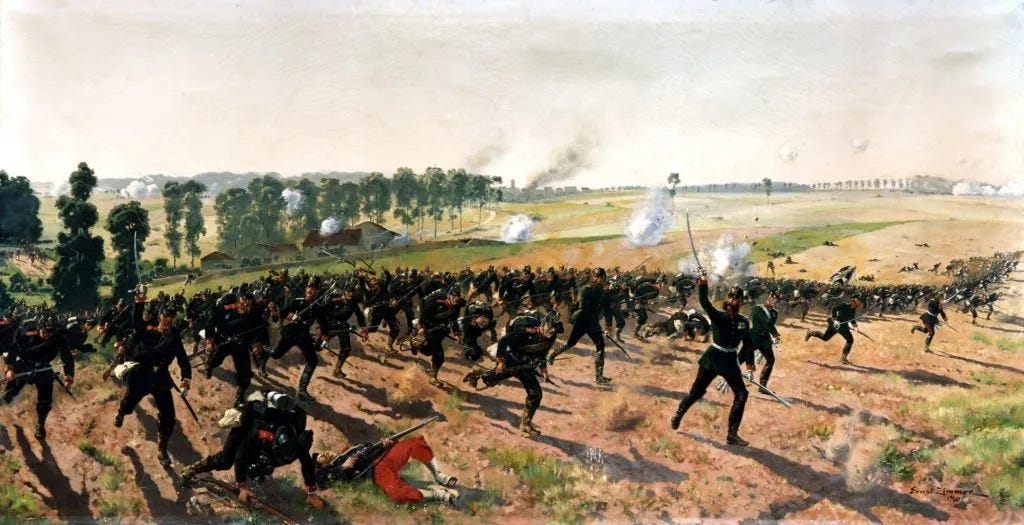
At some critical battles, like Antietam, many regiments had mustered bare weeks before. At best, these soldiers could handle their weapons reasonably well; large-scale maneuvers in the heat of combat were out of the question. Even long-serving formations did not have much of a chance to redress these deficiencies, as demonstrated by the disjointed conduct of Pickett’s Charge. What immediate lessons could the Prussian and French, efficiently maneuvering under fire at Gravelotte or Mars-la-Tour, have learned from Civil War armies?
Lessons at the Right Level
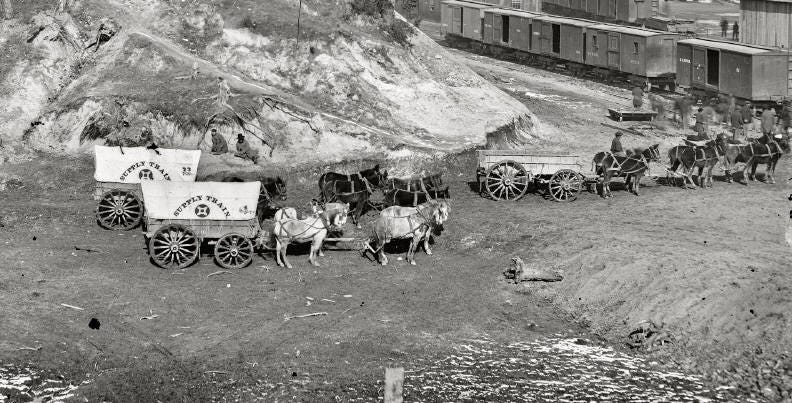
Perhaps not much at the tactical level, but there was plenty to be learned at the operational. Never before had railroads been employed at such scale to shift troops within and between theaters; nor the telegraph, which was used to coordinate such movements. Efficient logistical services allowed both sides to undertake bold maneuvers involving massive numbers of troops (it is noteworthy how many generals had previous experience working for railroad companies, and how many more went on to high management or board positions after the war).
But the point also holds more broadly, beyond the particular technical specialties of 1860s America. Whenever tactics alone cannot suffice—either because both sides are extremely skilled, as in the First World War, or because organizational breakdowns rule out more complex maneuvers—decisive action can by default only occur at the operational level. This was an essential point in Saladin the Strategist. Muslim and Crusader armies, through long experience fighting each other, had developed unique fighting styles tailored to blunt each other’s edges: barring a fluke, decision could only be won through some higher-level maneuver.
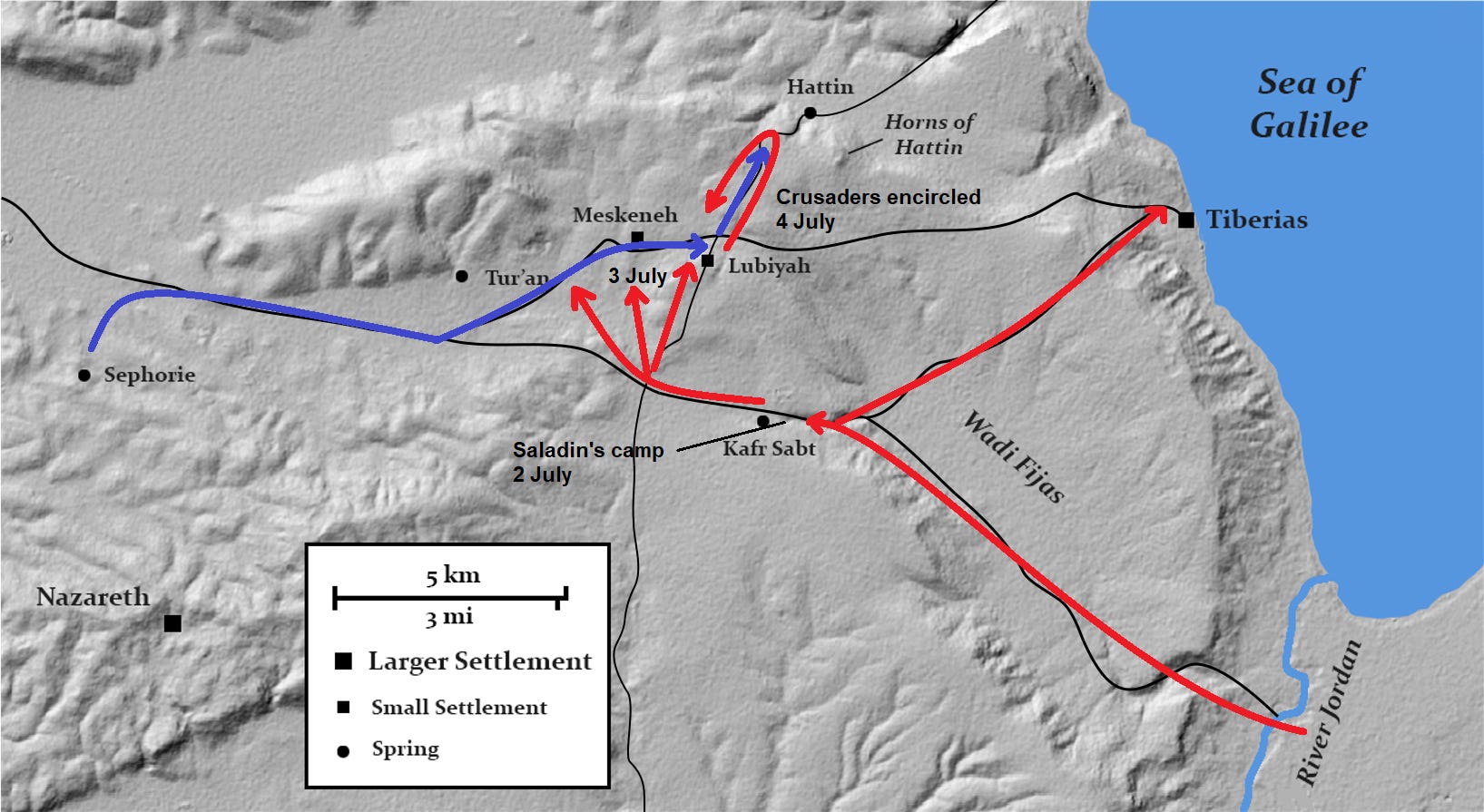
In such cases, the fighting capabilities of an army matter less in any absolute sense than in their ability to effect a particular operational scheme. Tactical proficiency is but one variable among many, and not necessarily the most important. Whether a general is dealing with poorly-trained militia or long-serving professionals, it is above all their relative odds that factor into his calculations.
Learning from the Past
This opens up much of military history to fruitful study. However few tactical lessons contemporary Europeans could draw from the Civil War, there are even fewer for us today. Technology has long since negated any directly applicable takeaways: at best, observations like the growing importance of cover against accurate firepower merely reinforces lessons more than a century old.
The primary utility of military history has never laid in practical tactical lessons. Even miniscule technological changes can have drastic effects on battlefield employment: just the few meters difference between the Spartan’s spear and the Macedonian’s pike led to radically different tactics. Studying past battles can help develop an intuition for tactical dynamics—the importance of concentration and flanking, the relationships between cover and suppression, the perils and payoff of pursuit—but can never teach how to apply those in a given case.
This is somewhat less true at the operational level. Although it too is sensitive to technological change—motorization, wireless communications, road quality all shape tempo and dynamics—operational parameters are somewhat abstracted from the details of the battlefield. Rates of advance, force densities, supply bottlenecks, and so forth are universal factors that have applied to land operations in all periods.
That is to say, the commander of a 20th-century combined-arms force would be flummoxed by 16th-century pike-and-shot tactics, and vice-versa. Understanding the employment of infantry, cavalry, and artillery in a given age requires a fairly detailed explanation of their armament, organization, and equipment, with many subtle details to throw off intuition. But the two commanders could pretty readily explain their higher-level decisions to each other. One does not have to be closely acquainted with the finer distinctions between ox-drawn tumbrils and 2½-ton trucks to understand logistical constraints—capacity, maintenance requirements, and traversability are universally intelligible.
Operational Universality
Past a certain scale, operational art itself takes on a universal character—certainly by the 18th century in Western Europe, and in many earlier times and places as far back as antiquity. The fundamental challenges of moving large quantities of men and material remain the same, regardless of the particular technology.
Rates of advance of large forces have been remarkably consistent across time. Although a pre-20th-century army could never travel as fast as a motorized army under optimal conditions, the latter advanced at similar rates in the face of even light opposition—typically well under 20 km/day. Likewise, geography exercises a similar influence on mobility in all periods: although mechanized forces can traverse rivers, mud, and mountains much easier than an animal-powered one, the relative effect is similar.
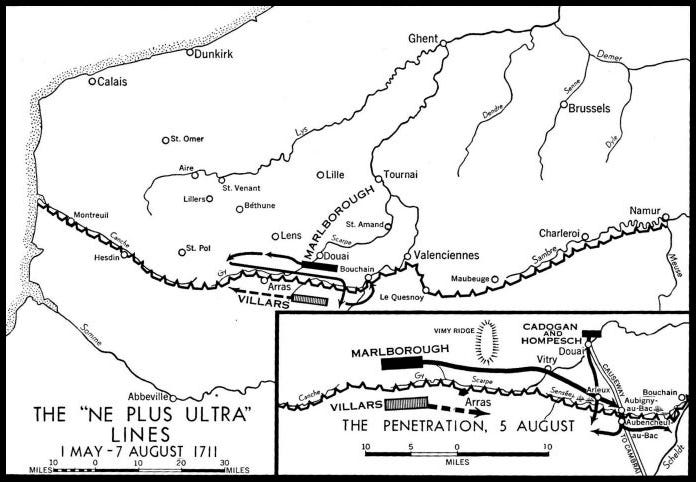
The dynamics of combat are also similar at the operational level. The most distinctive feature of post-1914 warfare has been the presence of a long, continuous front, but even that is not solely a product of machine guns and mass mobilizations. Past a certain size, even fairly primitive gunpowder armies could form a “virtual” front: a line beyond which it is operationally difficult for an attacker to advance, even if its whole length was not manned. The process of attacking such a front in the 18th century looks remarkably similar to later periods: massing forces while conducting fixing or diversionary actions, launching the main attack to break through the defensive screen, then bringing up reinforcements and engineers to secure the position. Follow-up decisions—whether to consolidate or exploit—come down once again more to relative speed and density than any inherent limitations.
Blurring the Lines
There are limits to this, of course, especially as modern weaponry has intruded into the operational domain. This began with the airplane: although the integration of airpower with ground forces in World War II can be analogized to the operational role of cavalry, developing a useful understanding of its employment requires much more detailed knowledge—we are back in the position of the modern general trying to employ 16th-century tactics. Drones and missiles have taken this still further, blurring the lines between the tactical and operational altogether.
Nevertheless, there remains much of value in the study of past operations. To return to the example of the Civil War, the next Dispatch for paid subscribers will focus on one exceptional case study. The Tullahoma Campaign was the first phase of the Union drive to capture Chattanooga, a major strategic objective that constituted the center of gravity of the Confederacy’s rail network.
In a nearly bloodless campaign of two weeks, Major General Rosecrans levered the defenders out of a strong position guarding several narrow passes. Although the campaign demonstrated plenty of tactical ingenuity, including the mounting of an entire infantry brigade to seize crucial chokepoints, its chief interest lies in its operational maneuver—the brilliance of which is recognizable in any age.
Thank you for reading the Bazaar of War. Most articles are free for all to read, but a subscription option is available to all who wish to support. Subscribers receive a pdf of the critical edition of the classic The Art of War in Italy: 1494-1529, and will have exclusive access to occasional pieces.
You can also support by purchasing Saladin the Strategist in paperback or Kindle format.
The American Civil War contained other lessons missed by von Moltke.
One was the martial spirit and staying power of both sides’ levied troops. Several insurgency campaigns such as Ireland, Vietnam, Algeria and much of Africa and the Middle East would show that it was not necessary for irregulars to follow the professional soldiering handbooks.
A second factor was war economy mobilisation especially in the North. Something European powers would take hard lessons on from 1915.
A third factor was the North and South were broadly free men fighting for ideas. That is fuel for war more potent that kingly or Cabinet command.