
What is the smallest-sized ground force that can operate in a single theater against a first-rate peer competitor? That is to say, what is the minimum force size to remain operationally viable? The answer depends first and foremost on the strength of the enemy, and secondarily on geography. But beyond those considerations, there are more fundamental variables involved.
A force with true operational capability must be able to perform a variety of tasks on demand: move, dig in, sustain itself, conduct reconnaissance, cross obstacles, protect its lines of communication, etc. Each of these tasks requires specialized units to perform, and may also require combat troops and assets for security, detracting from overall combat power. Below a certain threshold, all of a unit’s strength must go to merely sustaining itself, not to performing its mission.
This is far from an academic question. These constraints have important implications for force design, determining how larger formations should be structured. Although this is a complicated question with much that goes into it—types of likely mission sets, the nature of air support, etc.—it is worth looking at the broad parameters.
Self-Contained Corps
We see perhaps the earliest example of a formal minimum viable force in Napoleon’s corps d’armée. These were the building blocks of his armies, with enough operational independence to march tens of kilometers apart from their neighbors for weeks at a time if necessary—useful for the ambitious, sweeping maneuvers he was fond of. As the smallest unit that organically combined infantry, cavalry, and artillery, a corps was famously able to hold out against any enemy it was likely to encounter long enough for neighboring corps to come to their aid.
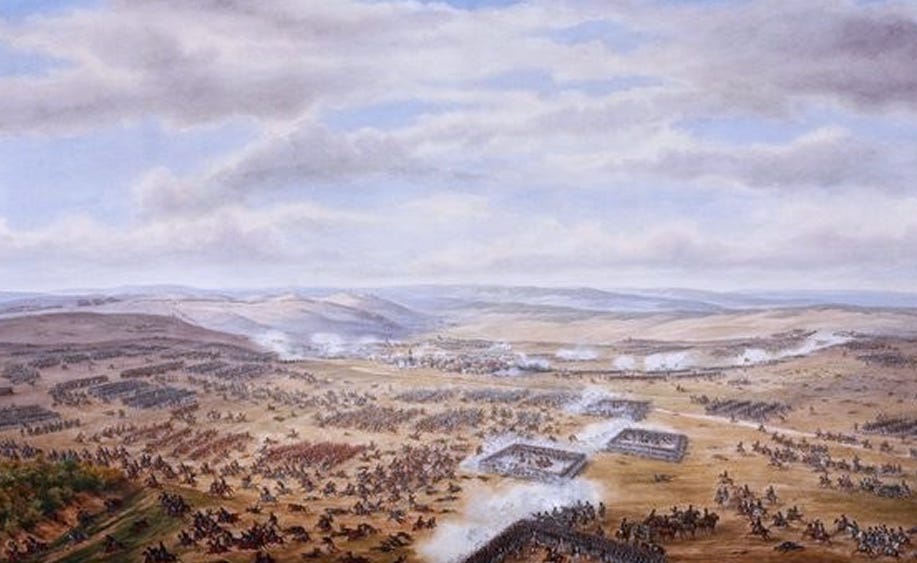
Tactical endurance was a necessary condition for this limited operational independence, but not sufficient. Any unit could combine infantry, cavalry, and artillery in well-balanced proportions in line of battle; what was truly the governing factor at the operational level was instead the absolute quantity of cavalry. A single corps had enough to scout ahead, screen movements, protect foragers, and guard supply lines—tasks that, say, a similarly-proportioned division could not manage.
As such, the basic corps structure did not require too much modification to make it truly independent—typically just a robust wagon train and engineers. A single corps formed the Army of Aragon, which held eastern Spain from 1809 until the collapse of the post-1812 French collapse. Another was likewise tasked to defend Dalmatia during the War of the Fifth Coalition, successfully beating back a smaller Austrian force.
Although the corps d’armée was an invention of the French Revolution, it formalized the accumulated military wisdom of the previous few centuries. The typical corps was 20-30,000 on paper, although often had as few as 15,000 effectives, corresponding to the rough minimum size of a viable army in the early modern period. Anything smaller simply could not endure any kind of reverse and remain in the field: there are countless examples of small 16th- and 17th-century armies having to fall back on a single stronghold or abandon a theater altogether after a single lost battle.
Compounding Complexity
Growing logistical requirements have been perhaps the single driver of increased viability thresholds. Technological change in the 19th century increased these burdens considerably. The growing importance of artillery alone demanded more transportation, which in turn demanded more robust protection of lines of communication—especially as operational distances lengthened with the adoption of railroads. So too with telegraph wires, which were increasingly important for command and control.
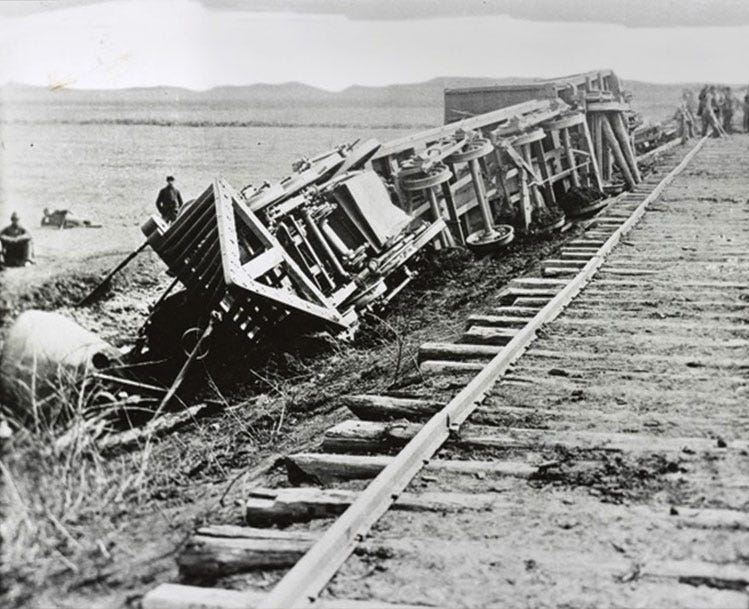
We recently saw with the Tullahoma Campaign, for instance, how William Rosecrans bulked up his cavalry to around 10,000 and formed a 20,000-strong Reserve Corps to protect his communications in Middle Tennessee. Although probably in excess of the minimum, this gives some indication of the effort required merely to enable operations in a remote theater.
World War I saw another quantum leap. Once again, much of this was dictated by logistics—heavier shell weights and exponential increases in consumption rates—but much was also driven by tactics. Tracing the arc of combined-arms warfare across the 20th century, we see how the proliferation of new types of weapons meant that a well-balanced force had integrated separate arms at all echelons, which increased the overall size of formations. The corps, which remained the lowest echelon that united all calibers of artillery, had grown to about 40,000 by 1914, not including the majority of necessary support personnel.
Mechanization raised the tactical floor still further. By the outbreak of World War II, the smallest complete combined-arms formation was the army, which united infantry and armored corps—although realistically, smaller formations could have been made tactically viable by attaching higher-echelon assets to them. It is hard to say exactly where the floor was—most secondary theaters saw quite large deployments—but the minimum was probably close to 100,000.1
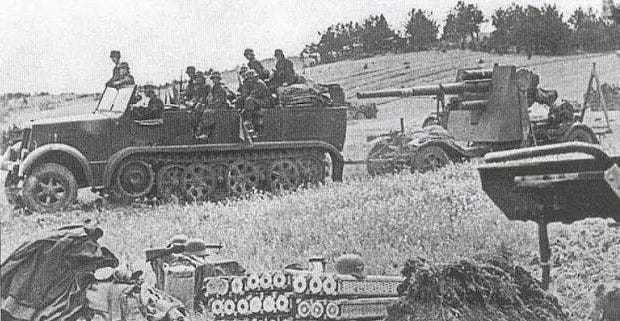
One factor that needs to be singled out is the introduction of airpower. By the end of World War I, ground forces required protection against the air threat. Even ignoring the tactical role of aviation, air defenses, like cavalry in earlier periods, were necessary to protect lines of communication and maintain operational viability. By 1918, anti-air guns were mostly controlled at the army level, where they numbered just a few thousand among hundreds of thousands. Those numbers steadily increased in the lead-up to World War II, by which time the division and corps had their own organic air defenses—with concomitant rises in logistical burdens.
Modern Operations
Drones and missiles now exert a similar influence to airpower. They greatly complicate the combined-arms battle, requiring tactical formations to be rebalanced, and also present challenges at operational depths. Thus far, satisfactory solutions have not been found for either problem, but will almost certainly raise deployability requirements still further—if not in terms of manpower, then certainly in terms of equipment: lots of next-generation interceptors to address the missile problem, lots of other hard-kill measures at lower echelons to defend against everything else, and lots of excavators to bury supply nodes.
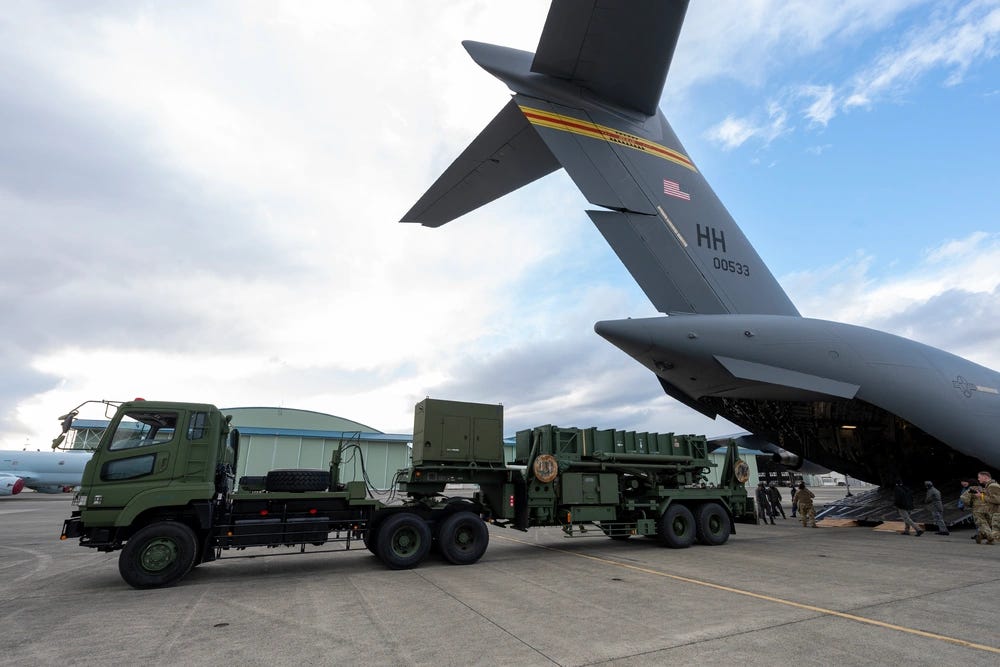
The question of minimum viable force is therefore fundamental to how the major militaries of the world will restructure as they absorb the lessons of Ukraine. For the largest, this must guide how they design their higher-echelon formations, constructing them around both operational survivability and tactical balance. For the larger NATO militaries in Europe, it sets a floor on what is needed to maintain a credible ground force. And for smaller militaries, it sets hard parameters on the conditions by which they can support allies.
Thank you for reading the Bazaar of War. Most articles are free for all to read, but a subscription option is available to all who wish to support. Subscribers receive a pdf of the critical edition of the classic The Art of War in Italy: 1494-1529, and will have exclusive access to occasional pieces.
You can also support by purchasing Saladin the Strategist in paperback or Kindle format.
An instructive counterexample is the Syria-Lebanon Campaign in 1941, where Vichy forces numbered only around 50,000, a majority of which were light colonial troops. Although they mounted stiff resistance in the constricted geography of Lebanon and southern Syria, they lacked adequate air defenses and were unable to defend their lines of communication against a flanking attack in their depths.
Great article Bazaar of War. You offer some very useful insights. One idea we would add is the the vulnerability of large formations in an increasingly sensor-saturated environment. Note, we are not believers in the "transparent battlefield" concept. It will be a long time before technology is good enough (and more importantly reliable enough) to create a truly transparent battlefield. However, large formations are now more vulnerable to detection and subsequent targeting with an unprecedented volume of guided munitions and accurate artillery. We believe this will require formations to disperse more, use deception and camouflage. So while we believe you are absolutely correct that the evolving requirements of modern war will require formations to grow bigger, we think there will be a competing urge to split into smaller elements, capable of independent combined arms maneuver in order to complicate the enemy's battlefield equation, increase uncertainty and allow for greater flexibility. We are not sure what that balance is but we thought we would put the idea on the table to hear your thoughts. Great article once again.