
One of the reasons I focus so much on doctrinal language and the origins of military terminology is how strongly it shapes our thinking. Language and concepts can moreover be very sticky: much of our current framework for military thought was laid down decades and centuries ago. Once a concept is embedded in the common lexicon, it can therefore be very difficult to discuss anything without invoking it—whether it is helpful or not.
This makes doctrinal terminology a delicate thing. It must draw meaningful and useful distinctions, while also being readily comprehensible. There are plenty of opportunities to go astray. Poorly-defined terms can generate more heat than light, provoking definitional debates whenever they are used. Another problem is the excessive use of abstractions, which shifts the ground of discussion from concrete reality toward rarefied (and often dubious) concepts.
These are not merely semantic problems, but often have very real consequences. Who can recall without second-hand embarrassment the earnest GWOT-era discussions on locating insurgents’ “centers of gravity” in the popular will, carried on at length with little material knowledge of the intricacies of Iraqi or Afghan society? Amusing, but for the catastrophic results.
A related problem is trying to cram too much theory into the terms themselves. This turns definitions themselves into battlegrounds, instead of a common vocabulary necessary for any serious debate; concepts become slogans instead of useful descriptors of reality. Nowhere is this more evident than in the longstanding debate over maneuver warfare. Not only have the specific claims of maneuver theory long been the subject of hot debate, but so too has its very theoretical foundation.
Maneuver theory is almost entirely the creation of William Lind, who, beginning in the 1970s, waged something of an insurgency within the American defense establishment to advocate doctrinal and force structure reforms. In the course of this, he wielded the maneuver-attrition paradigm as a polemical tool: to contrast the hidebound ways of the American military with the supposed virtues of past militaries (particularly the German).
Placing attrition and maneuver at two ends of a spectrum was not only a category error, but created untenable definitions that bundled together too many unrelated concepts. “Maneuver” was not just maneuver, with its attendant prerogatives of speed, surprise, and initiative, but also came to encompass decentralized decision-making, psychological disorientation, and demoralization of the enemy. “Attrition” came to mean not just trading losses at a favorable rate, but static, deliberate, top-down-directed warfare supported by the lavish application of firepower.
From this perspective, Lind’s one-man campaign was an enormous success. It established a theoretical distinction that has proven remarkably difficult to uproot, even long after his ideas have fallen somewhat out of favor. Even arguments in favor of a deliberately attritional strategy, contra the dictates of maneuverist dogma, often invoke that paradigm. Yet as much as Lind deserves the credit (blame) for popularizing this conception, its origins owe much to none other than Winston Churchill.
The Birth of an Idea
One of the earliest expressions of the maneuver-attrition distinction came from Churchill’s account of World War I, The World Crisis. Published in 1923 during his years out of Parliament, it exerted a powerful influence on popular understanding of that war in the English-speaking world.
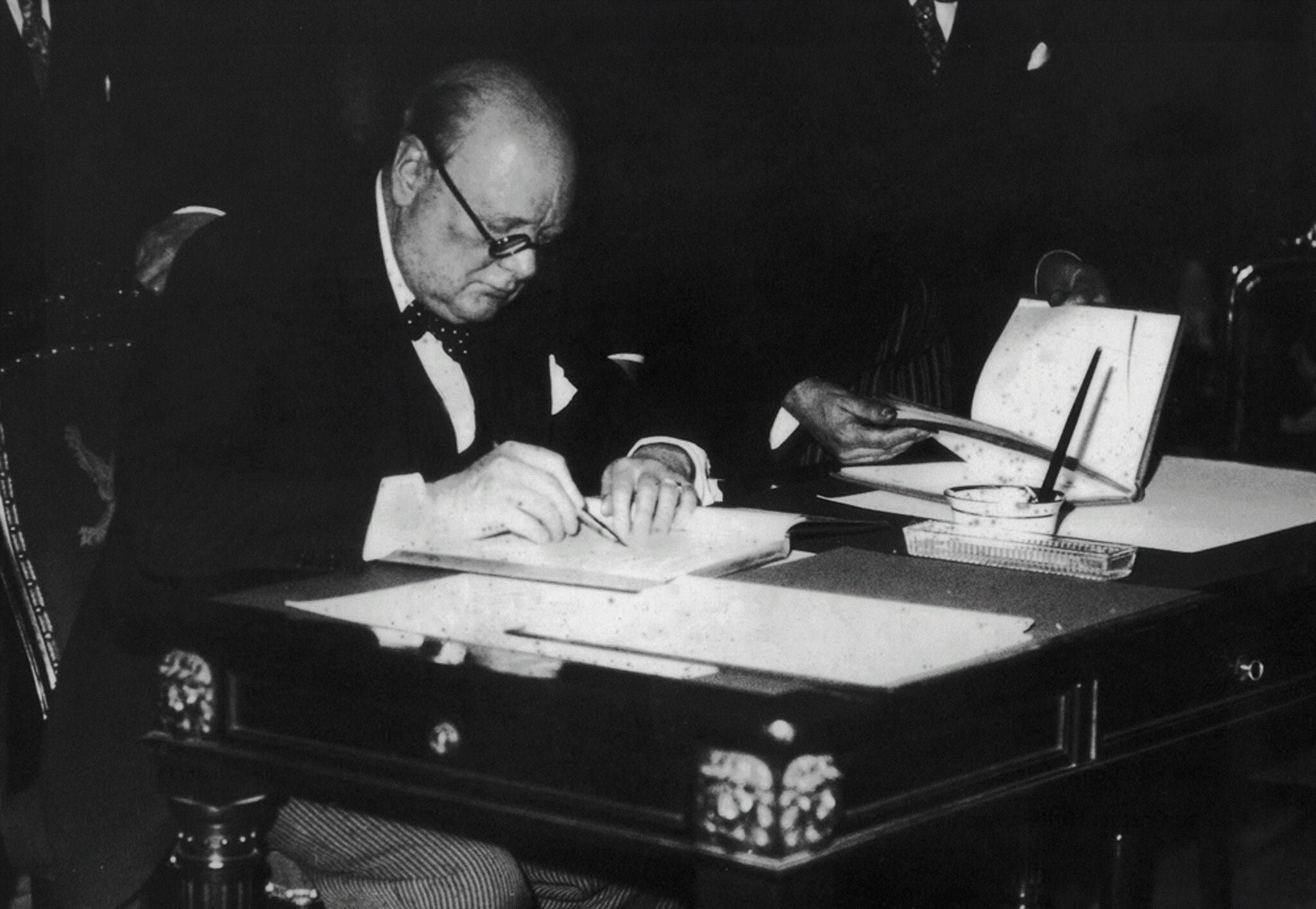
One passage in particular is worth quoting at length:
Battles are won by slaughter and manoeuvre. The greater the general, the more he contributes in manoeuvre, the less he demands in slaughter. The theory which has exalted the ‘bataille d’usure’ or ‘battle of wearing down’ into a foremost position, is contradicted by history and would be repulsed by the greatest captains of the past. Nearly all the battles which are regarded as masterpieces of the military art, from which have been derived the foundation of states and the fame of commanders, have been battles of manoeuvre in which very often the enemy has found himself defeated by some novel expedient or device, some queer, swift, unexpected thrust or stratagem. In many such battles the losses of the victors have been small. There is required for the composition of a great commander not only massive common sense and reasoning power, not only imagination, but also an element of legerdemain, an original and sinister touch, which leaves the enemy puzzled as well as beaten.
At first glance, this looks as if it could have been written by a maneuverist in the 1980s or 90s. A few points stand out, however:
Churchill does not contrast slaughter and maneuver as representing opposing types of war, but as two factors that coexist in all combat—one desirable, the other not.
He says that in many battles won by maneuver the losses of the victors have been small; he does not say that successful maneuver automatically leads to less bloodshed.
Likewise, he does not equate sanguinary battle with attrition. Although this specific passage condemns the ‘bataille d’usure’ as one particular instance of it, “slaughter” could just as easily refer to the decisive battles of annihilation of the Napoleonic Wars—many of which were fought with all the subtlety of a wrecking ball.
These distinctions are easily overlooked in context, however. The passage follows a discussion of the peculiar problems of the Western Front, which lacked flanks that could be turned or a center that could be pierced. Immediately after, Churchill considers the alternatives to conventional forms of maneuver:
There are many kinds of manoeuvres in war, only some of which take place upon the battlefield. There are manoeuvres far to the flank or rear. There are manoeuvres in time, in diplomacy, in mechanics, in psychology; all of which are removed from the battlefield, but react often decisively upon it, and the object of all is to find easier ways, other than sheer slaughter, of achieving the main purpose.
This is strikingly similar to the more abstract forms of maneuver that Lind and his disciples advocated—especially the emphasis on psychology.
To what degree did Lind follow Churchill’s thinking? The first passage was quoted in the influential 1943 edition of Edward Mead Earle’s Makers of Modern Strategy, albeit in a discussion of the more technical aspects of the deadlock of trench warfare. Yet Churchill makes little appearance in Lind’s writings, except in passing for historical context. The writers he invokes most frequently, such as Basil Liddell-Hart and JFC Fuller, come from a different a much older tradition: one that draws a distinction between maneuver and position.
The Maneuver Tradition
This older paradigm dates back at least to the 18th century, and owes much to the writings of the French military theorist Jacques-Antoine-Hippolyte de Guibert. He wrote a number of treatises in the 1770s and 80s advocating military reforms in response to his country’s defeats in the Seven Years’ War. It was he who helped cement the modern definition of “maneuver” as movement to a position of advantage.
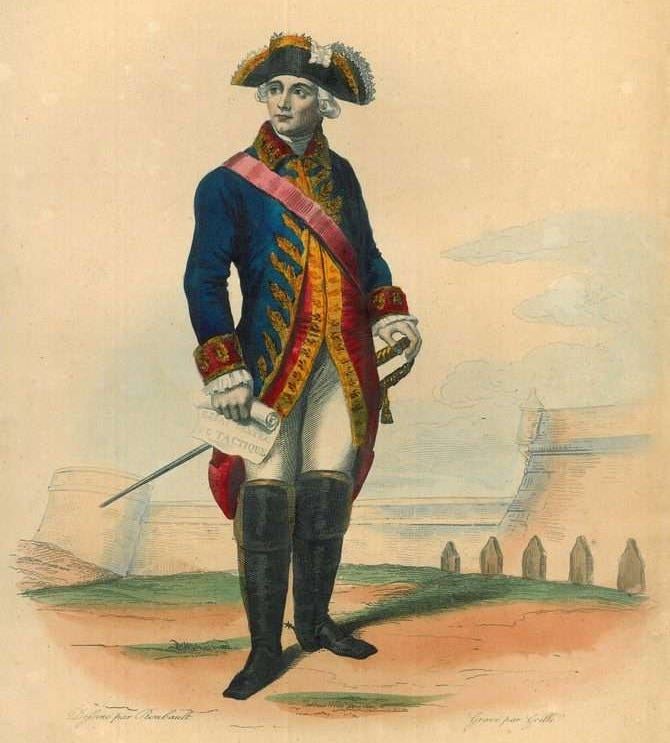
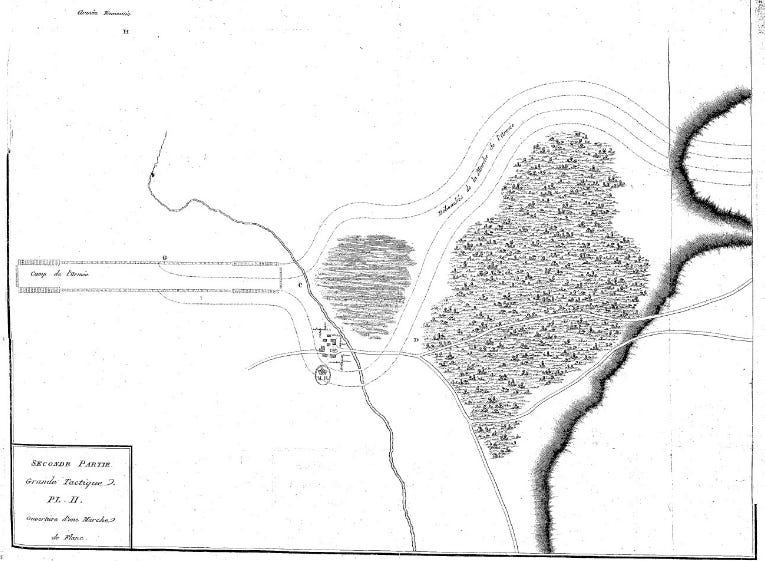
Throughout most of the century, “maneuver” meant something closer to the handling or manipulation of tactical formations (“manipulate” was an etymologically-related term that the classically-trained military writers of the time would have recognized as originating with the maniples of Republican Roman legions—the smallest sub-unit that could be independently maneuvered on the battlefield). The maneuvers of elementary tactics, to use the language of the time, encompassed the deployment of battalions and regiments from column into line and vice-versa; the maneuvers of grand tactics referred to the handling of larger formations, all the way up to a field army, in battle and on the march.
Guibert advocated a more aggressive and mobile style of warfare that would allow France to throw off her dependence on the static (and expensive) lines of fortification along her northern frontier. For this, it was necessary to train an army that could readily form multiple columns for a rapid march then rapidly deploy—maneuvers in the older sense. The word came, by extension, to refer to the entire process of moving to a position of advantage.
What, then, did Guibert mean by positional warfare? Positional warfare could refer to the defense or conquest of fortresses, but also to occupying or attacking strong positions in the field. In the latter case, he recognized the essential complementarity of maneuver and position: he advised that defenders occupy positions which offered good protection but which also afforded room to maneuver. Liddell-Hart, writing a century and a half later, was entirely correct in equating maneuver with the “indirect approach”, in contrast to frontal attacks on fixed defenses.
Yet here too we have to be careful about the subtleties of language. Although Guibert envisaged maneuvers that could extend to the operational level (as, for example, Villars’ celebrated maneuver at Denain), his understanding of position was mostly battle-oriented. This is quite different from our modern usage of “positional warfare”, which, informed by the continuous fronts that emerged in 1914, refers more to operational-level dynamics.1
A New Paradigm
It was precisely the operational-level morass of the Western Front that Churchill, Liddell-Hart, and Fuller were responding to. Although the latter two went on to publish their most important work after 1945, when the bold armored thrusts of the Second World War seemed to show up the failures of the First, they had already established their theoretical frameworks during the interwar period.
Fuller makes a particularly interesting distinction in The Foundations of the Science of War, published in 1926:
There are two ways of destroying an organization:
(i.) By wearing it down (dissipating it)
(ii.) By rendering it inoperative (unhinging it).
In war, the first comprises the killing, wounding, capturing, and disarming of the enemy’s soldiers (body warfare); the second, the rendering inoperative of his power of command (brain warfare).
[…]
The fact I wish to accentuate here is that, as our present theory of offensive action is based on the idea of destroying personnel, new means of war, so I am convinced, will force us to substitute a theory based on the idea of destroying command—not after the enemy’s personnel has been disorganized, but, when it is possible, before it has been attacked, so that it may be found in a state of disorganization when attacked.
Here is, in full form, the essential distinction that Lind tried to capture with his maneuver-attrition paradigm: focused on the distinction between physical destruction and cognitive/moral disruption. Yet what is remarkable is that Lind did not adopt Fuller’s own language of unhinging vs. dissipating; he instead used Churchill’s distinction between maneuver and exhaustion.
There is some logic to this. Of the three writers, Churchill was by far the most widely-read and certainly the most effective rhetorician. And there is also some overlap between the two men’s conceptions, to be sure: Churchill’s “manoeuvres in psychology” sound a lot like Fuller’s “brain warfare”, while Fuller draws some limited distinctions between movement and attrition.2 But on the whole, their two conceptions are very different. Maneuver is not necessarily psychological, is quite often physical, and may or may not lead to costly victories.
This is not to say whether either author was even correct in his premises—I would argue that both made serious errors. It is only to show how “maneuver warfare” is an awkward union of disjointed concepts, the bones of JFC Fuller wearing the ill-fitted clothing of Winston Churchill. And that should serve as a warning about the stickiness language, how careless yet charismatic phrasing can burden us with counterproductive frameworks.
Caveat lector, semper caveat scriptor.
Thank you for reading the Bazaar of War. Most articles are free for all to read, but a subscription option is available to all who wish to support. Subscribers receive a pdf of the critical edition of the classic The Art of War in Italy: 1494-1529, and will have exclusive access to occasional pieces.
You can also support by purchasing Saladin the Strategist in paperback or Kindle format.
Although Guibert was of course familiar with the extended lines along France’s northern frontier—certainly an example of static operational dynamics—these were too singular an example, and he focused on more localized operations.
On p. 290 of The Foundations of the Science of War: “Attacks based on restricted movement are, more frequently than not, parallel actions of attrition.” But here he is speaking of attrition in its strictly tactical role as a preparatory action for a decisive attack (p. 265).