
The growth of armies between the 18th and 20th centuries profoundly changed the nature of operational art. Increases in manpower and firepower transformed field armies from compact masses that could occupy just a few square kilometers into extended formations that spanned tens or hundreds of kilometers. This process culminated in the World Wars, with the emergence of fixed fronts: lines that spanned an entire theater and shifted only slowly. Maneuver was no longer a matter of rapid or unexpected marches, but of creating and exploiting breakthroughs in extended enemy lines.
This evolution was of course irregular and highly context-dependent. Under certain circumstances, operations between relatively small armies were far less fluid than typical of the earlier era. By exploiting geography, manmade defenses, and mobility, an army could defend a much wider area than its numbers alone would suggest. This gave rise to what I call a virtual front: a semi-stable dynamic that resembles the operational patterns of an extended front, even while looking completely different in all the particulars.
Defensive Multipliers
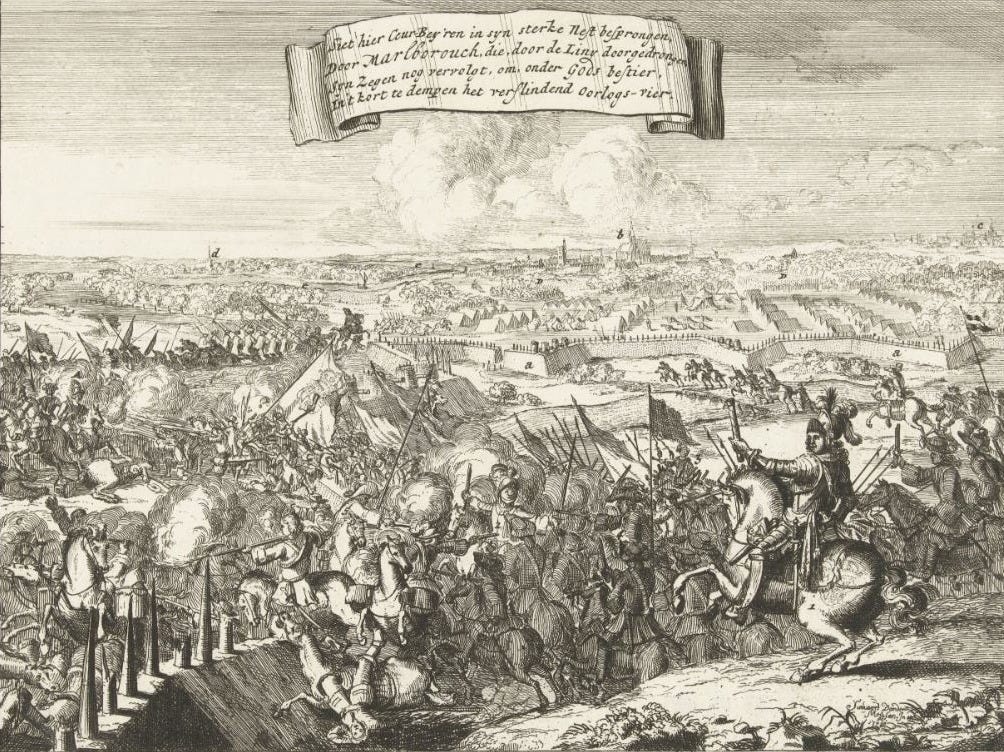
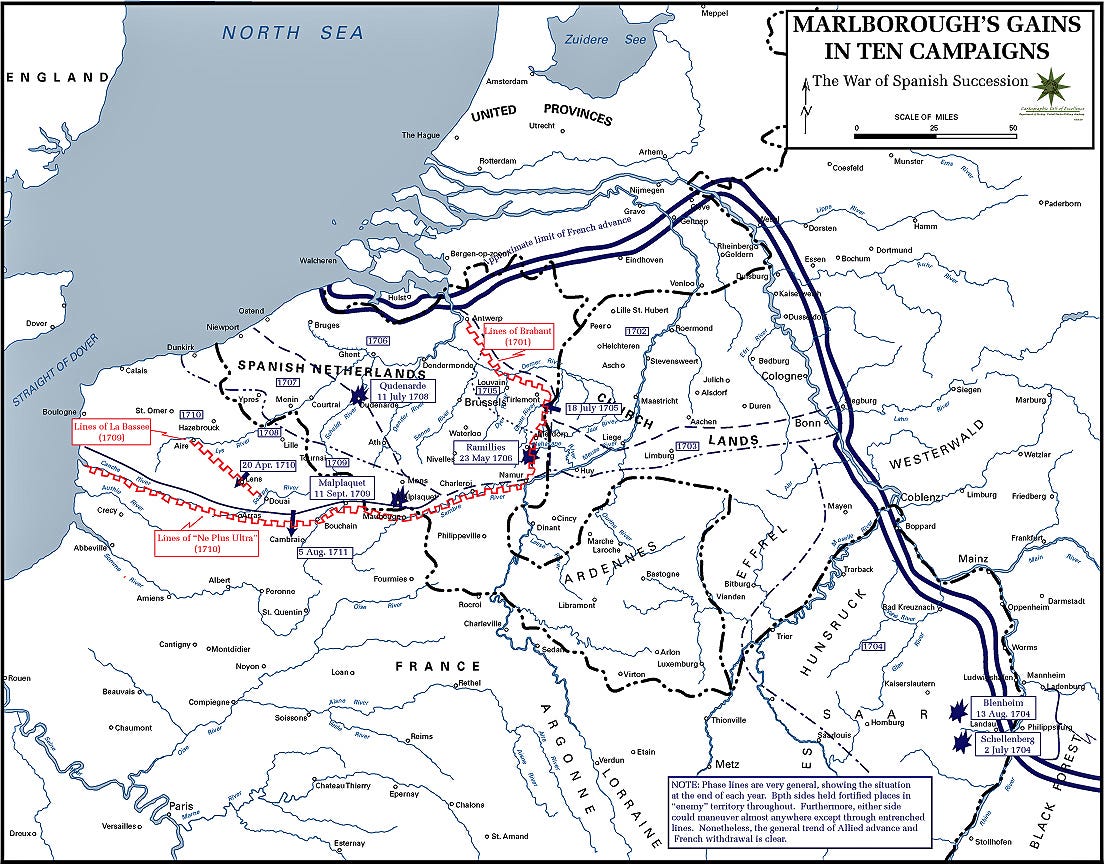
We have already examined a few instances of this phenomenon. As early as the beginning of the 18th century, the French constructed long defensive lines along their northern border and in modern Belgium. These extended earthworks integrated the many fortresses and rivers of the region, allowing an army several tens of thousands strong to defend a front over 100 km in length during the War of the Spanish Succession. Although the French could not come close to manning the entire length of their fortifications, small forts covered particularly vulnerable sectors while regular cavalry patrols alerted the main army to any surprises. This allowed an advance guard to rush to a threatened sector and man the fortifications, buying enough time for the main body to come up.
If, on the other hand, the enemy managed to create a breach, the defenders could usually contain it; and the attacker at any rate had to reduce surrounding fortresses to secure his lines of communication, giving the defender plenty of time to construct new lines to the rear. In this way, the French were able to fall back to successive positions over the course of ten years, preventing an exploitable breakthrough before the war ended—similar to the operational dynamics on the Western Front.
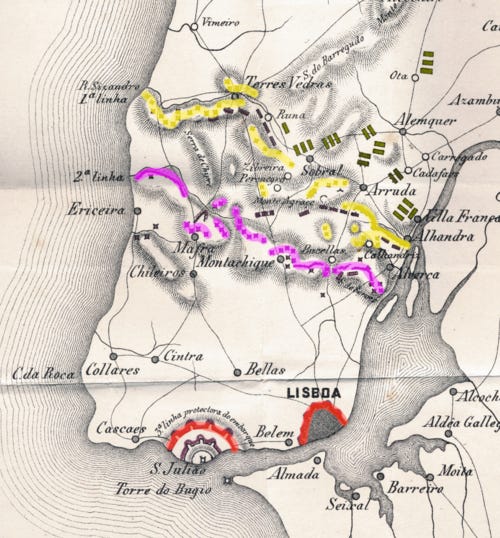
A hundred years later, the French found themselves on the opposite end of a similar situation. During the Peninsular War, Anglo-Portuguese forces constructed two fortified lines, about 40 km long, to block the approaches to Lisbon. These did not employ earthworks at all, but were instead composed of small forts constructed on ridgelines with interlocking fields of fire. Garrisons at each fort were small, but semaphore stations placed at regular intervals allowed Wellington’s army to react instantly to any threat—so effective was this system that the French never managed to penetrate the first line during the five months they spent in the area.
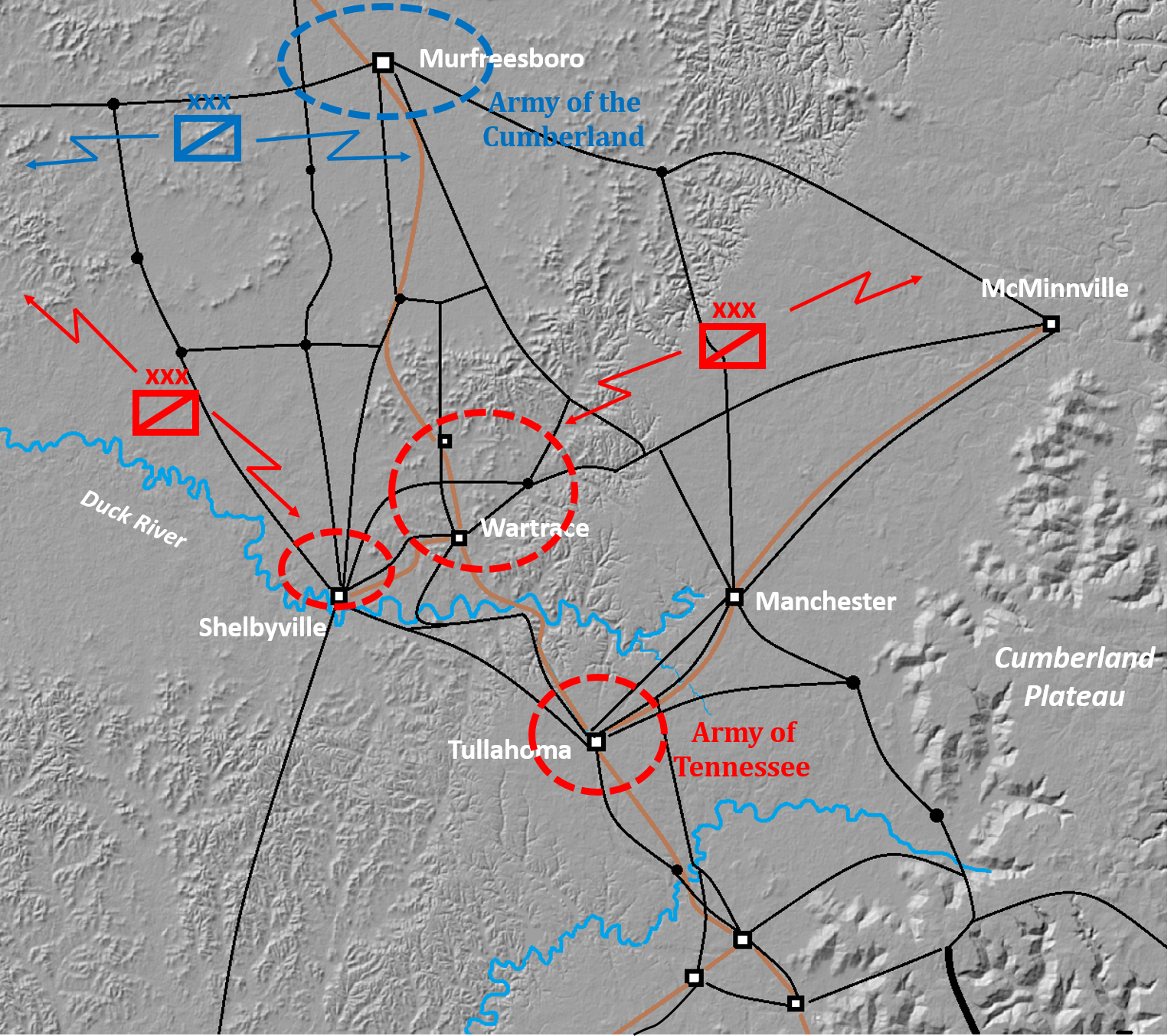
Less rigid were the positions occupied by Union and Confederate forces leading up to the Tullahoma Campaign during the American Civil War. During the first half of 1863, the two armies faced off across an 80-km front in Middle Tennessee. The Confederates, posted on the Highland Rim and along the Duck River, could easily defend the limited crossing points by rapidly shifting forces, at least in principle. The front was not especially active for most of that time: instead, geography and defensive works forced the Union army to undertake extensive preparations, during which fighting was limited to skirmishing and cavalry raids; but once Union forces were ready, the offensive collapsed the Confederate position in a matter of days.
Somewhat different, but related, was the front that emerged in northern Virginia during that same war. The Rappahannock River formed a permeable barrier that both sides could and did frequently cross: the Confederates launched two far-reaching offensives into the North, while Union forces made incursions during the Chancellorsville and Mine Run campaigns. Yet the one had to turn back as soon as it faced a reverse, while the other could only drive south with a very sustained effort.
Gaps and Continuities
Virtual fronts, where the bulk of a field army moves as a mass in response to enemy action, are quite distinct from another phenomenon that affected extended fronts: diminishing troop densities. The eastern fronts in both World Wars looked very different from the cramped trenchlines that stretched across northern France in 1914-18. The vast expanses of Eastern Europe required a sparser distribution of troops, and gaps between major concentrations could be tens of kilometers wide—covered by artillery, minefields, and patrols, and backed by local reserves.
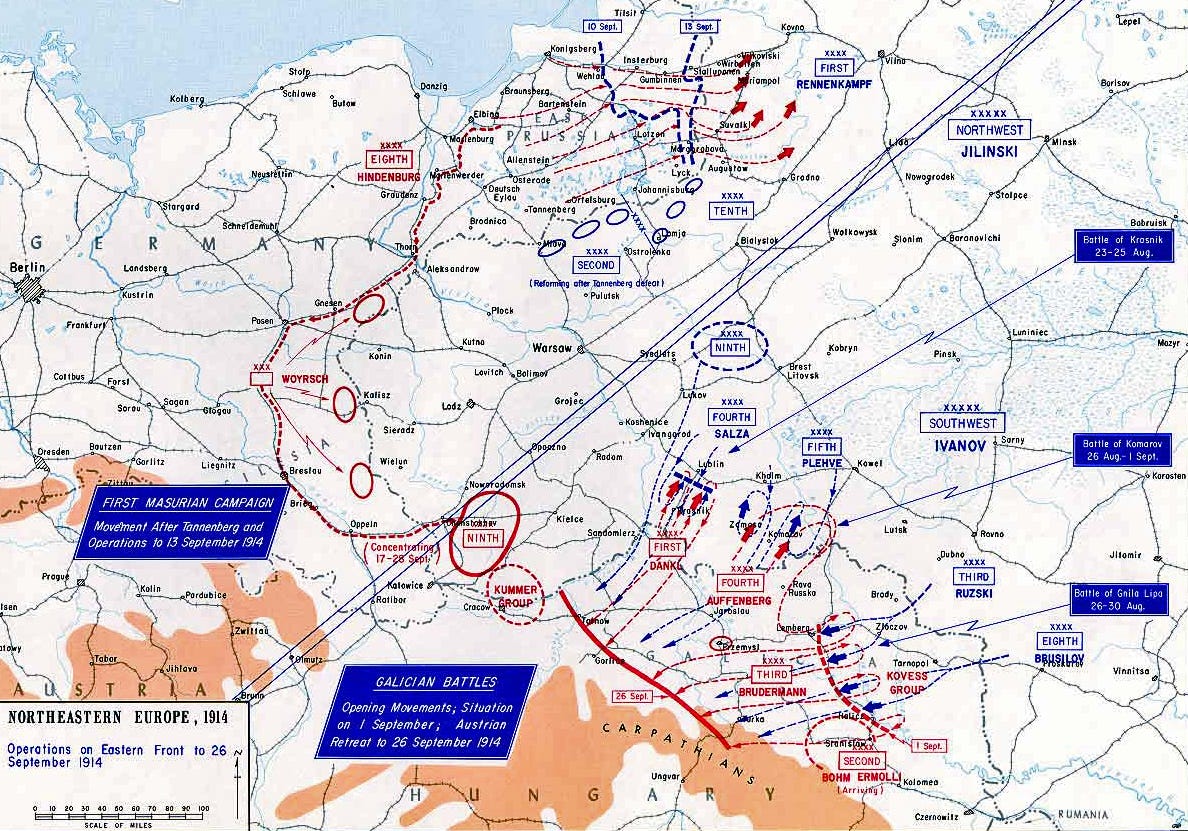
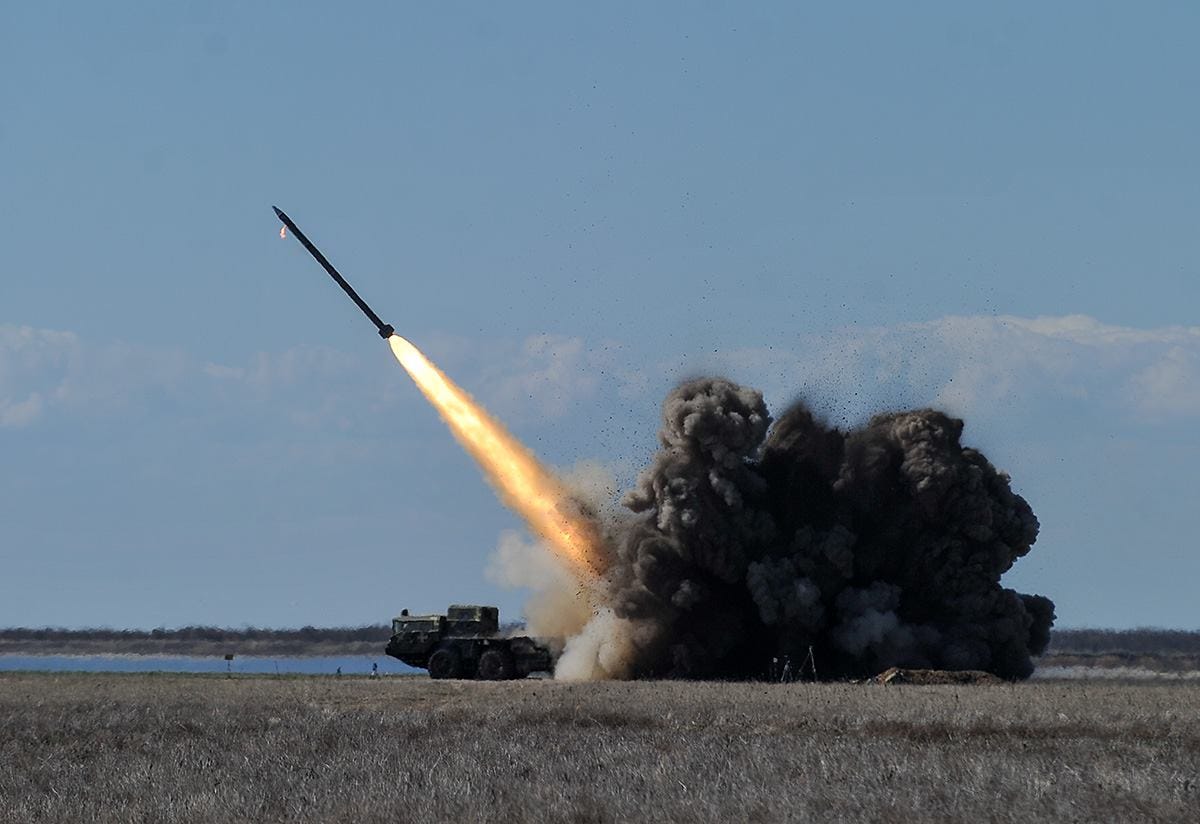
Indeed, the general trend since 1918 has been to substitute firepower and airpower for manpower. Although other conflicts have occasionally reached comparable densities to the Western Front, these exceptions have been far smaller in scale. This trend has reached an extreme in Ukraine, where the proliferation of drones and long-range missiles have allowed densities of just a few hundred troops per kilometer—even less than the French had on their northern border during the War of the Spanish Succession. The drone and precision-strike revolutions are simply part of the continuing trend in improving firepower that has enabled lower densities on a continuous front.
From that perspective, virtual fronts appear to be a phenomenon of a specific time: when armies were beginning to grow fairly large, but before the invention of machine guns and modern artillery. The increased range of new weapons—10-20 km for smaller FPV drones, much longer for larger weapons—allows the rapid concentration of firepower to substitute for the rapid redeployment of troops.
Mobile Firepower, Virtual Fronts
Yet current appearances may prove deceptive. We are at a point where operational mobility against a peer adversary is very difficult, but that will not necessarily last. A few points to consider:
1.) Any eventual counter-drone scheme that proves truly effective will doubtlessly involve a complex combined-arms array, which will in turn require a heavy concentration of protective assets. For an offensive to avoid getting bogged down, it will therefore have to concentrate along one or two axes, in line with historical norms.
2.) A defending force is equally vulnerable to drones and missiles, and will also have to concentrate in order to protect against them.
3.) Even if a defender can cover his entire front from a single point using his longest-ranged weapons, these will always be in shorter supply—and likely bottlenecked in their delivery mechanism—compared to shorter-range weapons. Defensive concentrations must therefore move to meet offensive thrusts.
4.) A prepared defender will always have a mobility advantage over the attacker: for instance, by building fortified concentration areas connected by protected mobility corridors that allow him to safely move throughout his own operational depth.
Taken together, this looks a lot like a virtual front: a concentrated force moving between prepared positions to parry offensive thrusts, wherever they may come. This is, admittedly, just one possibility among many for future land operations; but while it is certainly easy to imagine alternatives that look quite different, it is also true that operational patterns have a tendency of recurring amidst very different technological environments.
Thank you for reading the Bazaar of War. Most articles are free for all to read, but a subscription option is available to all who wish to support. Subscribers receive a pdf of the critical edition of the classic The Art of War in Italy: 1494-1529, and will have exclusive access to occasional pieces.
You can also support by purchasing Saladin the Strategist in paperback or Kindle format.