
Military theory has grappled for centuries with how to categorize attritional warfare. Clausewitz contrasted protracted wars of exhaustion with those won through culminating battles of annihilation. For the maneuver warfare school, annihilation is merely attrition on a compressed time horizon—very different from wars that are won by relatively costless maneuver. I maintain that the most important distinction is decisiveness: when force is employed not merely to erode the enemy’s strength, but to create windows of opportunity that are subsequently exploited.
It is often lost in these debates just how challenging the term “attrition” itself is. It is most commonly invoked to describe a strategy of attrition, deliberately wearing down the enemy until he capitulates—a mechanism of victory, in other words. But that is just one of three separate meanings which often get conflated. Untangling these three strands gives us a better understanding of how wars are actually won or lost.
It also reveals an apparent paradox. Discussion that opposes attrition to maneuver usually contrasts the material focus of the former with the moral and psychological aspects of the latter. Yet when it comes to the actual mechanism of victory, this is often reversed: attrition wins wars through its psychological effects, whereas more decisive means succeed by inalterably changing the material facts on the ground.
The Definitions of Attrition
In the most straightforward sense, attrition refers to the ongoing losses inherent to warfare. Nor is it just from combat itself, but the steady depreciation of operating costs: soldiers get sick, equipment breaks down, supplies run out. Any force that is not actively sustained and regenerated will gradually diminish from attrition.
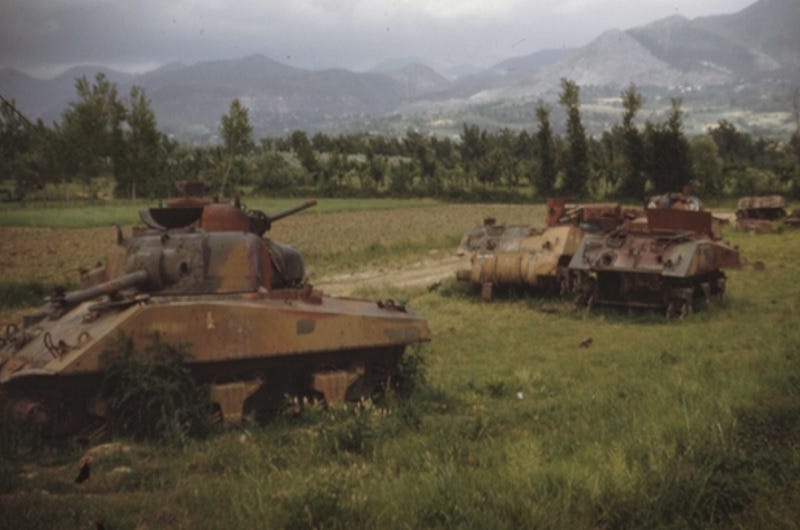
The second sense is used to characterize a particular phase of hostilities. When two sides become locked on a stalled front, attrition—not decisive action—predominates. This sense gave its name to the Egyptian-Israeli War of Attrition, in which the two sides fired upon each other for several years without shifting the border between them.
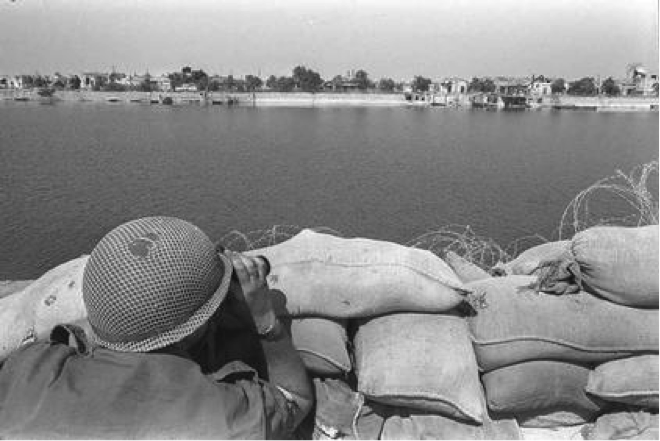
But the War of Attrition was not attritional in the third sense, which refers to the mechanism of victory: winning by wearing down the other side until it can no longer field a credible force. Although such wars are often dominated by phases of static attrition, they can also be free-wheeling and dynamic.
The Maneuverist Lens
Much of the common understanding of attrition is inflected by maneuver warfare doctrine. Maneuver theory explicitly defines the attrition-maneuver dichotomy in the third sense—as a mechanism of victory—but it also judges the success of a maneuver by attrition in the first sense: how little loss it incurs. This is one of the weaknesses of maneuver theory, underplaying how exploitation of a successful maneuver often requires headlong pursuit and frontal assaults: the time-value of a high-casualty pursuit today can be worth far more than another brilliant maneuver tomorrow.
Others have tried to reconcile the extreme maneuver-attrition dichotomy by emphasizing their essential complementarity. Campaigns are said to consist of alternating periods dominated by one or the other: attritional phases that weaken the enemy and prepare the ground for maneuver, followed by maneuver phases that put friendly forces in a better position to inflict further losses.
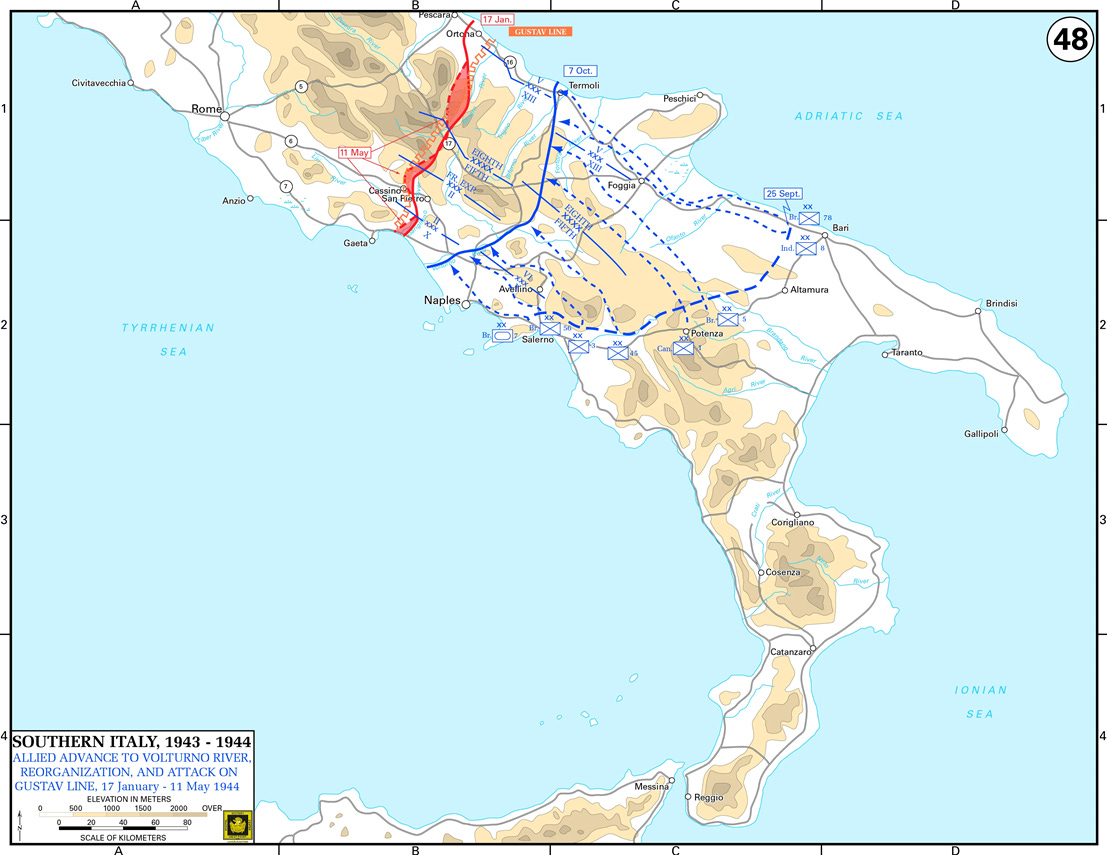
There is plenty of merit to this argument, but the type of attrition it refers to is limited to the first and second senses: static periods of preparatory bombardments and frontal assaults during which both sides suffer steady losses. This is also attrition at the tactical and operational levels, not the strategic-level attrition that exhausts the enemy’s war-making capacity.
Static Attrition
The equation of static fronts with attritional warfare is mostly a post-WWI phenomenon. Theorists have debated the “war of position” vs. “war of maneuver” since at least the 18th century, but those terms really referred to the methods of conducting a campaign: whether to seize and hold fortified positions or attempt to discomfit enemy forces in the field. It was only after 1914 that positional warfare became inextricably linked with attrition as a strategy—using strong positions to deliberately exhaust the enemy.
Even in previous wars that resembled the Western Front’s operational dynamics, strategic aims were quite different: to break through defensive lines so that they could freely maneuver in the enemy’s rear (even if, realistically, that required first wearing down the defender’s overall warmaking capacity). It was only with the deadlock of the trenches that operational stasis came to be equated with strategic attrition, as generals adopted a deliberate strategy of exhaustion.1
How different from the dramatic thrusts and counterthrusts of the Second World War! And yet that war was won by the mechanism of attrition no less than the First. There was no single battle or campaign that decided the outcome of the war; instead, mounting losses made it impossible for the Germans and Japanese to replace their losses, until over time their ability to resist crumbled completely.
Decision by Attrition
Yet World War II is also a bad template to generalize about mechanisms of victory. Most wars are not fought to the bloody end; in wars between peers or near-peers, it is rare for one side to completely overwhelm the other, occupying its territory and destroying its very capacity to resist. Most wars in the Western world, even those that are quite lopsided in their outcome, are ended by a negotiated settlement.
A survey of major wars over the past four centuries demonstrates this: the Thirty Years’ War, Dutch Revolt, the long Franco-Spanish War, Franco-Dutch, Nine Years’, Great Northern, Spanish Succession, Polish Succession, Austrian Succession, Seven Years’, American War of Independence, First Coalition, 1812, Crimea, Austro-Prussian, Wars of Italian Independence, Russo-Japanese, World War I, and Korea were all settled by treaty. Against that, the Napoleonic Wars, American Civil War, Franco-Prussian War, Russian Civil War, and both theaters of World War II stand out as exceptions, not the rule.
In the latter group, about as many were won by rapid decision as by attrition: most of the Napoleonic Wars and the Franco-Prussian War belong to the latter category; the Civil War and World War II to the second. The War of the Sixth Coalition falls somewhere in between: although Napoleon was steadily ground down by a stronger coalition, much was decided at the climactic Battle of Leipzig.2 Decisive battles/operations may occur within wars won by attrition, but only when the strategies of two opponents are not symmetrical: that is, if that battle closes off one side’s only credible path to victory, dooming it to inevitable defeat by exhaustion.
Limited Decision
There is a reason such cases are rare. Attrition makes war expensive for the victor as well as for the vanquished, and most wars are fought for limited aims; to utterly crush an enemy requires a willingness to suffer well beyond the initial aims. For wars that are ended by negotiations, the final settlement usually reflects the facts on the ground once both become exhausted—the outcome is a combination of local decision and general attrition.
The dynastic wars of 17th and 18th-century Europe illustrate this well. These conflicts were usually fought for multiple objectives in a variety of theaters, which could be won or lost independently of one another. The final treaty usually conformed to the facts on the ground when hostilities ceased, minus some territorial exchanges—lands that were particularly valuable to one side could be traded as a bargaining chip.
Sometimes this entailed trading towns and fortresses along a jagged border, but often it involved the fate of entire theaters. Such dynamics created a more complicated relationship between decision and attrition. During the multi-theater War of the Spanish Succession, for instance, the Allies won in Italy, Germany, and the Low Countries, while the Bourbon powers won in Spain. In one sense, these victories were truly decisive: neither side had enough spare capacity to recover its position in their lost theaters.
Yet the Allies came close to a total victory in the attritional struggle. The war raged on in its final years in northern France, where Louis XIV had increasing difficulty fending off the Allied offensive under the growing fiscal strain of the war, crop failures, and a very severe winter. The situation grew so dire that by 1709 he feared a total collapse of his defenses that would lead to the enemy’s occupation of Paris. He offered terms that amounted to complete capitulation: abandoning all his war aims, to include his grandson’s claim to the Spanish throne.
Only extreme demands by the Allies—that Louis send troops to help remove his own grandson—coupled with their pyrrhic victory at Malplaquet convinced the French king to fight on. It was by winning the final attritional phase of the war (aided by a significant local victory that erased a year of Allied gains) that he managed to secure his grandson’s rule in Spain. Ultimately, it was a matter of will and psychology: he was willing to resist longer than the Allies were willing to sustain one another in the fight.
We can compare Louis’ situation to Kaiser Wilhelm at the end of World War I. Although the Germans were pushed out of France and were on the brink of losing Belgium during the Hundred Days’ Campaign, they had not yet suffered a total collapse. Militarily, they could fight on into the next year by contracting their lines to the borders of Germany itself. Domestically, the situation was dire. Local uprisings, mutinies, and starvation from the ongoing blockade threatened the government with complete collapse.
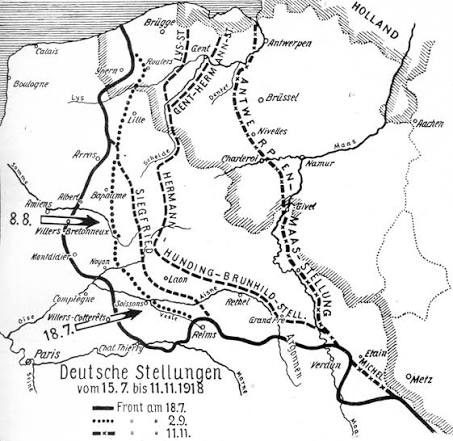
It is impossible to say what would have happened if the Germans had kept fighting—the leadership’s worst fears might well have proven justified. But they might equally have taken drastic measures and held out for better terms, sparing themselves the worst of defeat. it was ultimately a collapse of self-confidence that caused them to capitulate at that precise moment and under those precise terms. The proximate agent of their defeat was psychological and moral, not physical.
The Paradox of Attrition and Decision
This overturns the conventional framing of attrition and decision. Long wars of exhaustion focus on munitions expenditures, production rates, loss replacements, and financial resources—the means by which such wars are waged. But except in cases fought to the very finish, where the last means of resistance are actively crumbling in the defender’s hands, defeat is psychological. This just as true for the weaker power that fears imminent catastrophe as it is for a superpower that is unwilling to endure a steady drip of casualties against an endemic insurgency.
This is the exact inverse of wars won by decision. The maneuverists are not alone in emphasizing how truly decisive campaigns and battles are usually lost by a combination of misjudgment, psychological disorientation, and moral collapse; but those are likewise the means of inflicting defeat, not the actual cause. Napoleon at the apex of his career as much as the Germans of 1940 won tremendous victories through psychological shock and profound demoralization of their opponents. Those victories were only effective because they materially changed the balance of the war against enemies that were far from exhausted.
It would be pedantic to point out that all defeat is ultimately psychological, and that, short of complete annihilation, there is always some way to resist. That is to conflate the military contest with the strategic objectives: it may still be all but impossible to attain any positive objectives. By a similar logic, wars of attrition that are fought to the bloody end require some sort of culminating battlefield victory to convince the losing side that it is well and truly defeated—such was the rationale for the atomic bombs dropped on Japan.
Templates of Military Dynamics
The counterintuitive dynamics of attrition and decision hold at lower levels as well. A decisive victory in a particular theater or around a certain objective may radically alter the local conditions, even if the wider war is decided by a balance of attrition. To go back to the Spanish Succession example, only an Allied victory in the larger war of attrition could have recovered Spain for them.
Short of a decisive victory, however, local defeats are at least partly moral and psychological. Even when cutting sunk costs in a losing attritional struggle is the rational thing to do, the decision is rarely made through dispassionate calculation: usually it takes the fear of a larger collapse to tilt the balance.
Much of our intuition around warfare is shaped by the extremes. The Napoleonic Wars, the American Civil War, and World War II draw the attention of theorists because they furnish the most abundant and striking case studies, and it is easy to unthinkingly extrapolate their examples to warfare more generally. Sometimes this is justified, when those extremes make plain the trends and dynamics that are apparent in all wars; but in many other cases, they represent categorically different things. The question of ultimate victory and defeat belongs firmly in the latter category.
Thank you for reading the Bazaar of War. Please like and share if you enjoyed, it helps more people find this. You can also support with a paid subscription—supporters receive the critical edition of the classic The Art of War in Italy: 1494-1529 and get access to exclusive pieces.
You can also support by purchasing Saladin the Strategist, in paperback or Kindle format.
This is not dissimilar to how the unique dynamics of World War I caused needless confusion around the concept of the “operational”. The concept developed organically in German to fill the gap left by strategy after that term—originally used for the maneuvers of a campaign—got elevated to encompass the entire war effort. This semantic shift was not evident to the Soviet writers who treated the concept as something entirely novel when they adopted it in the 1920s, treating it as a product of continuous, theater-wide fronts.
A French victory at Leipzig was extremely unlikely, as Napoleon faced nearly 2:1 odds in a battle involving over a half-million soldiers—for all his genius, the problems of command-and-control alone made it hard for him to win. A more plausible path to victory was in the campaign leading up to the battle, where the Allies only neutralized his maneuvers via an extremely disciplined approach: that offered his best chance to knock individual allies out of the enemy coalition and even out the balance of forces.
Much needed definition and discussion. Thank you for an excellent read 👍
>defeat is psychological
I recommend Martin Gurri's discussion of the information sphere: the public doesn't act like a person "only moreso" but has its own rules